
ADD · PROJECT/加设计·扬州瘦西湖丽芮酒店

时间流逝的目的只有一个:
让感觉和思想稳定下来,
成熟起来,
摆脱一切急躁或者须臾的偶然变化。
——给下一轮太平盛世的备忘录/卡尔维诺
"The purpose of time is to make feelings and thoughts settle down, to mature, to detach themselves from the haste or the chance of the moment."
—— Italo Calvino,Six Memos for the Next Millennium
诗人用月色砌墙,历史的辉煌写满诗篇,遮住了现世安稳的梦。扬州,一座让帝王将相魂牵梦萦,迁客骚人歌咏不尽的的江南名邑。
Poets build walls with moonlight; history's glory fills the verses, overshadowing dreams of worldly peace. Yangzhou, a Jiangnan city famed in history, haunts the dreams of emperors and generals, and poets endlessly sing of it.
扬州瘦西湖丽芮酒店坐落在邗江京华商圈,毗邻著名的瘦西湖风景区,一处人文魅力与江南美学共生长之地。酒店拥有客房116间,以旗舰店标准落地打造,是锦江酒店(中国区)旗下丽笙品牌位于扬州的首个高端酒店项目。
Radisson RED Yangzhou Slender West Lake, situated in Jinghua commercial hub of Hanjiang, adjacent to the renowned Shouxihu Scenic Area, where humanistic allure and Jiangnan aesthetics coexist. With 116 guest rooms, the hotel is built to flagship standards and represents the first high-end hotel of the Radisson under Jin Jiang Hotels (China) in Yangzhou.
“腰缠十万贯,骑鹤下扬州。”是古人对完美生活的一种理想化想象。酒店以此为空间叙事线索——随同仙人骑鹤阅访广陵,体验扬州千年的文化意韵与市井生气,感知历史厚重与现代盎然的诗意交织。
"Carrying all my possessions, I will ride a crane down to Yangzhou." This ancient vision of an ideal life serves as the hotel's narrative thread, guiding us through the cultural essence of Yangzhou: accompanying immortals on cranes to explore Guangling, we experience the millennia-old cultural allure and urban vitality of Yangzhou, feeling the historic depth intertwined with contemporary poetic vibrancy.
骑鹤下扬州
-以空间叙述扬州文化图景-
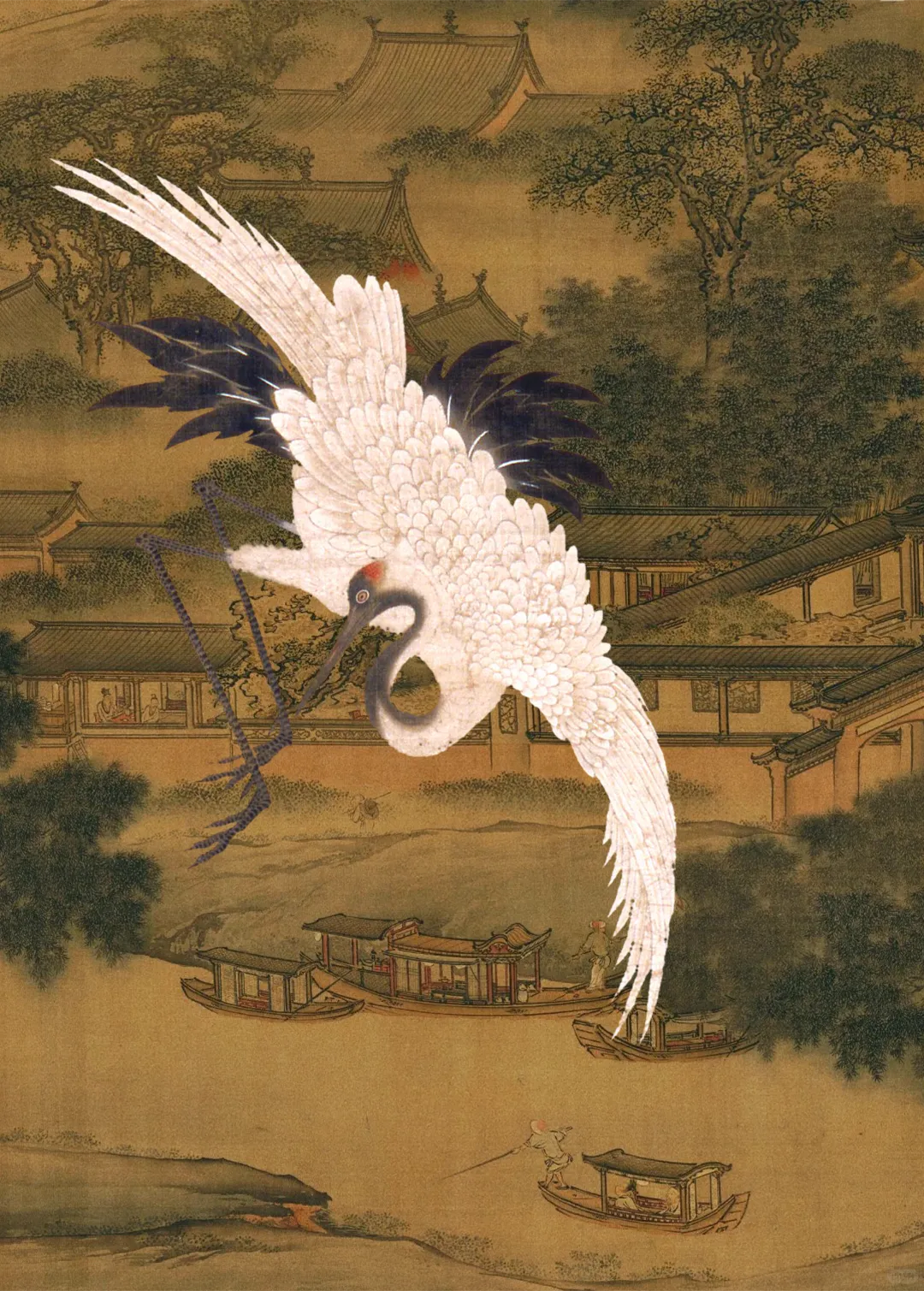
▲《邗江胜览图》(局部拼贴)
Han Jiang Sheng Lan Tu (Collage of Details)
唐代的诗歌和清代的绘画描绘了一个文化荟萃,经济富庶的扬州。与威尼斯一样,水运商贸发达,富商巨贾、文人及艺术家汇集,诗酒风流,夜市千灯,扬州成为一个让人向往的城市目的地。清代文人李斗在其著作《扬州画舫录》中,全面记载了清代扬州的城市布局与人文风貌,完整地呈现了这种迷人的城市环境和生活方式,那一段充满色彩和浪漫的过去。
Tang Dynasty poetry and Qing Dynasty paintings depict a Yangzhou rich in culture and prosperity. Like Venice, Yangzhou was a hub of waterborne commerce, attracting wealthy merchants, literati, and artists, known for its poetic and wine-loving atmosphere, and its bustling night markets lit by thousands of lanterns, making it a desirable city destination. The Qing Dynasty literati Li Dou comprehensively documented the urban layout and cultural characteristics of Yangzhou in his work "Yangzhou Huafang Lu," fully presenting this enchanting urban environment and lifestyle, capturing the colorful and romantic past.
A GUEST ARRIVES: FIRST IMPRESSION
旅人:初下扬州
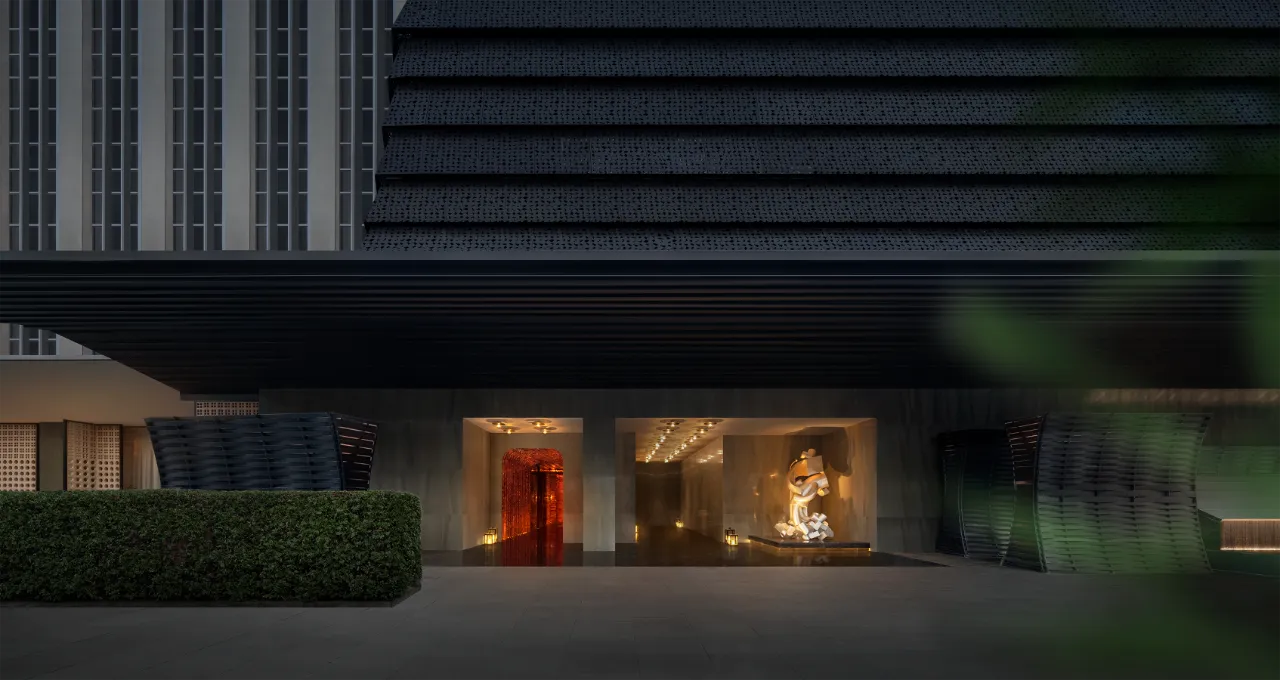
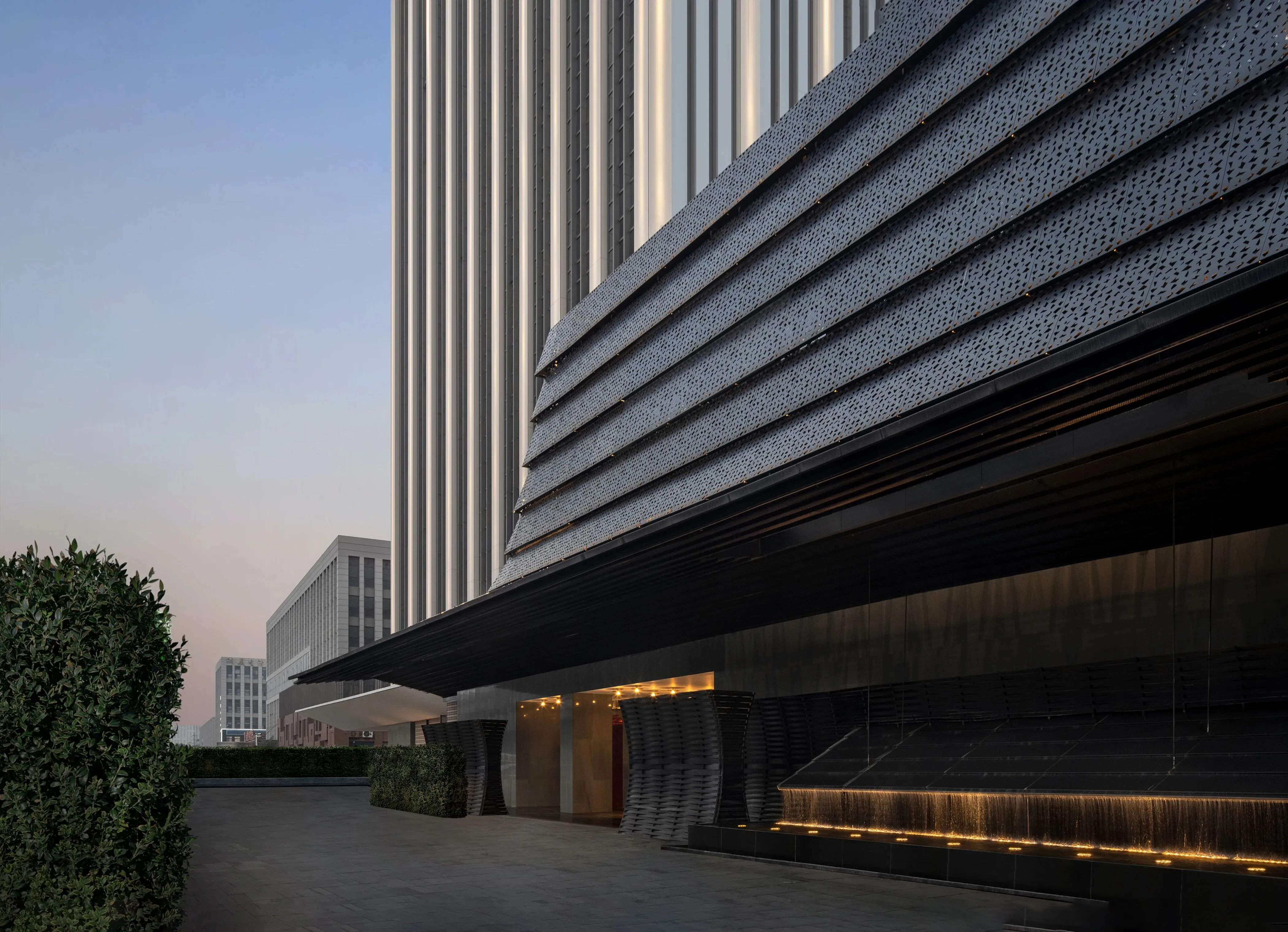
下扬州时如御风而行,接连成片的深色屋顶映入眼帘,青砖黛瓦掩映在绿荫中。高墙、重檐、篱笆院墙,酒店入口叙述着园林院落幽然雅致的日常。
As if borne on the wind, the vision of Yangzhou unfolds: a tapestry of cyan bricks and black tiles set amidst verdant shades. The grand walls, layered eaves, and the enclosure of the courtyard whisper the quiet grace of a garden retreat at the hotel's threshold.
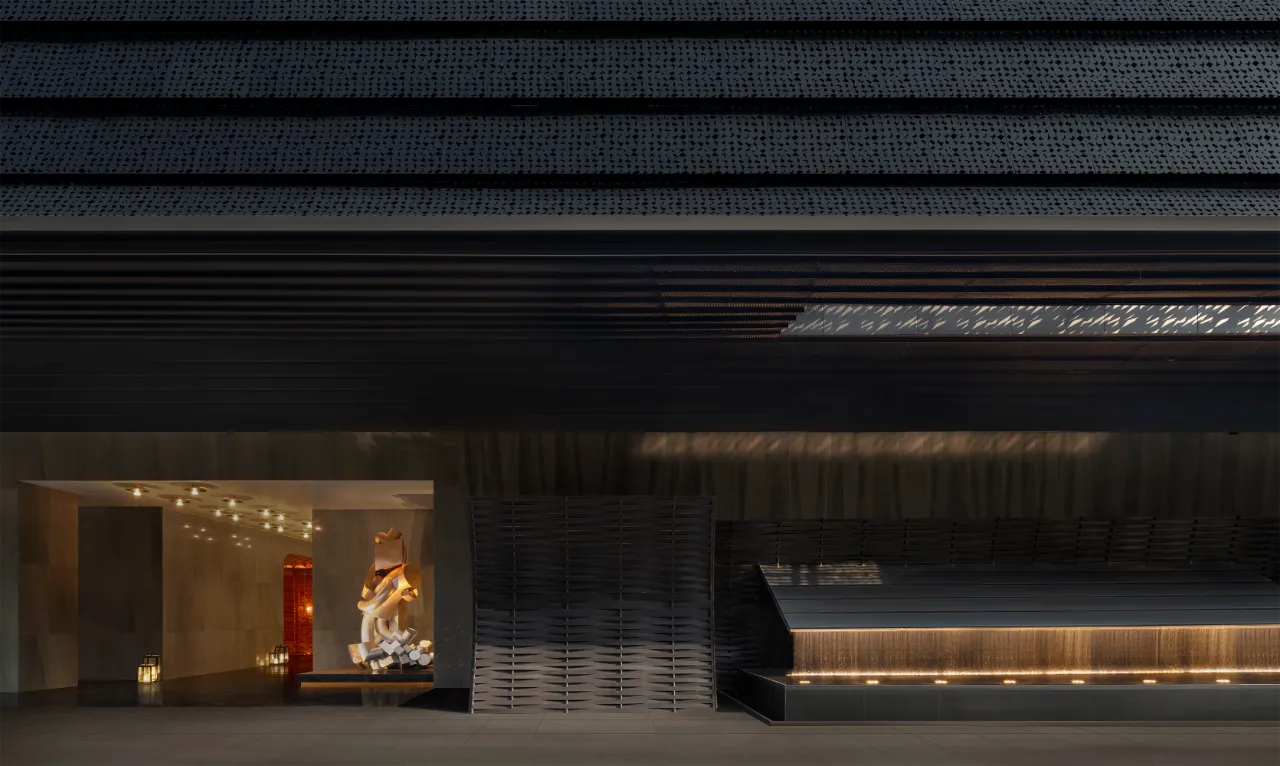
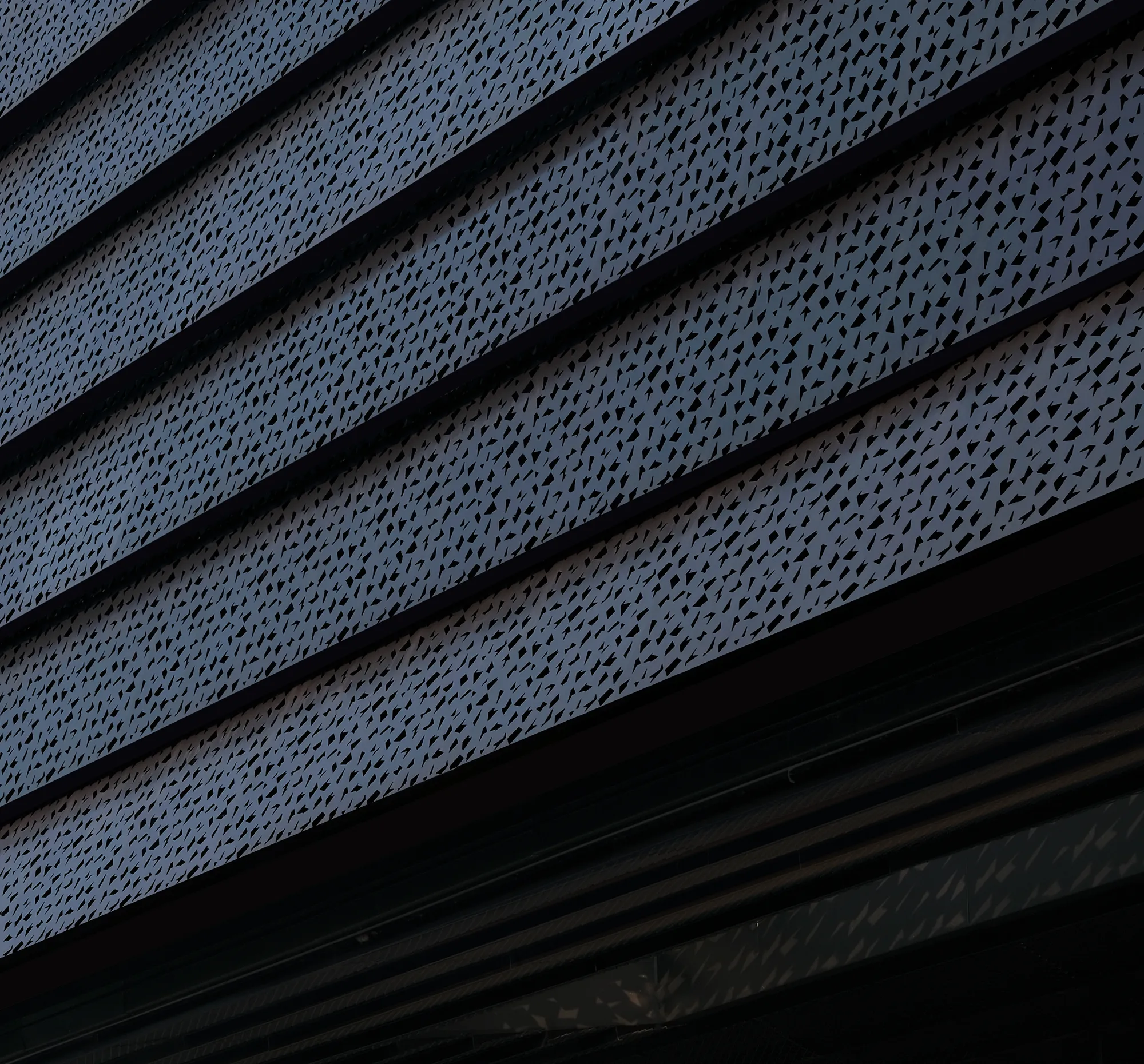
叠檐结构自立面一直延伸至雨棚,如同天空脚下密密层层、重重叠叠的屋脊瓦片,一个接一个铺陈开来,似潮水般连绵起伏。
The eaves structure extends from the facade to the canopy, like densely packed, overlapping ridges and tiles beneath the sky, cascading continuously like the tide.
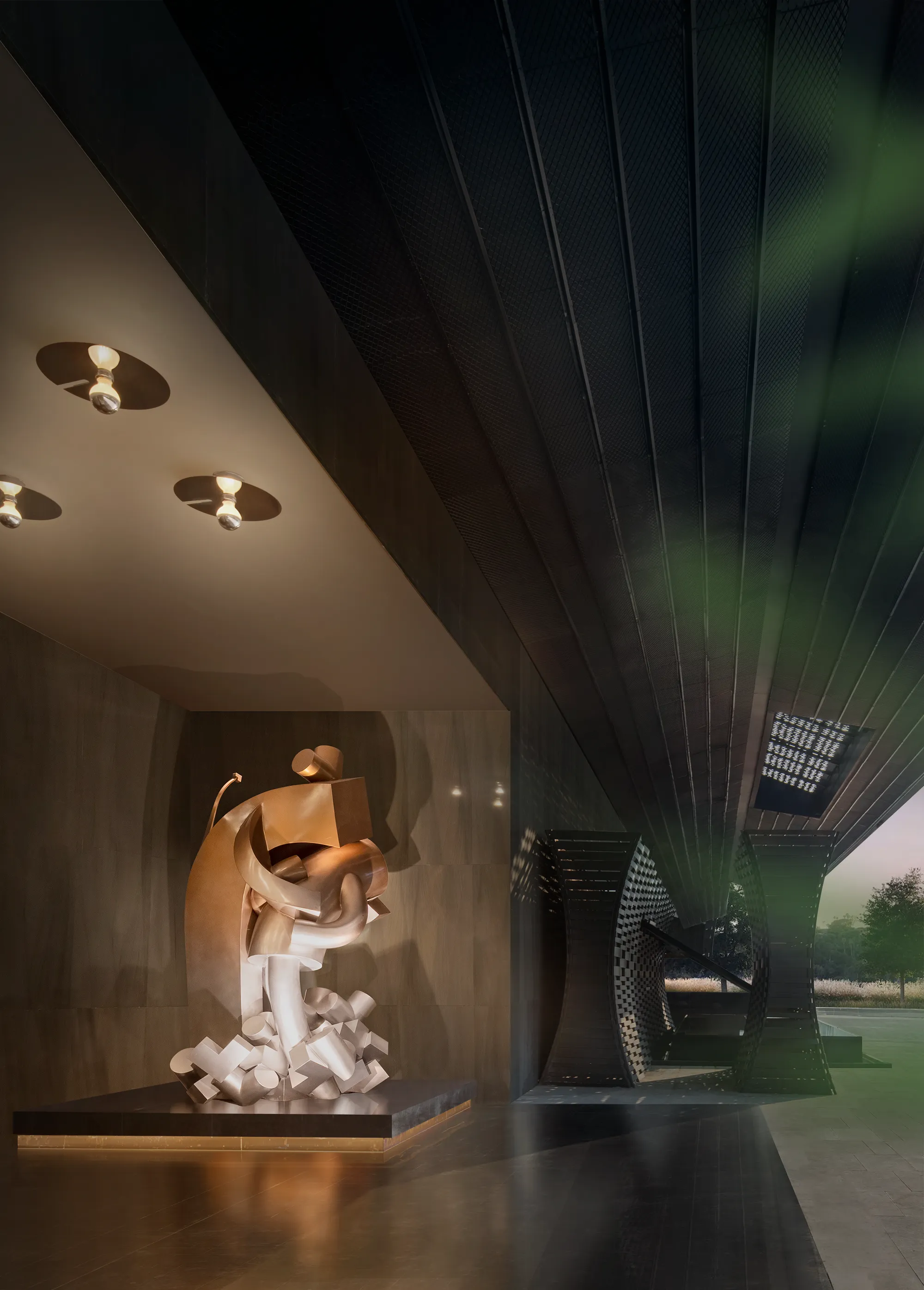
古城悠闲的日常里沉睡着过去的荣光。向外延伸悬挑的雨棚投下浓郁的阴影,檐下如水滴悬挂的灯发散着朦胧的光。
In the leisurely daily life of the ancient city lies the glory of the past. The overhanging eaves cast a rich shadow, and droplet-like lamps hang beneath, emitting a soft light.
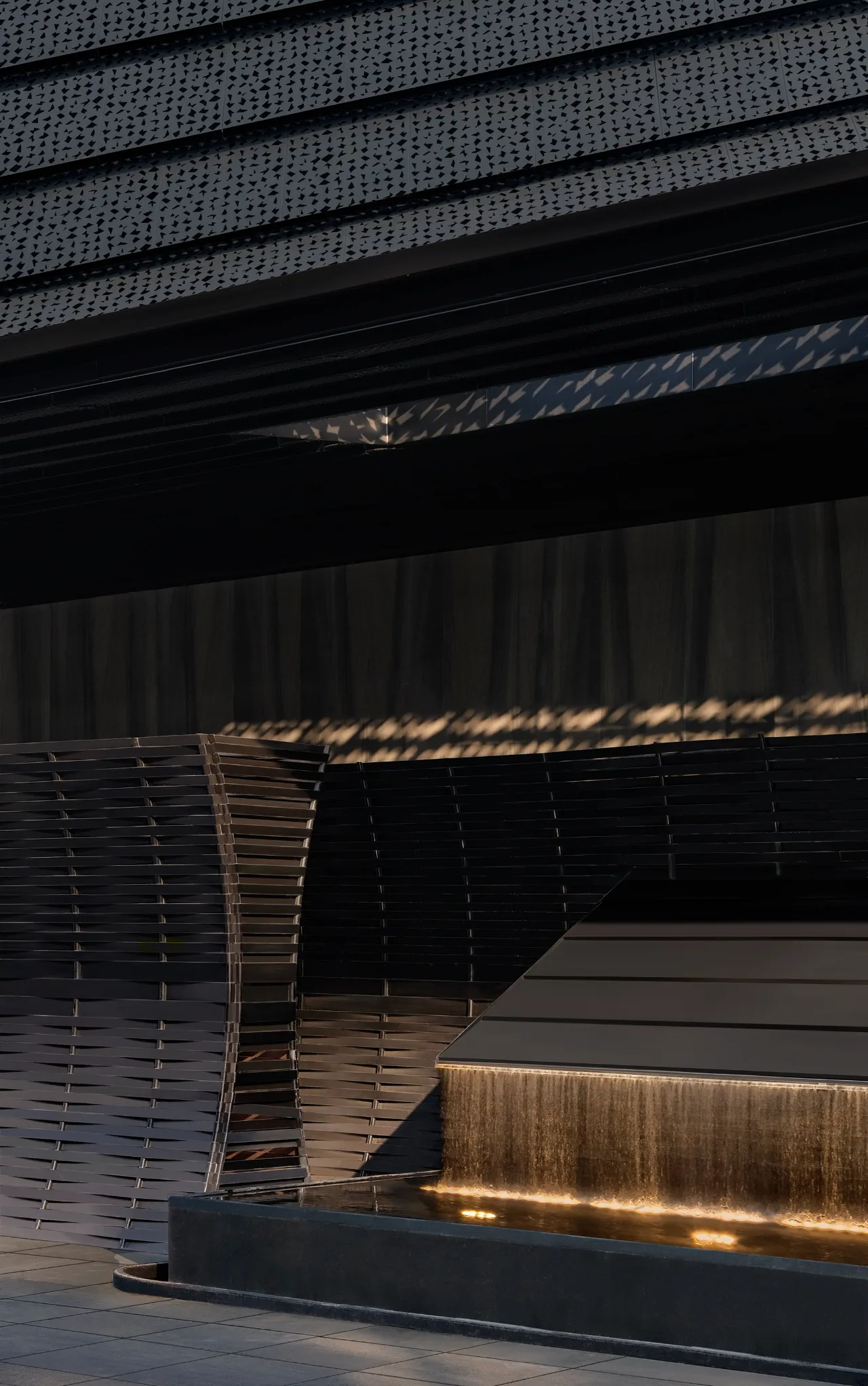
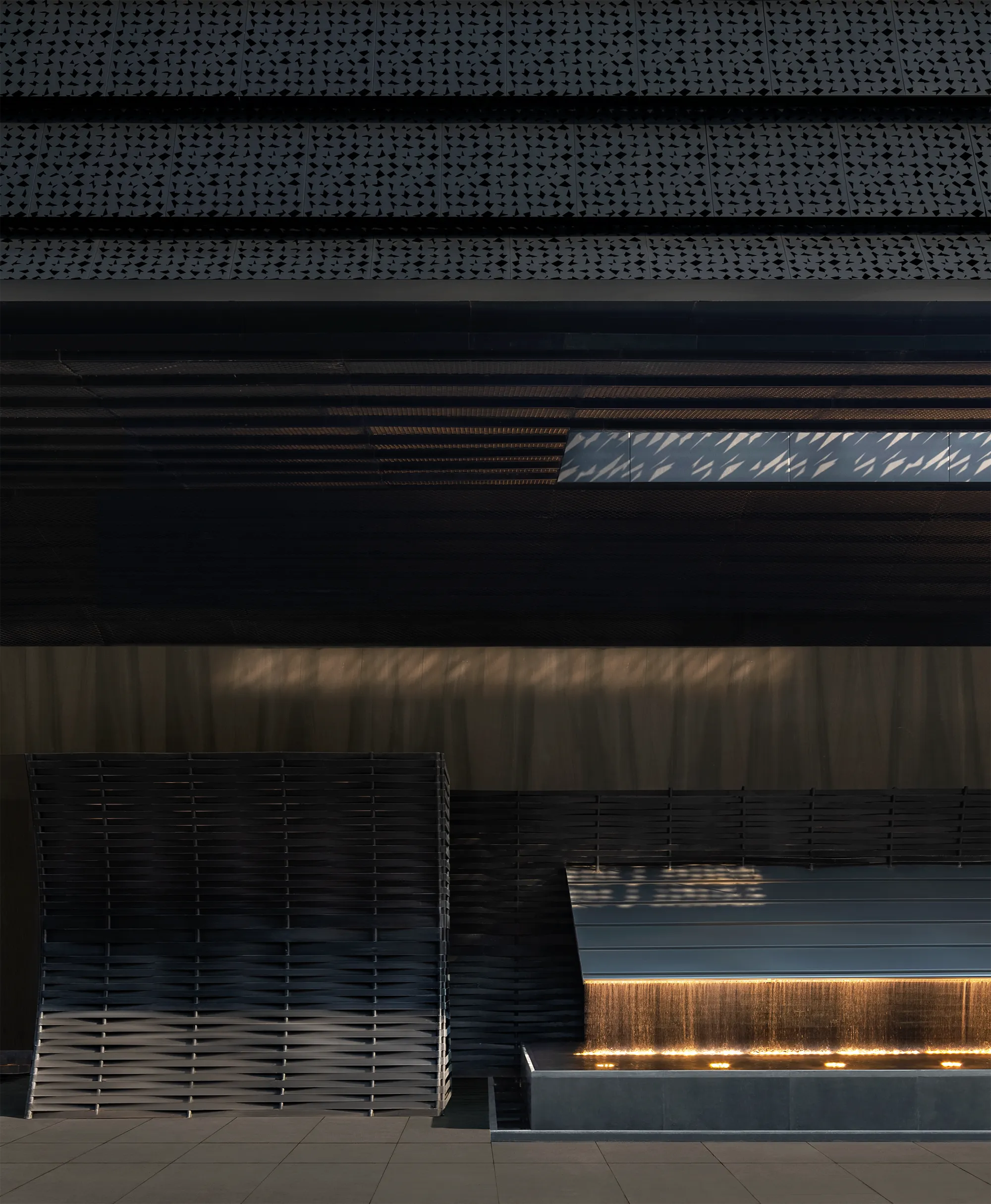
阳光透过雨棚空隙流淌而下,斑驳的光影映照在墙面,雨水也可从上方的洞口处倾数落下,水波粼动。
Sunlight filters through the gaps in the canopy, casting dappled shadows on the walls, and rainwater can also pour down from the openings above, creating a shimmering ripple effect.
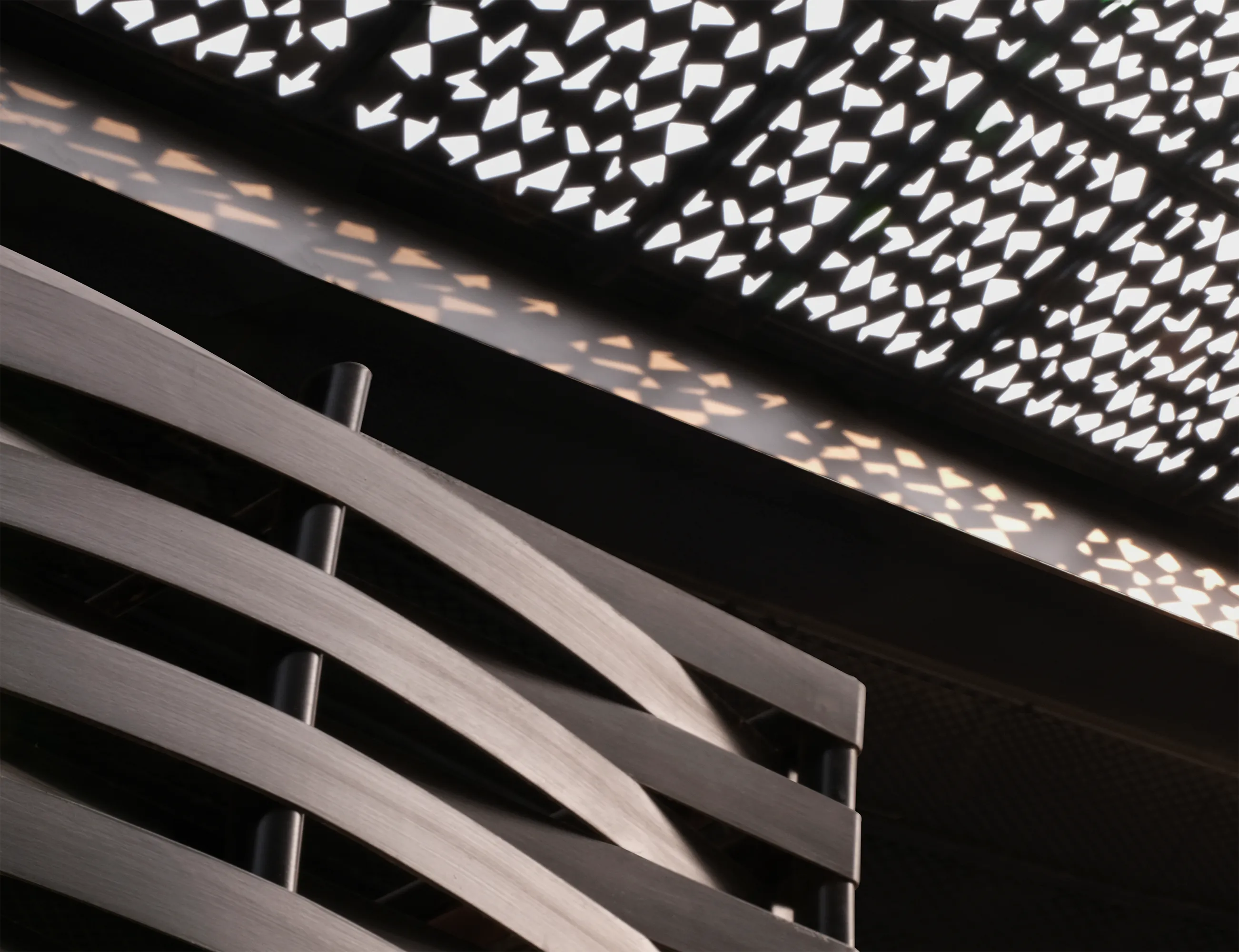
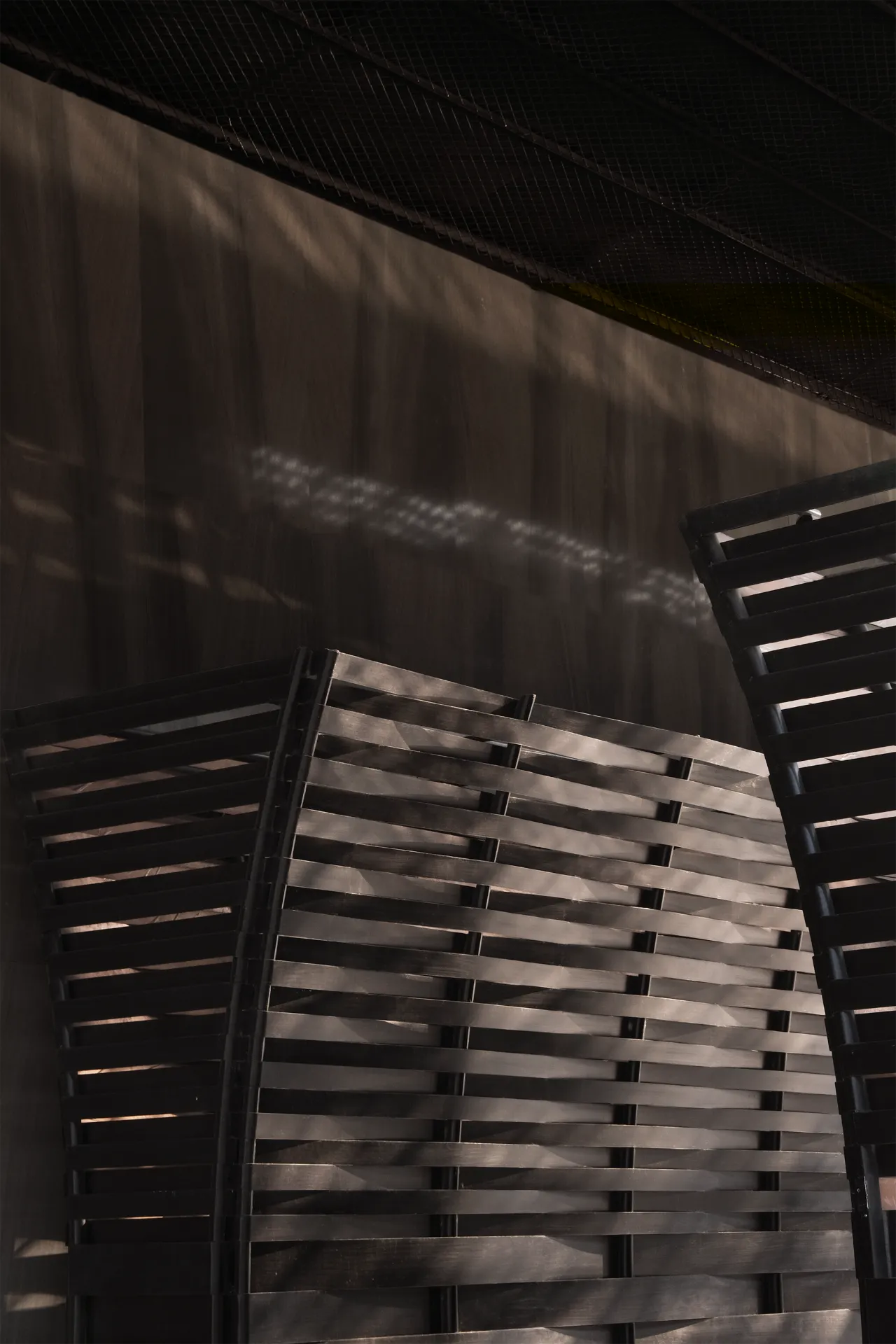
竹编技艺以金属材质重新转译,铝板镂空图案改编自传统的雕花纹样,设计以现代文化回应着这片土壤上生长已久的文脉。
Bamboo weaving is reimagined in metal, with aluminum panels featuring patterns inspired by traditional carvings, creating a design that resonates with the cultural heritage of the land through a modern lens.
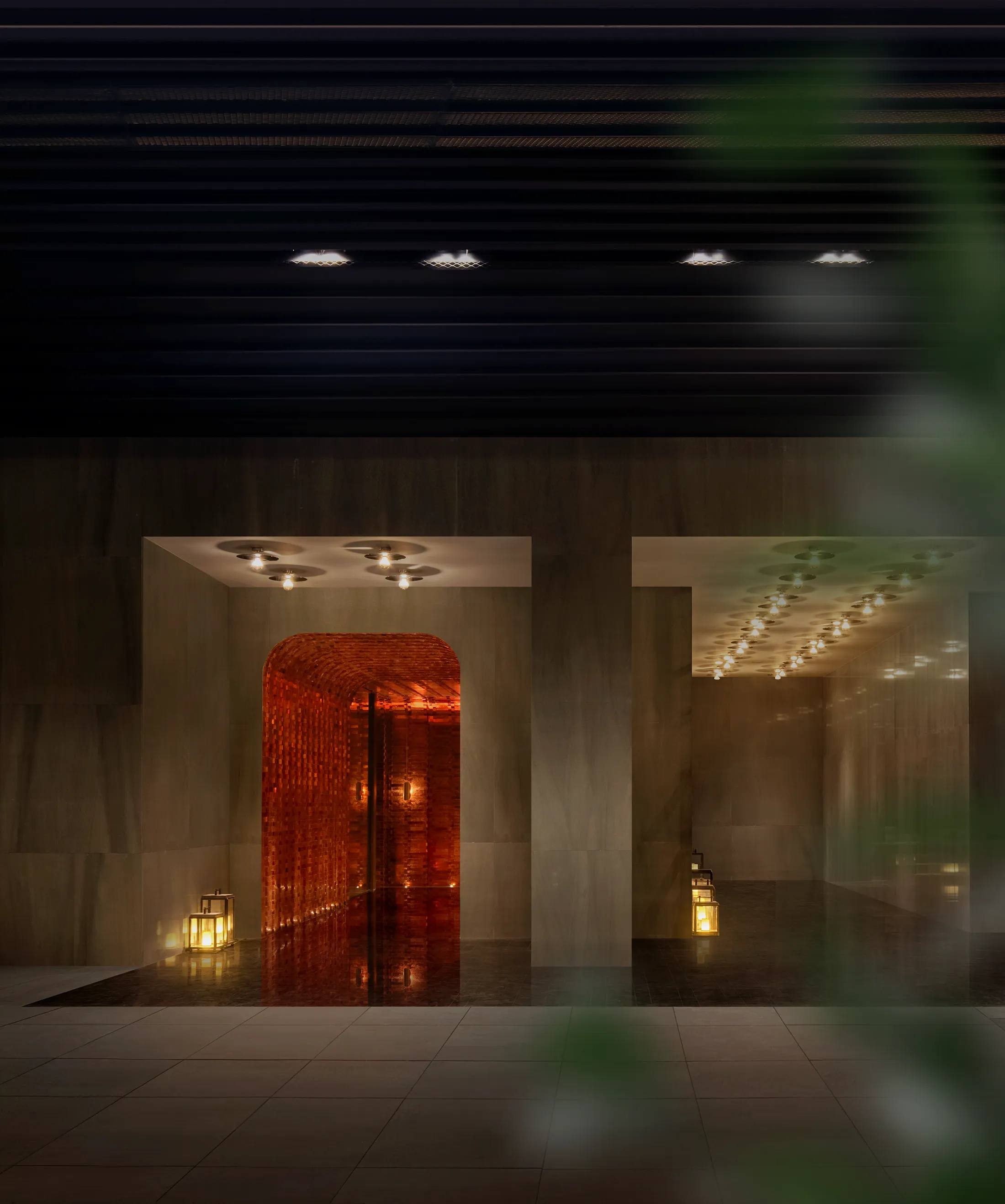
非对称的多通道入口汲取自游园体验中的自由动线,左右两侧不同的步入体验,在移步异景的曲折中,藉由朦胧模糊的陌生感催生出探索欲。
The asymmetric multi-channel entrance, inspired by the free-flowing paths of a garden stroll, offers different approaches on each side, sparking a desire to explore within the twists and turns, as the hazy unfamiliarity evokes curiosity.
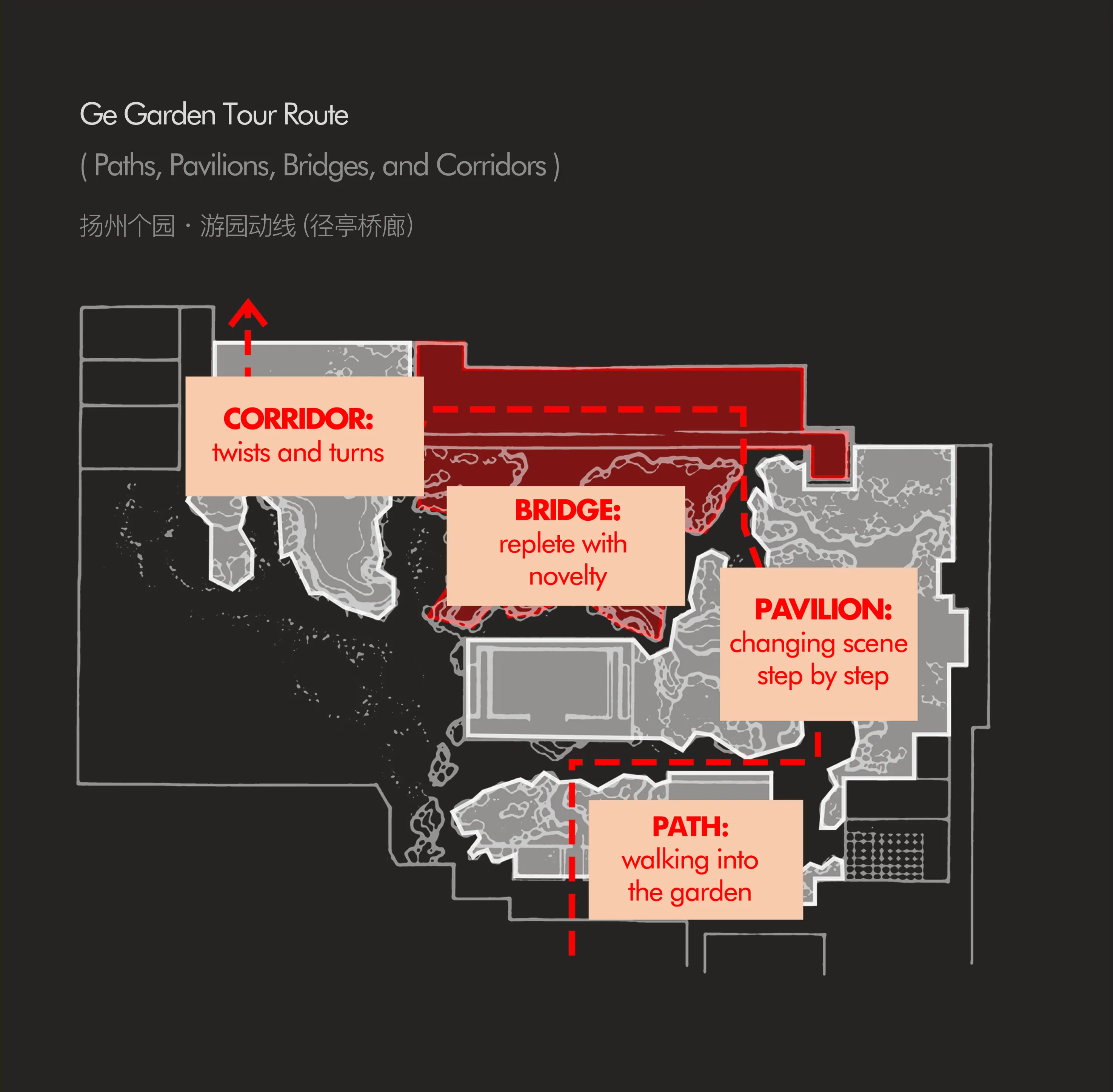
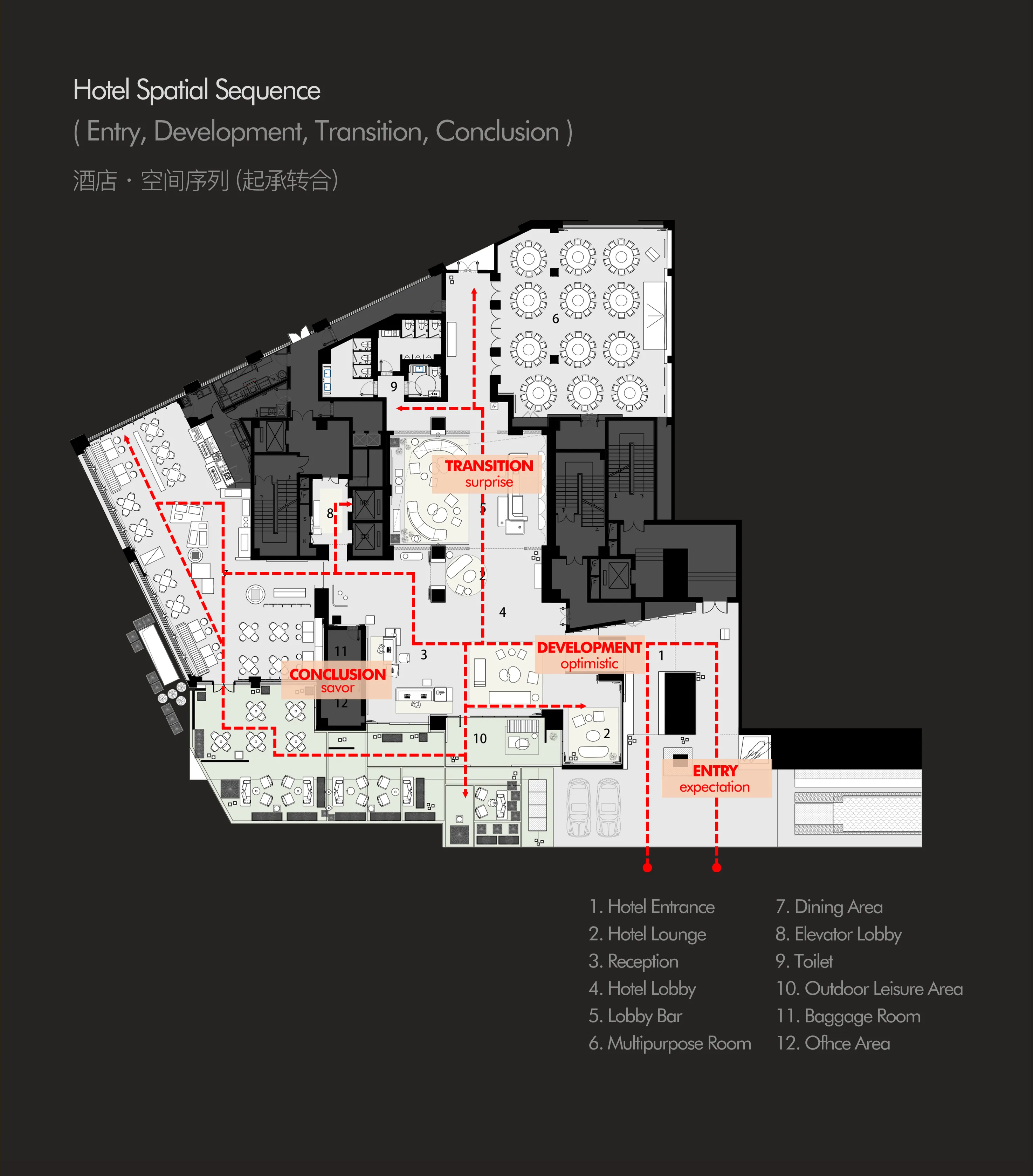
▲游园式空间动线
GARDEN-STYLE SPATIAL CIRCULATION
酒店的整体空间布局灵感源于扬州园林,径亭桥廊的游园动线引导空间形成高低起伏,蜿蜒回环的空间体系,走进去,高墙深院,层楼四合,有着深厚的文化意韵和美学意境。注入园路的趣味和惊喜,规制出多层次的空间感知,形成起承转折的空间序列。
The hotel's layout is inspired by the Yangzhou gardens, with the meandering paths, pavilions, bridges, and corridors guiding the visitor through a space that undulates and meanders, creating a system of spaces that rise and fall, and loop back on themselves. Inside, high walls, deep courtyards, and surrounding structures evoke rich cultural and aesthetic depth. Garden paths bring playful surprises, shaping a dynamic, multi-layered spatial flow.

A RECORDER: CITY GATES AND STREETS
记录者:城门与街道
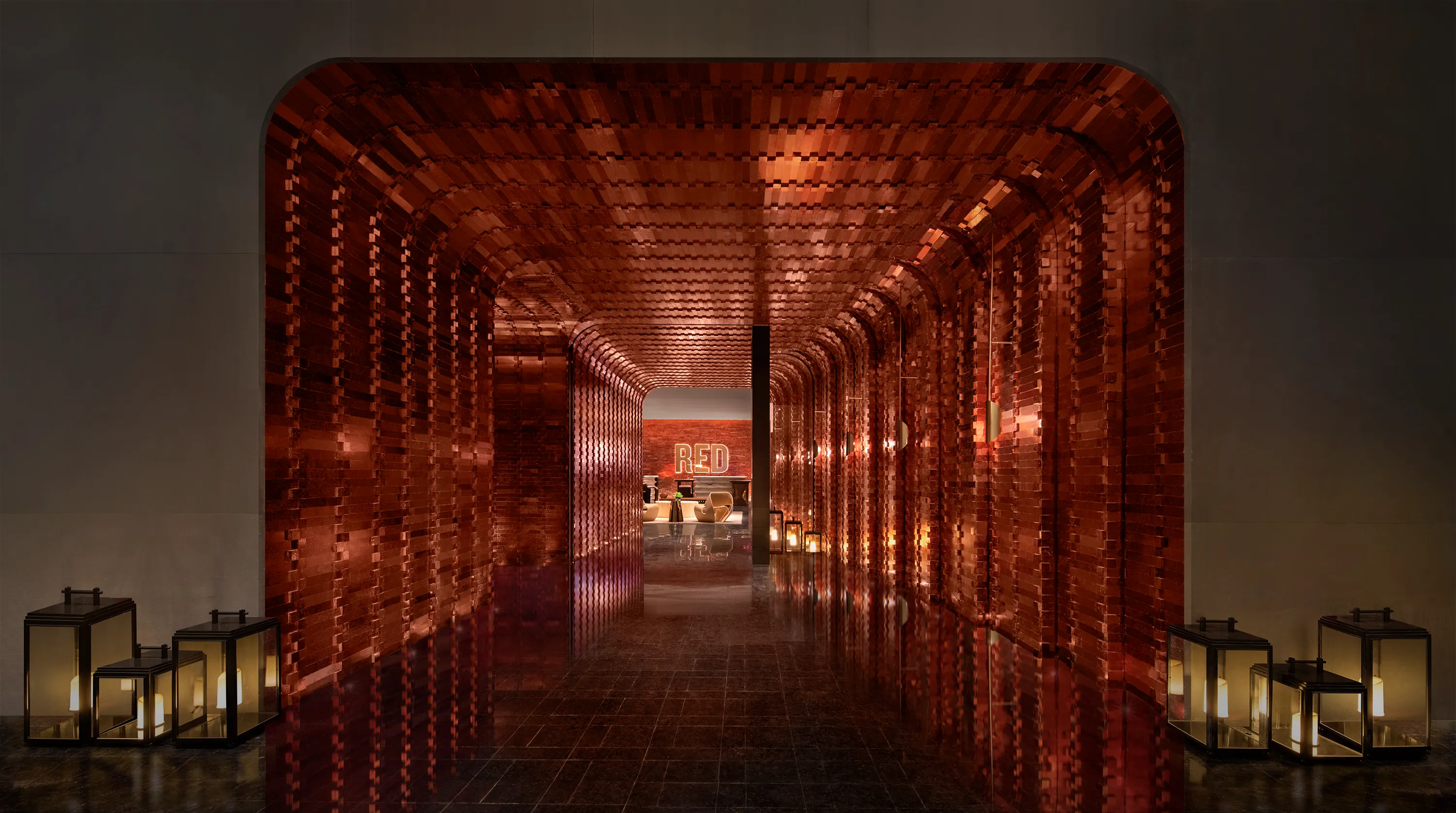
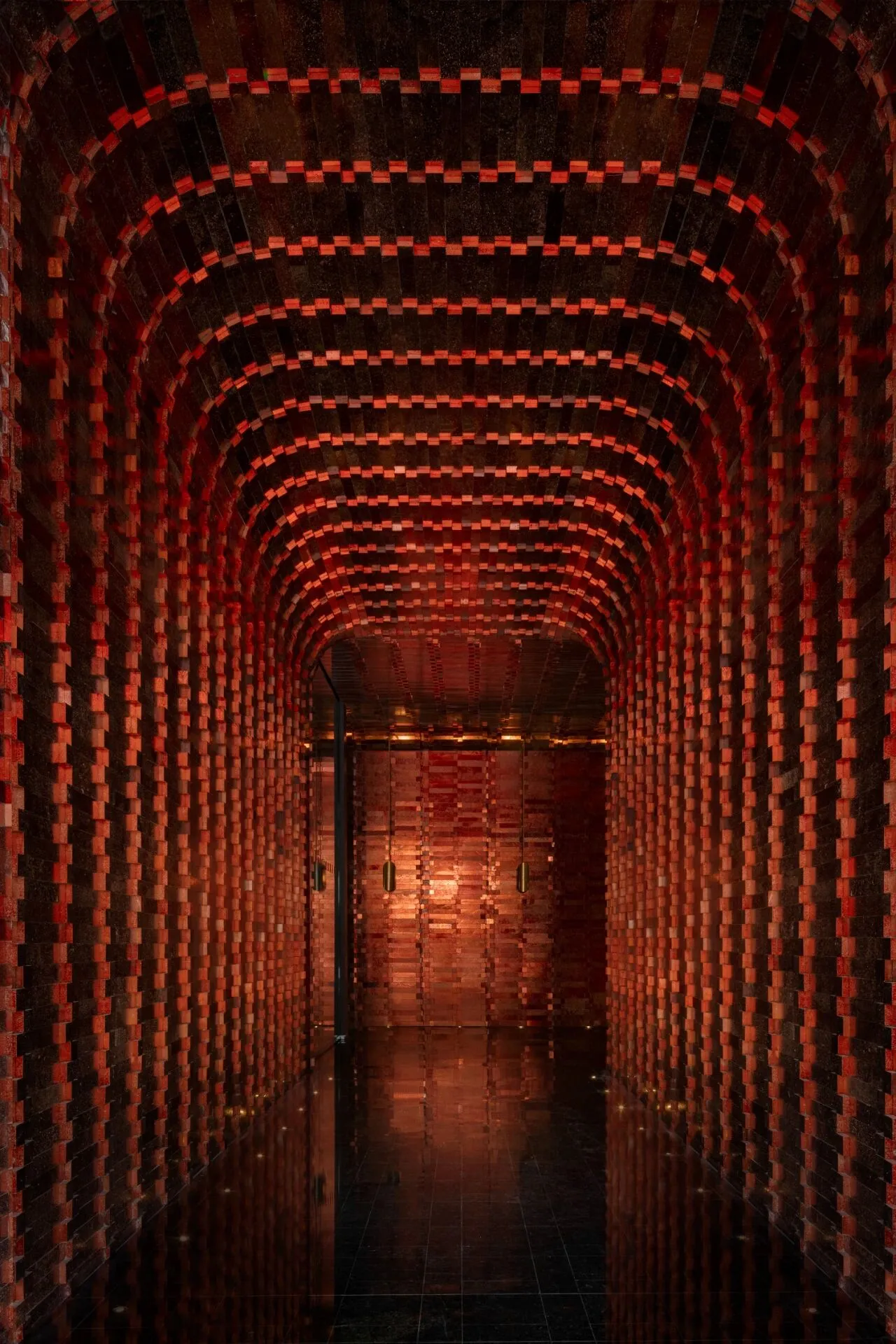
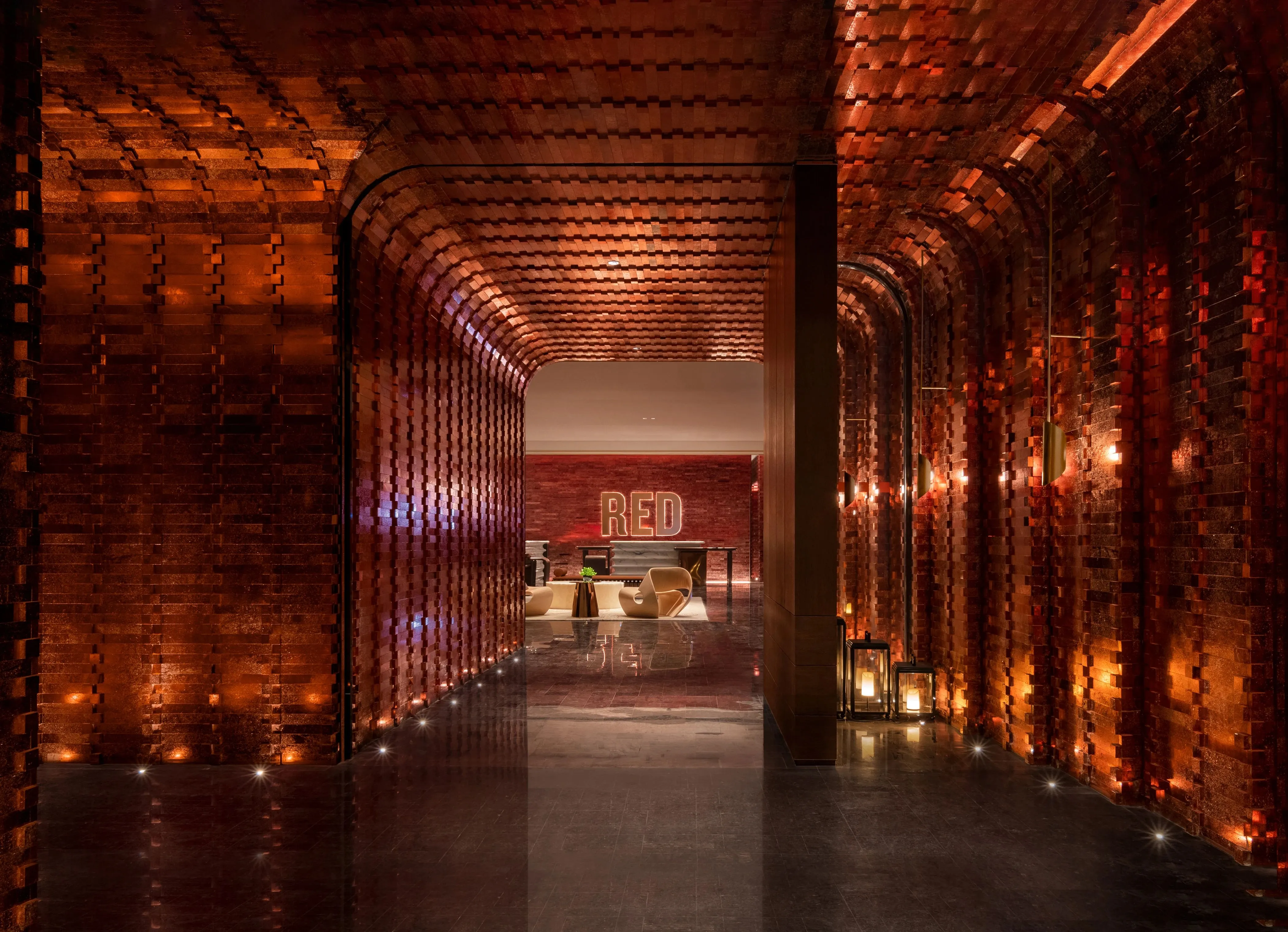
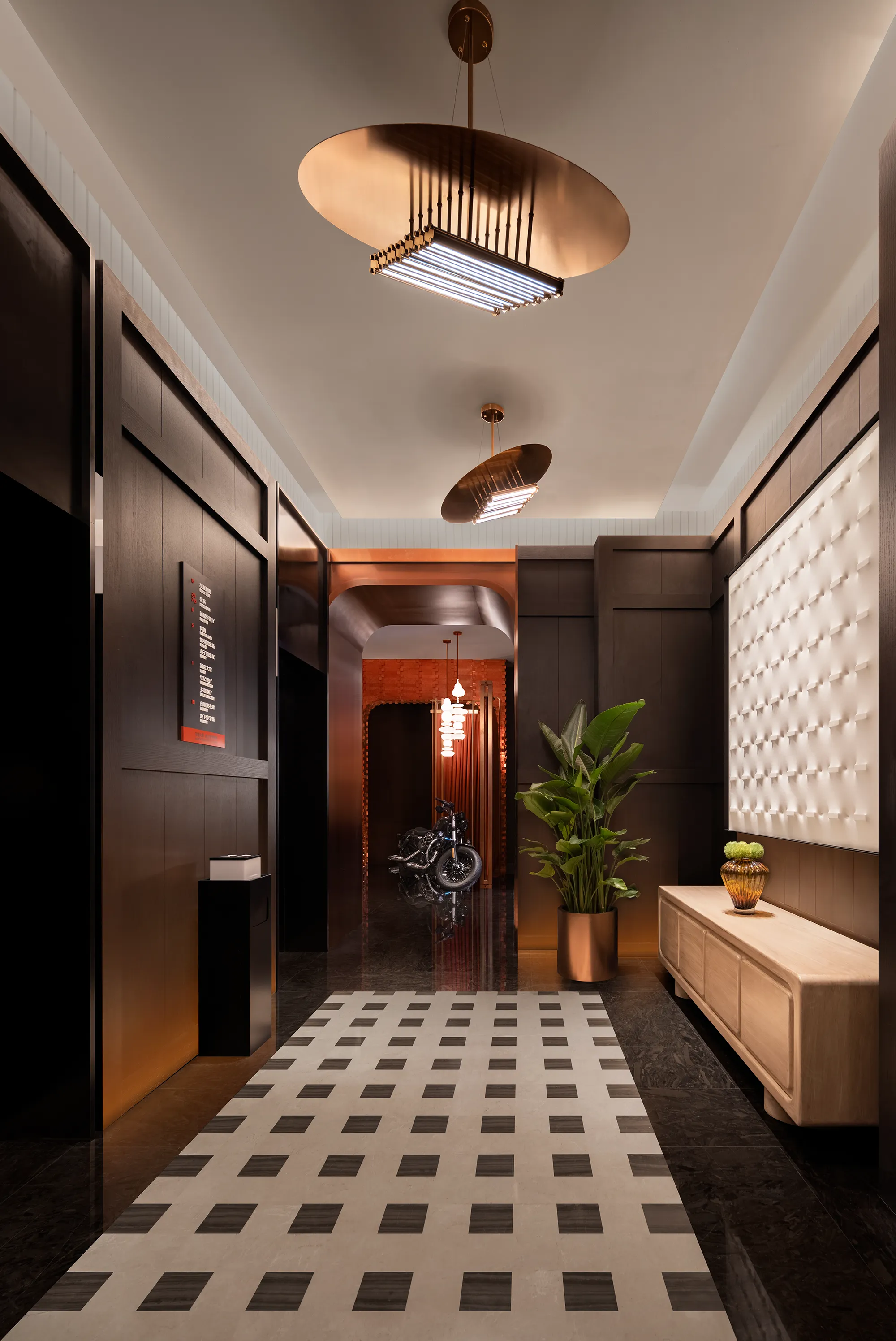
走进东关城门,厚重的城垣和深邃的门洞是城市的守望者,记录着行人的脚步和岁月的流转。序厅红色砖块的凹凸肌理,在明暗交替中形成序列。
Entering the Dongguan city gate, the thick city walls and the gateway arches as the guardians, recording the footsteps of passersby and the passage of time. In the foyer, the red bricks with their undulating textures form a sequence in the interplay of light and shadow.
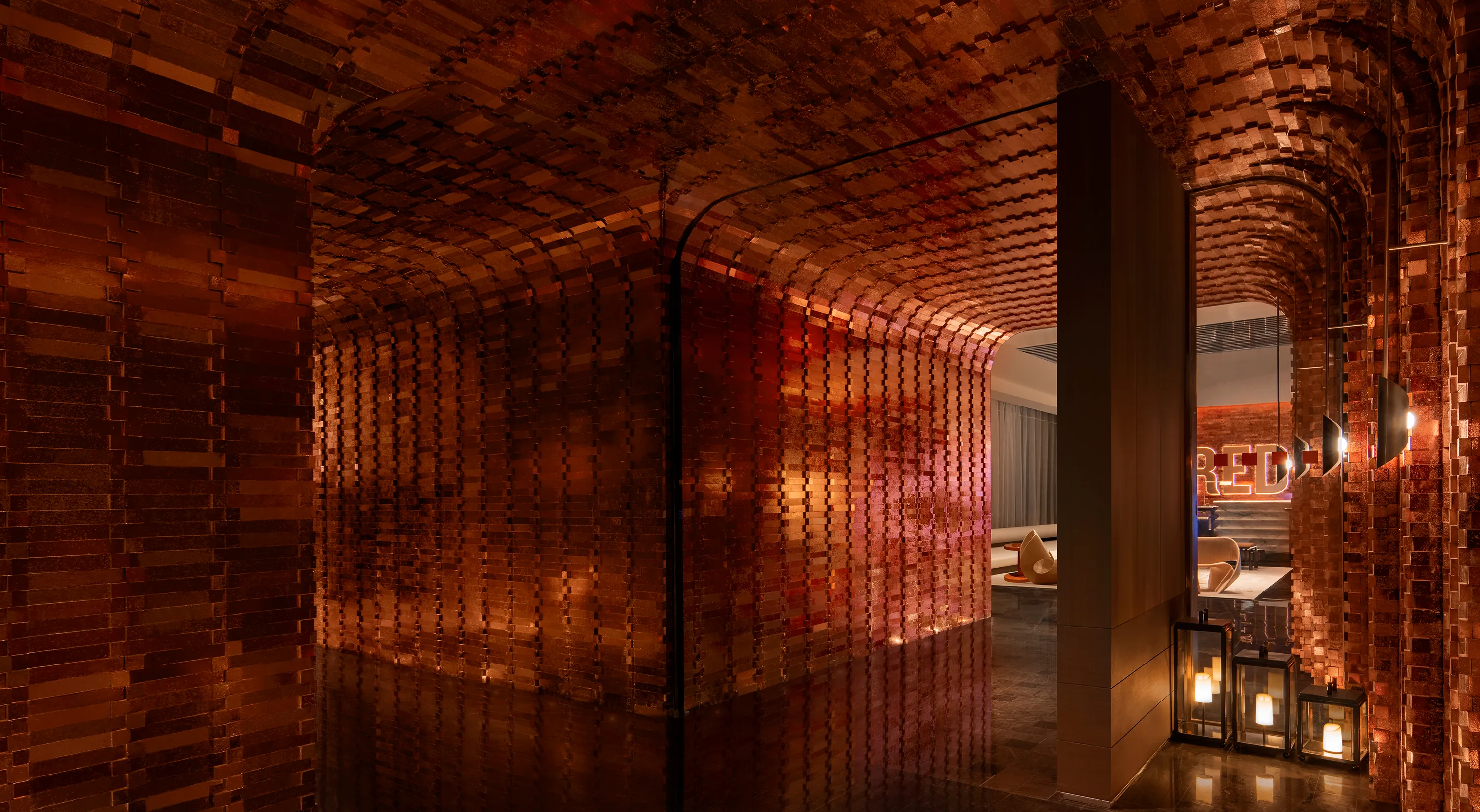
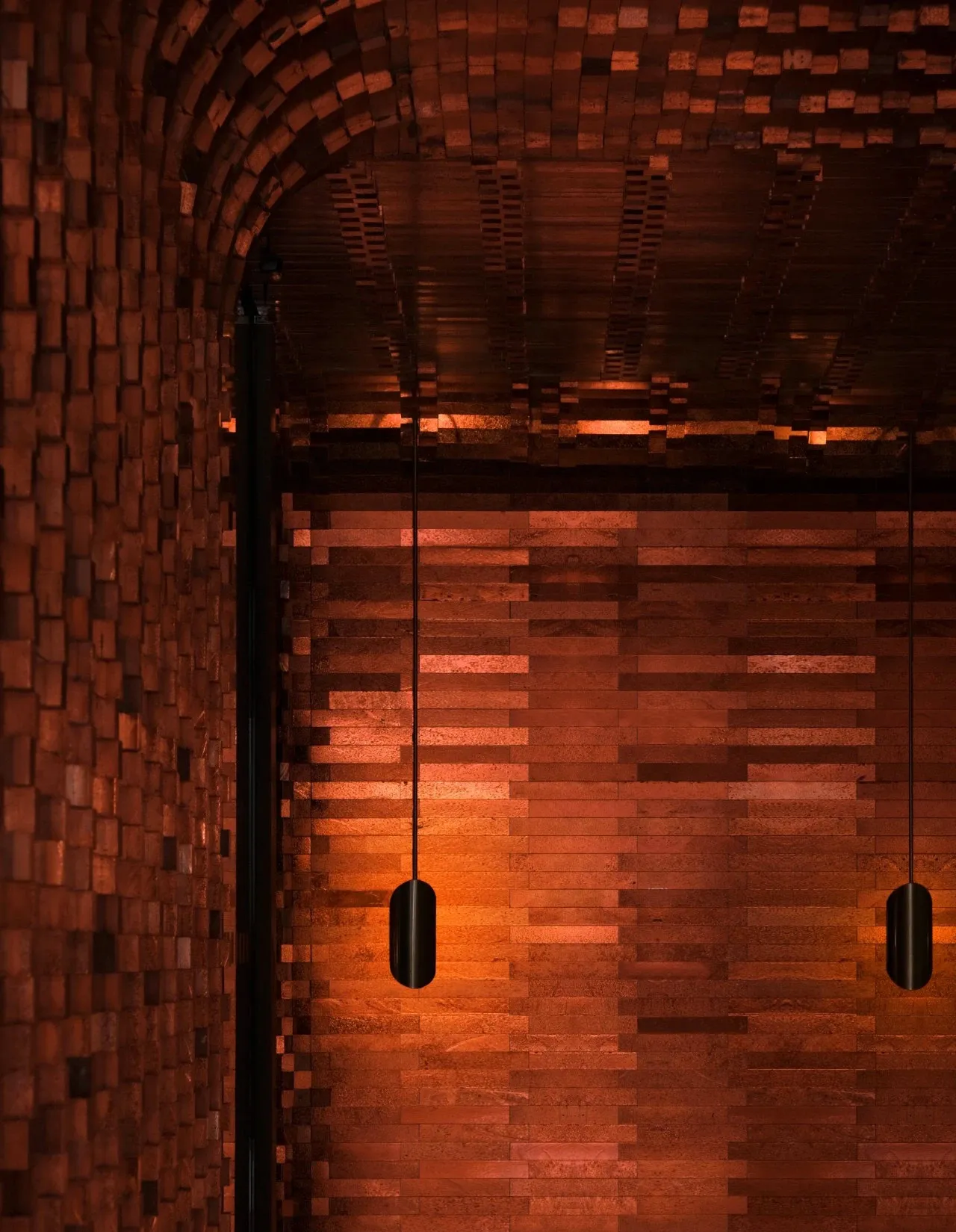
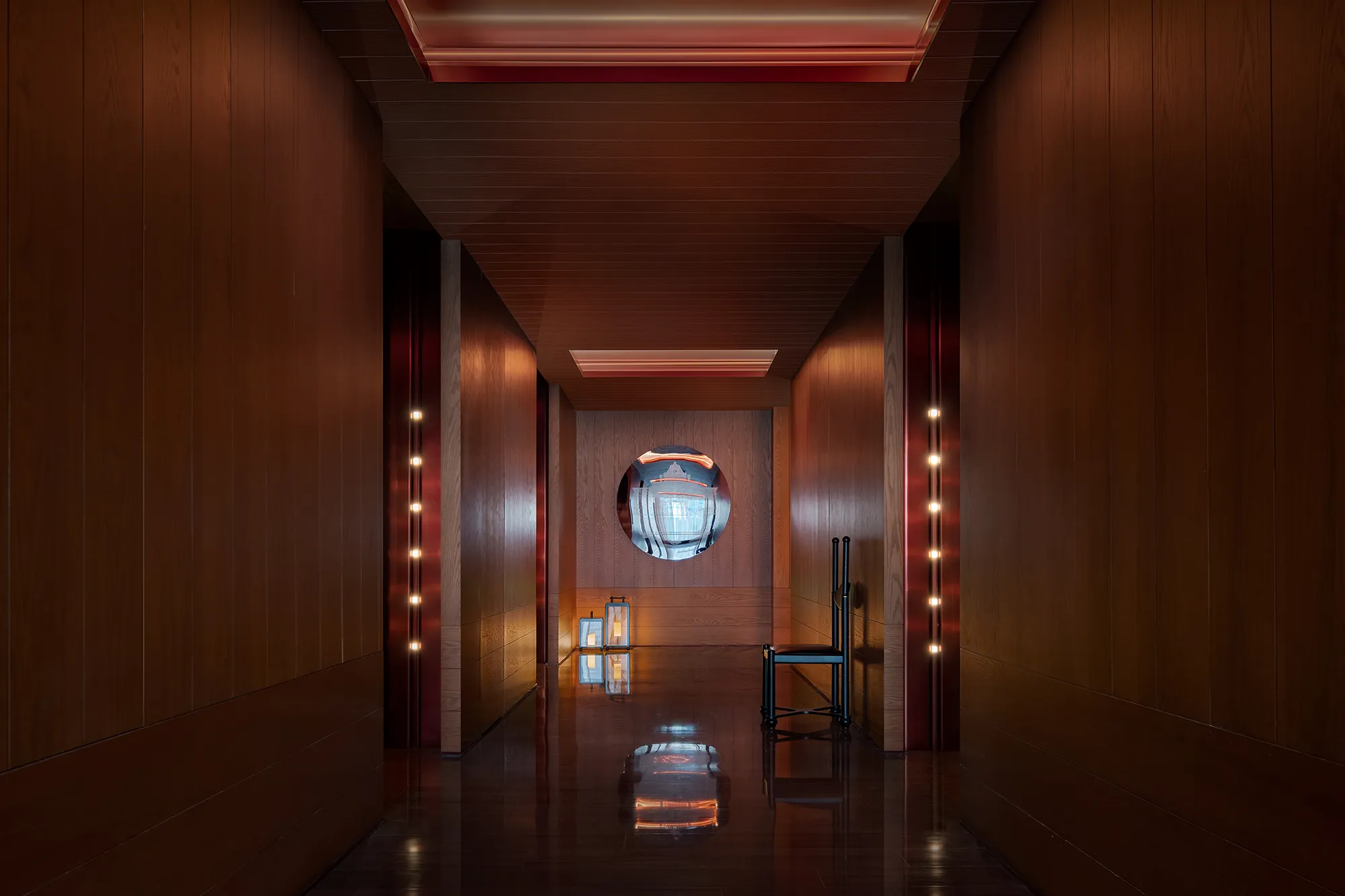
漫步在狭长的通道里,丰富的光影变幻拉开时间的度量,仿佛开启了跨越时空的传送带。
Strolling through the narrow passage, the play of light and shadow stretches time, as if activating a time-traveling conduit.
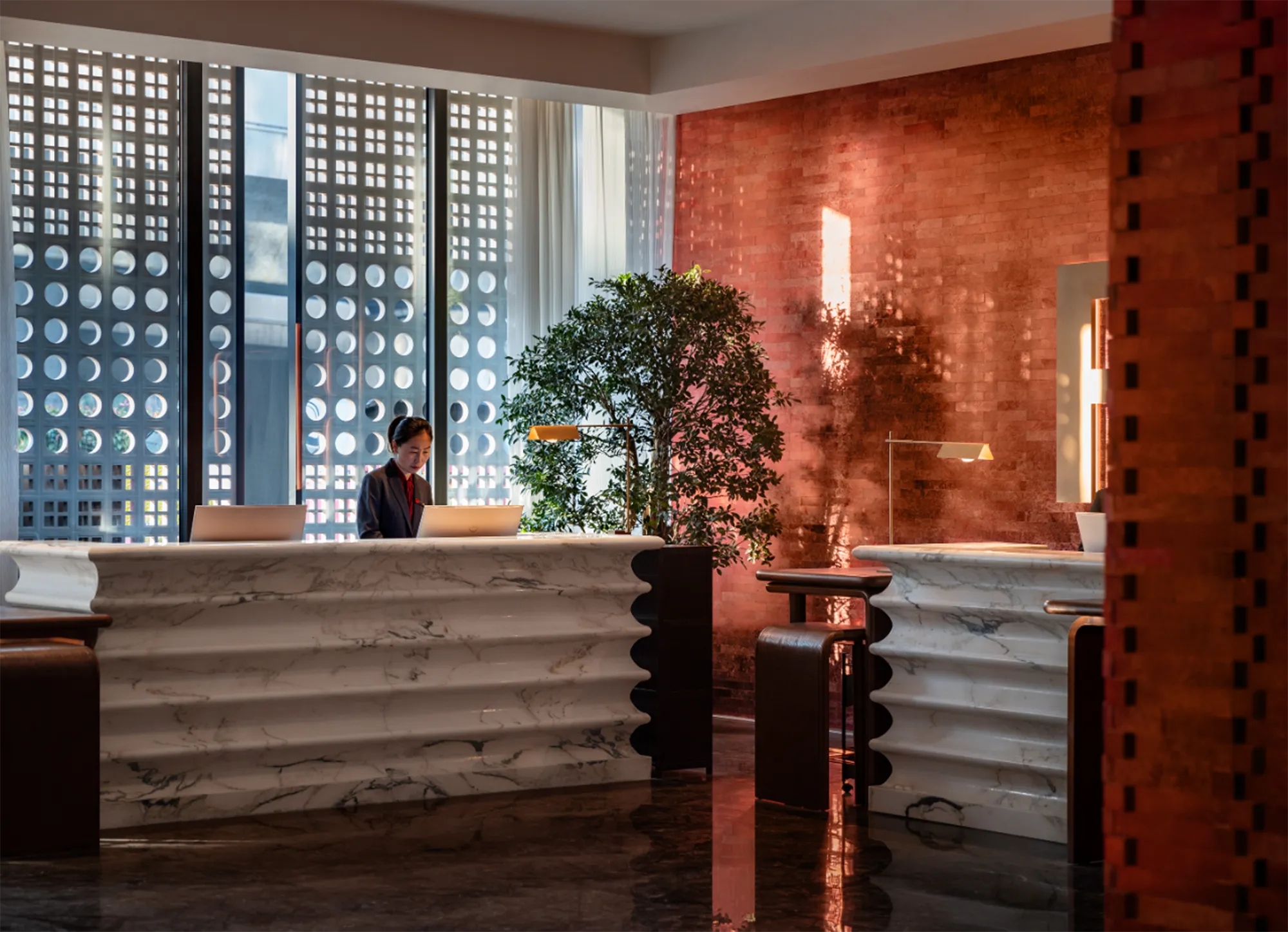
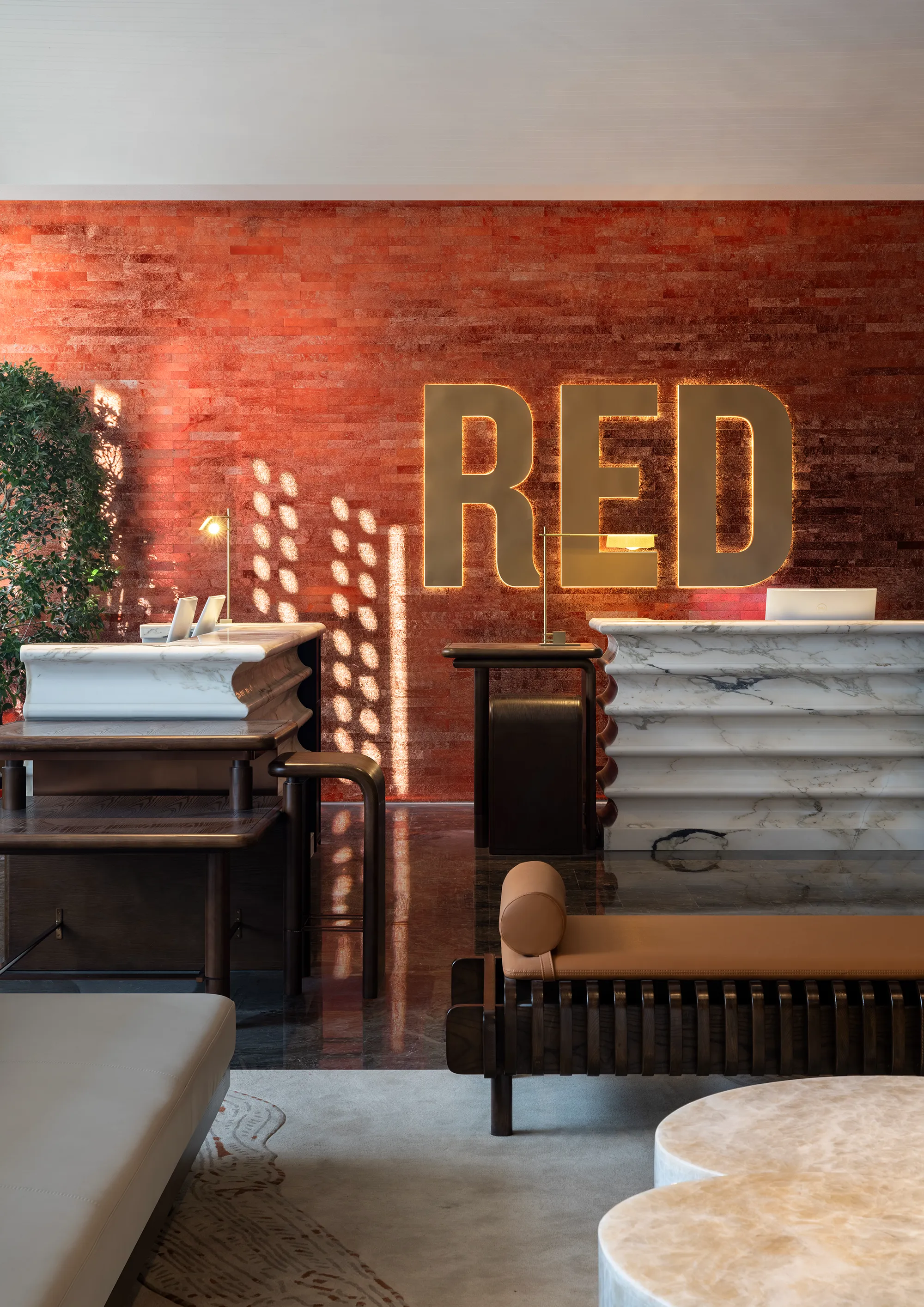
扬州是据盐而起的城市,千年扬州城史,亦是千年中国盐史。一本万利的盐,扬州之繁华可比今日世界之纽约,东关街则是当时全国的商贸中心。穿行过城门洞,商贾辐辏、熙攘热闹的商业气息铺陈在眼前。
Yangzhou, city built on salt, has a history that mirrors the salt industry of China for a thousand years. Once as prosperous as today's New York, Yangzhou's Dongguan Street was the national center of commerce. Passing through the city gates, the bustling atmosphere of trade unfolds before you.
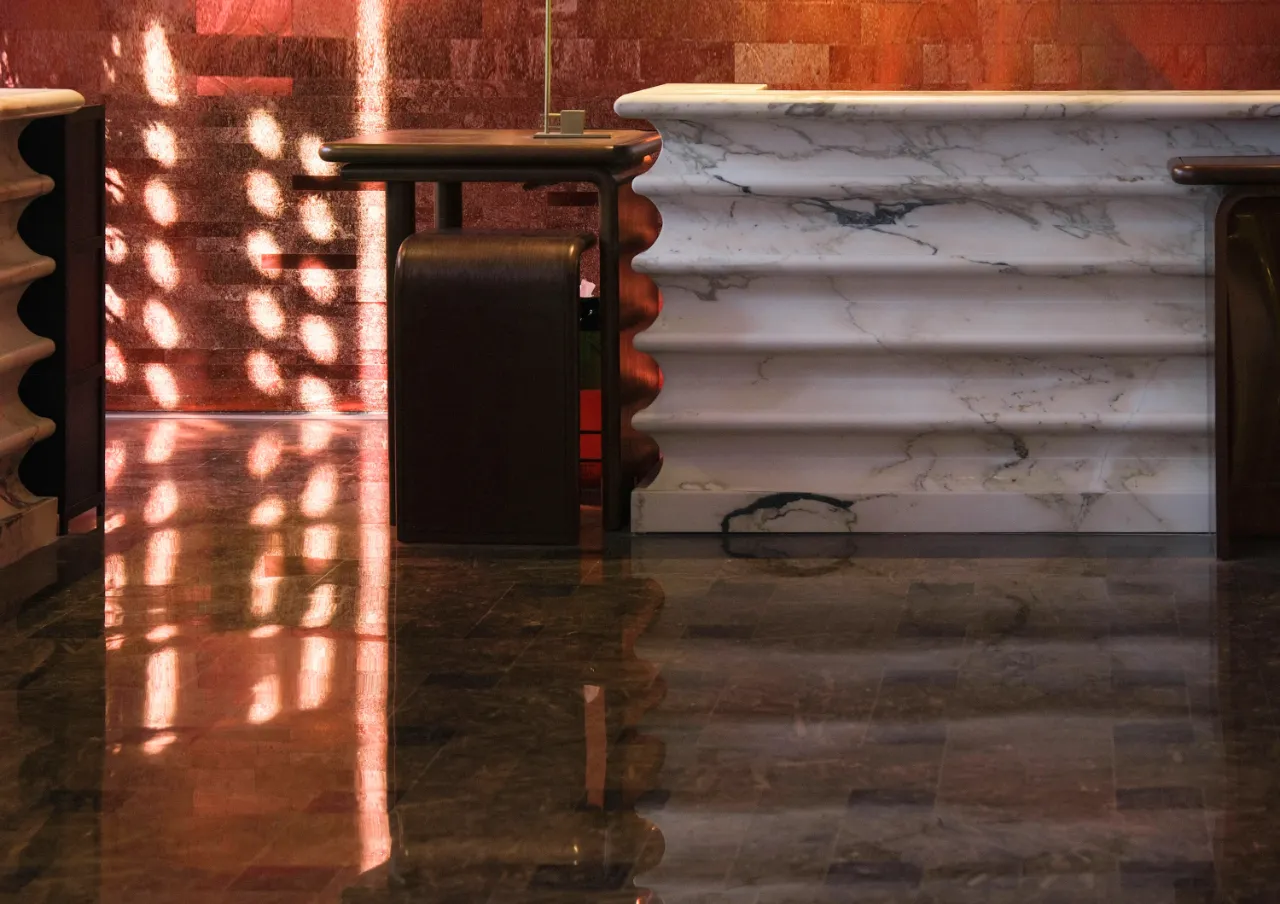
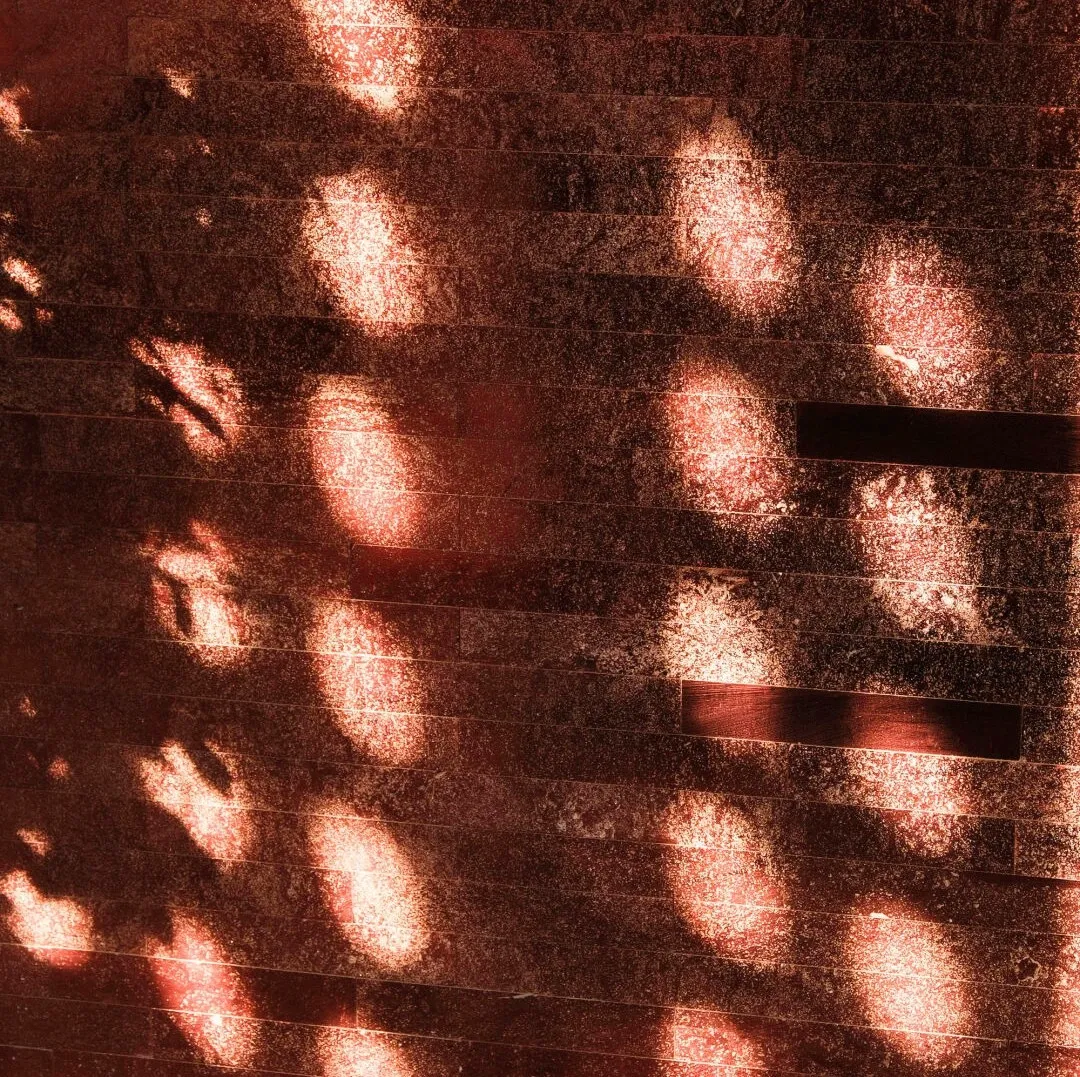
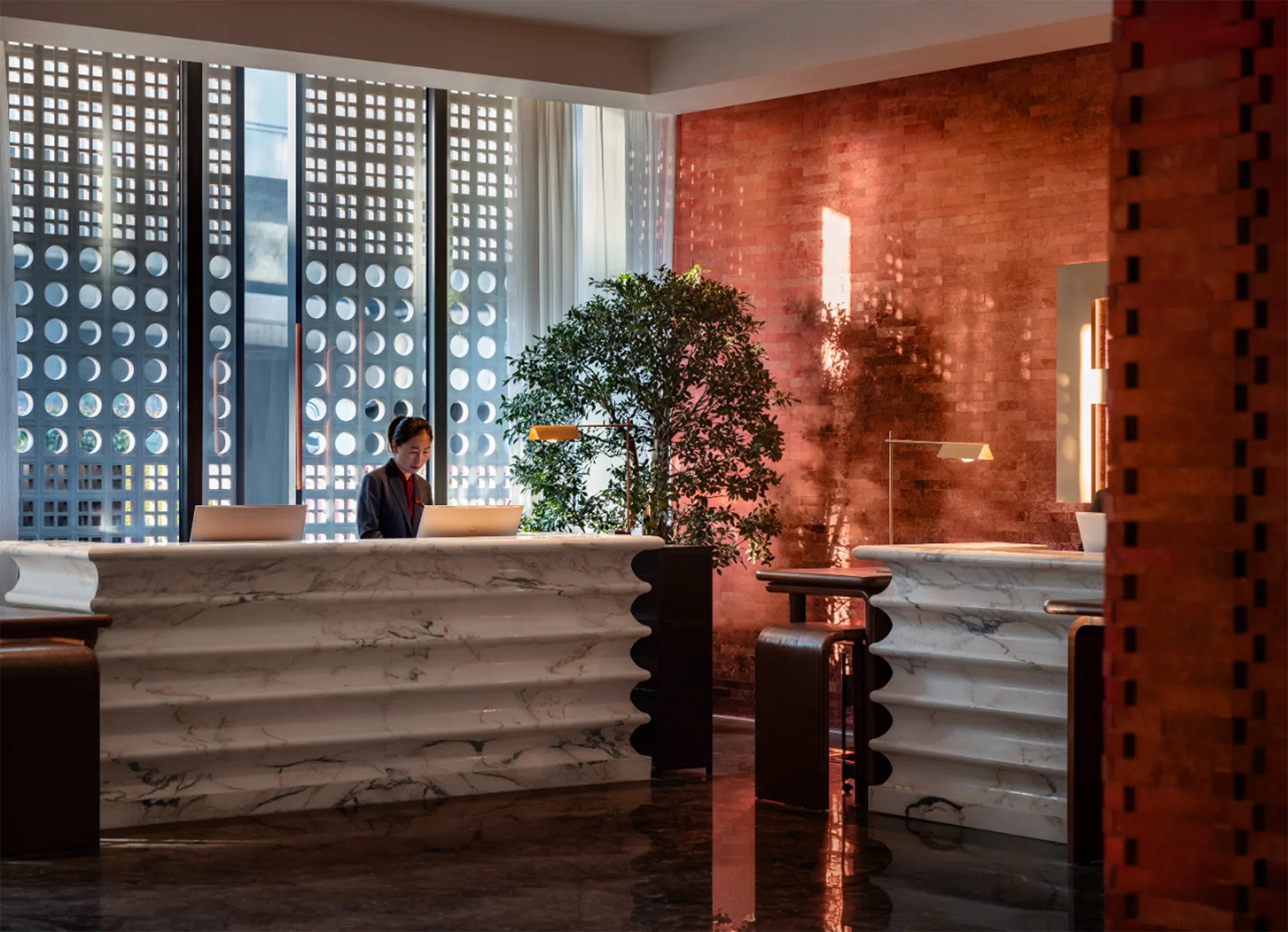
接待前台处,窗格的光影联动连续的拱形,流出五亭桥湖光月色的美景想象,月满时,十五个桥洞各衔一月,金色滉漾……
At the reception, the light and shadow from the window panes form a continuous arch, conjuring images of the lake and moonlight at Wuting Bridge, with each of the fifteen arches reflecting a golden moon on a full moon night.
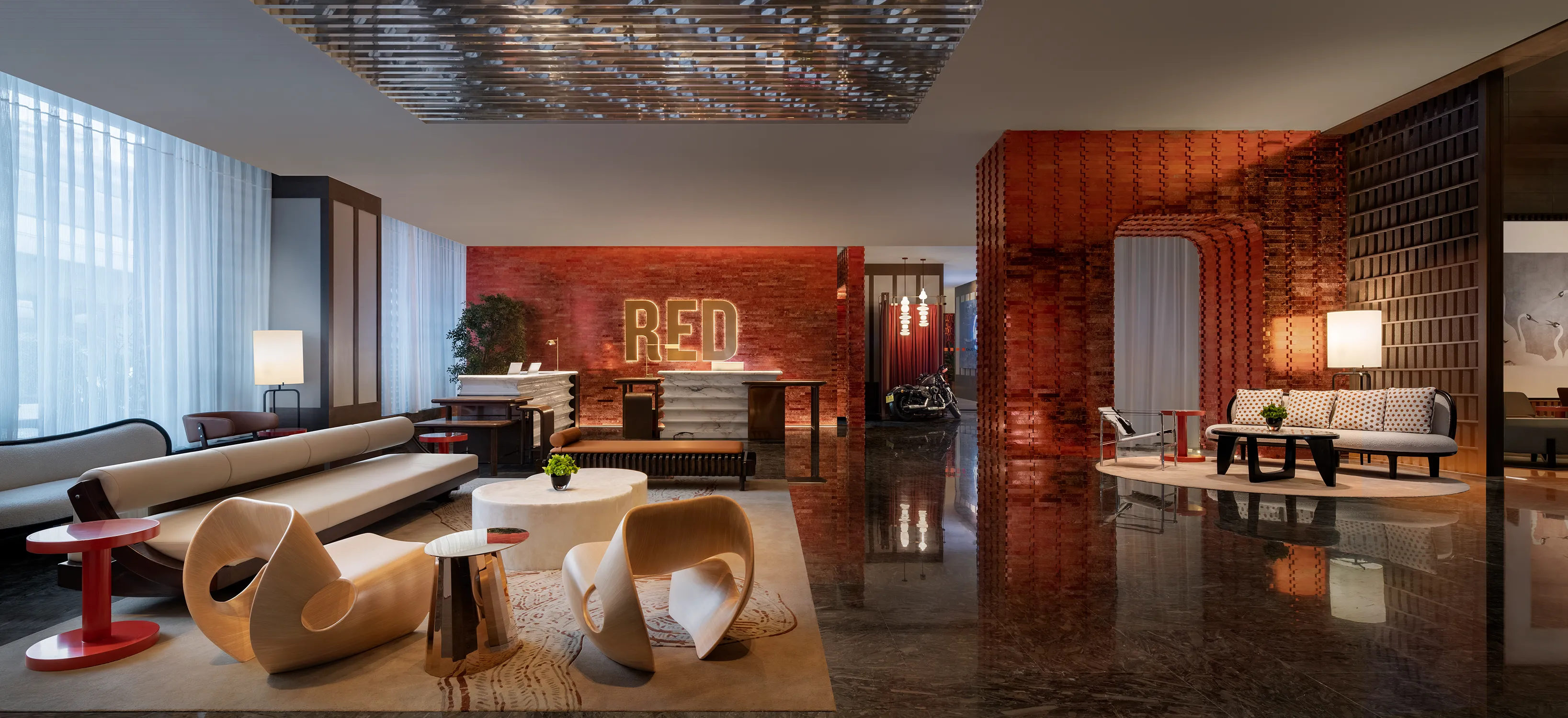
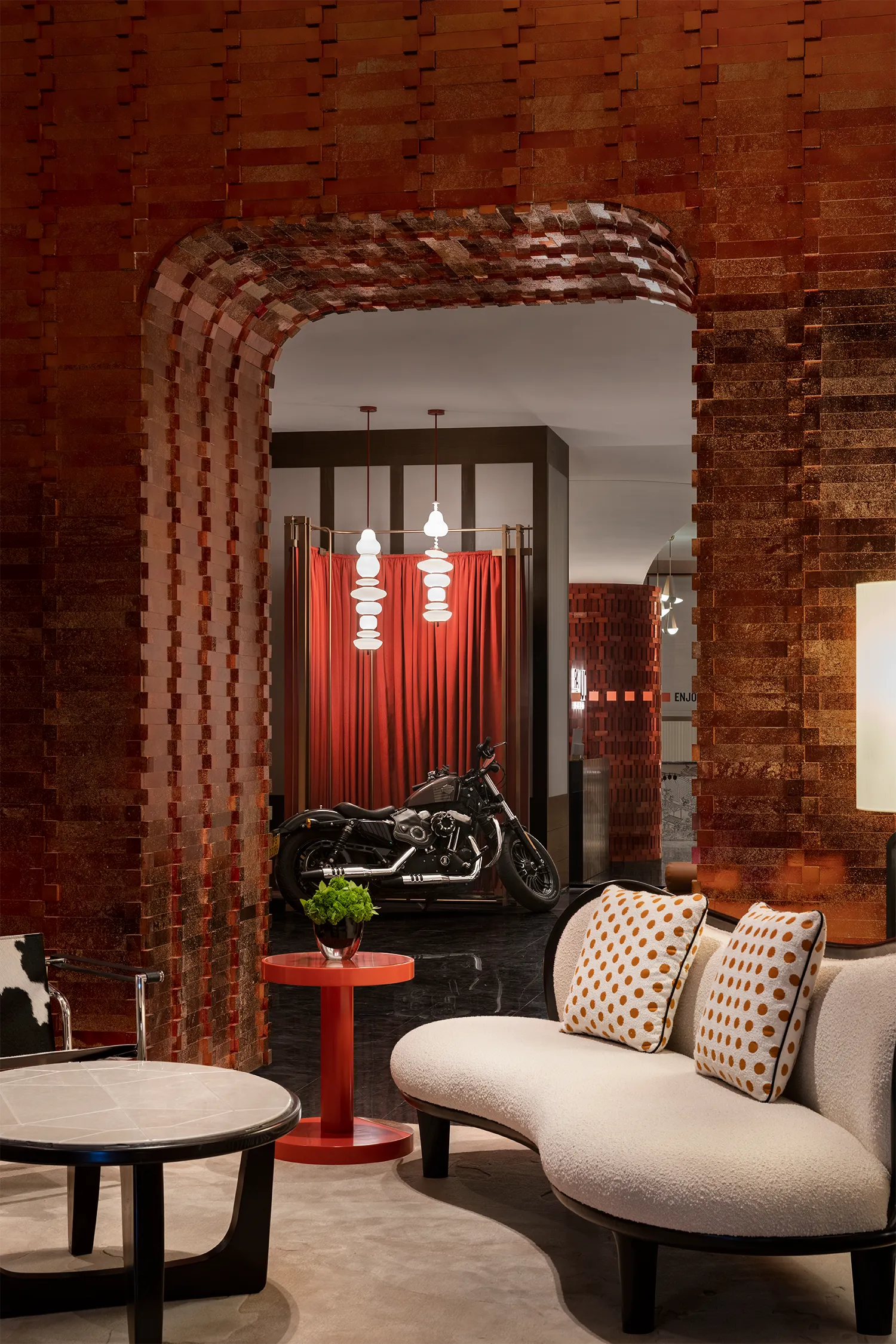
室内规划延续了园林的布局结构,利用拱门隔断与层高差异,将各个空间柔和地分隔开来。在虚与实、疏与密、藏与显的转换中,将不同的单体场景动线串联起来,同时为个场景留出独立的功能区域,满足住客不同的场景使用需求。
The interior planning continues the layout structure of the garden, using arched partitions and differences in ceiling height to gently separate various spaces. In the transition between the virtual and the solid, the sparse and the dense, and the hidden and the revealed, it connects different individual sceneries with their own circulation routes, while also reserving independent functional areas for single-line scenes to meet the diverse scene usage needs of the guests.

THE ORIGIN: HAN GOU CANAL
开端:邗沟运河
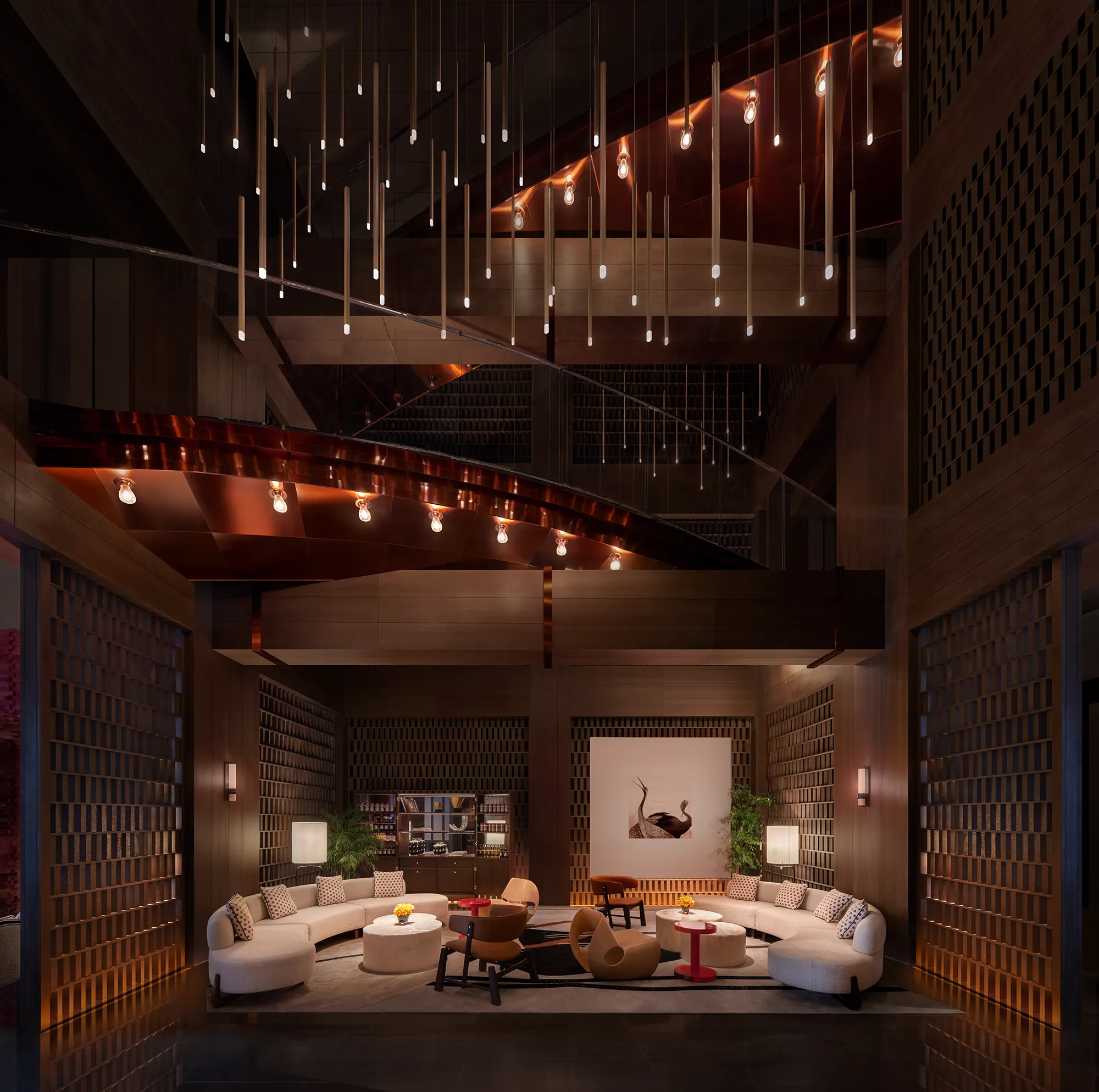
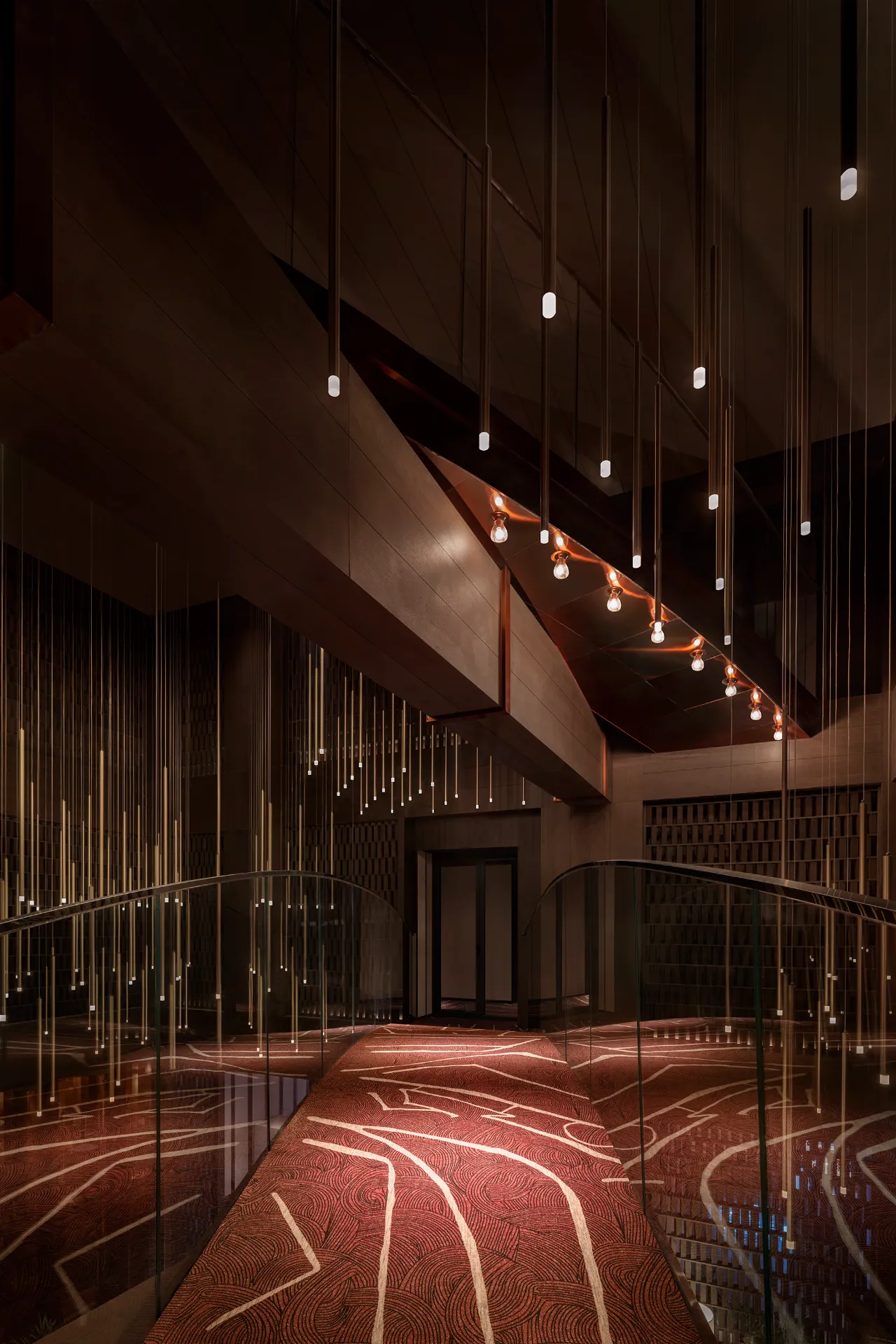
大堂吧以围墙构筑起繁盛古城的多情夜色,改造原建筑结构,形成三层挑空。于梁上搭架桥梁,连接起二三层左右两侧的行人动线,灯体流坠,游走在桥上,陷入一场李绅笔下“夜桥灯火连星汉,水郭帆樯近斗牛”的阔大与繁华之境。
The lobby bar, with its walls, captures the romantic nights of the ancient city, transforming the original structure into a three-story open space. A bridge is built on the beams, connecting the pedestrian routes on the second and third floors, with hanging lights creating an illusion of grandeur and prosperity, as if stepping into the scene described by Li Shen: "lights on night bridge connecting the Milky Way, waterside city and sails are near the stars".
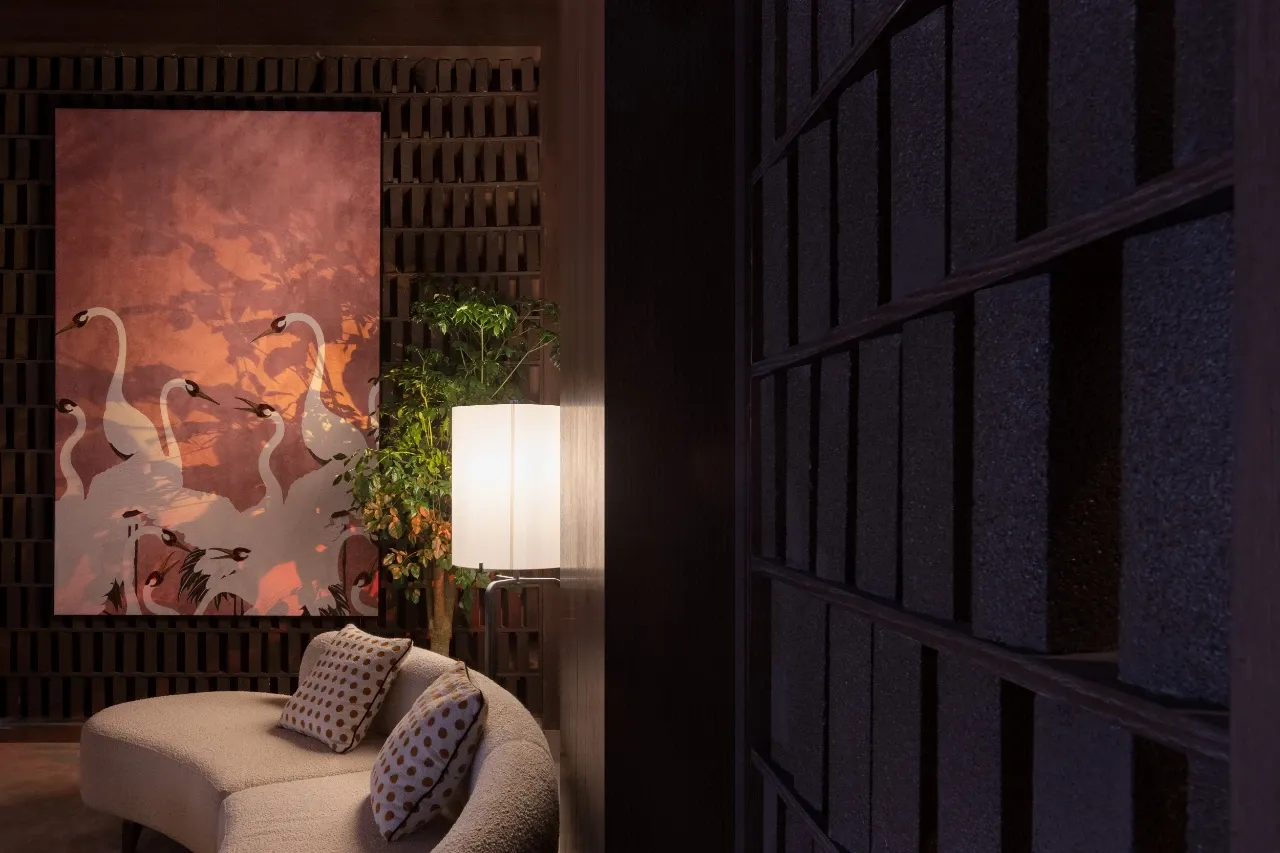
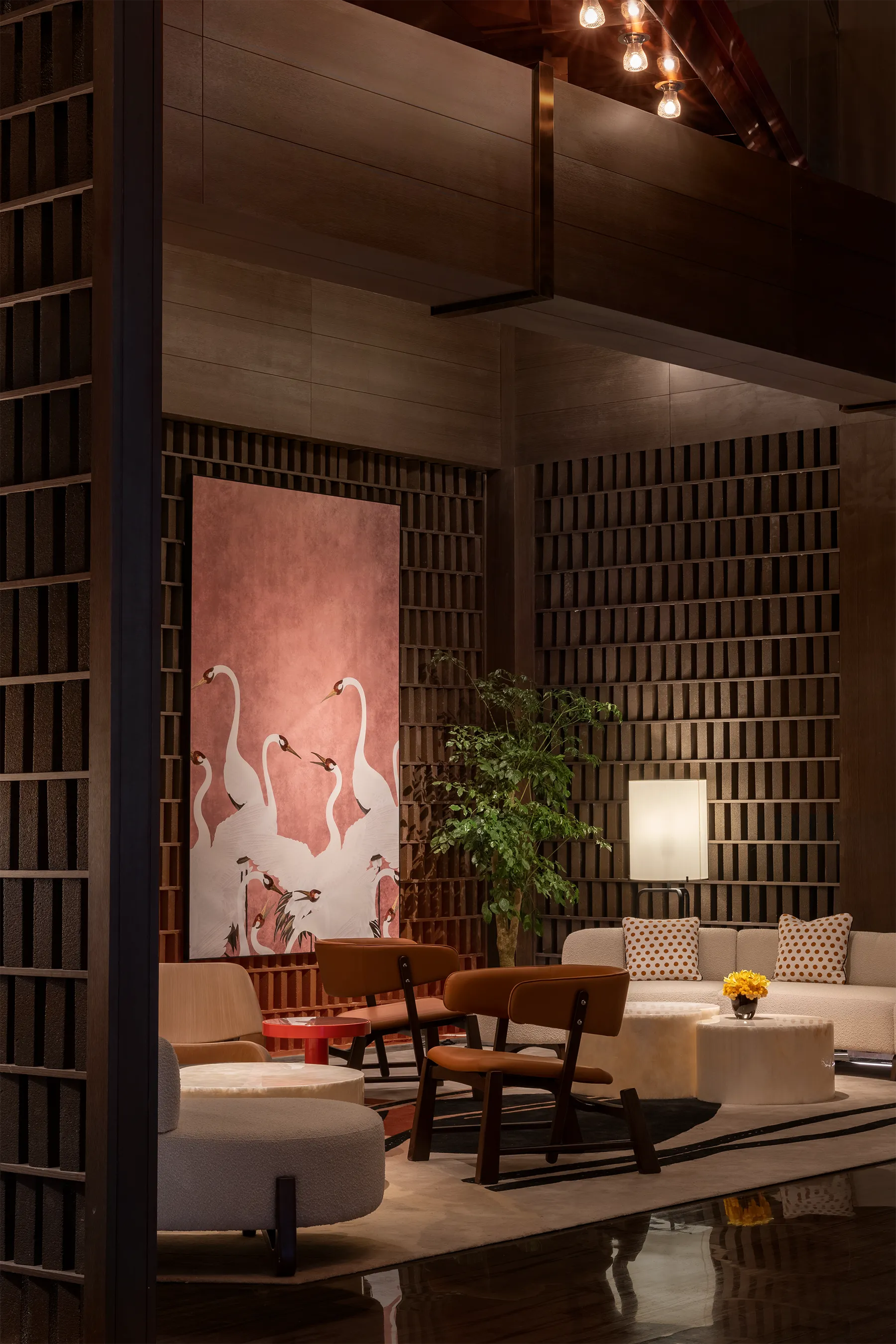
围合的花式砖墙形成相对幽静的空间,镂空的墙体隔而不断,借调而来的大堂空间带来流动的景致,在高阔空间中构筑出私密自在的舒适性。
The enclosed patterned brick walls create a relatively quiet space, with the hollowed-out walls separating yet not cutting off, bringing a dynamic view from the lobby and creating a cozy privacy in the expansive area.
因运河而生,亦因运河而兴。2500多年前,吴王夫差开凿邗沟,一锹土,打开了古城扬州繁华昌盛的大门,但一个城市的结局早在它的兴起之初就已埋下伏笔,它的未来往往是高山低谷交替循环。
The city was born and prospered due to the canal. Over 2,500 years ago, King Fuchai of Wu excavated the Han River and opened the door to prosperity for the ancient city of Yangzhou with a shovel of soil. However, the fate of a city was already foreshadowed at the beginning of its rise, and its future is often a cycle of highs and lows.
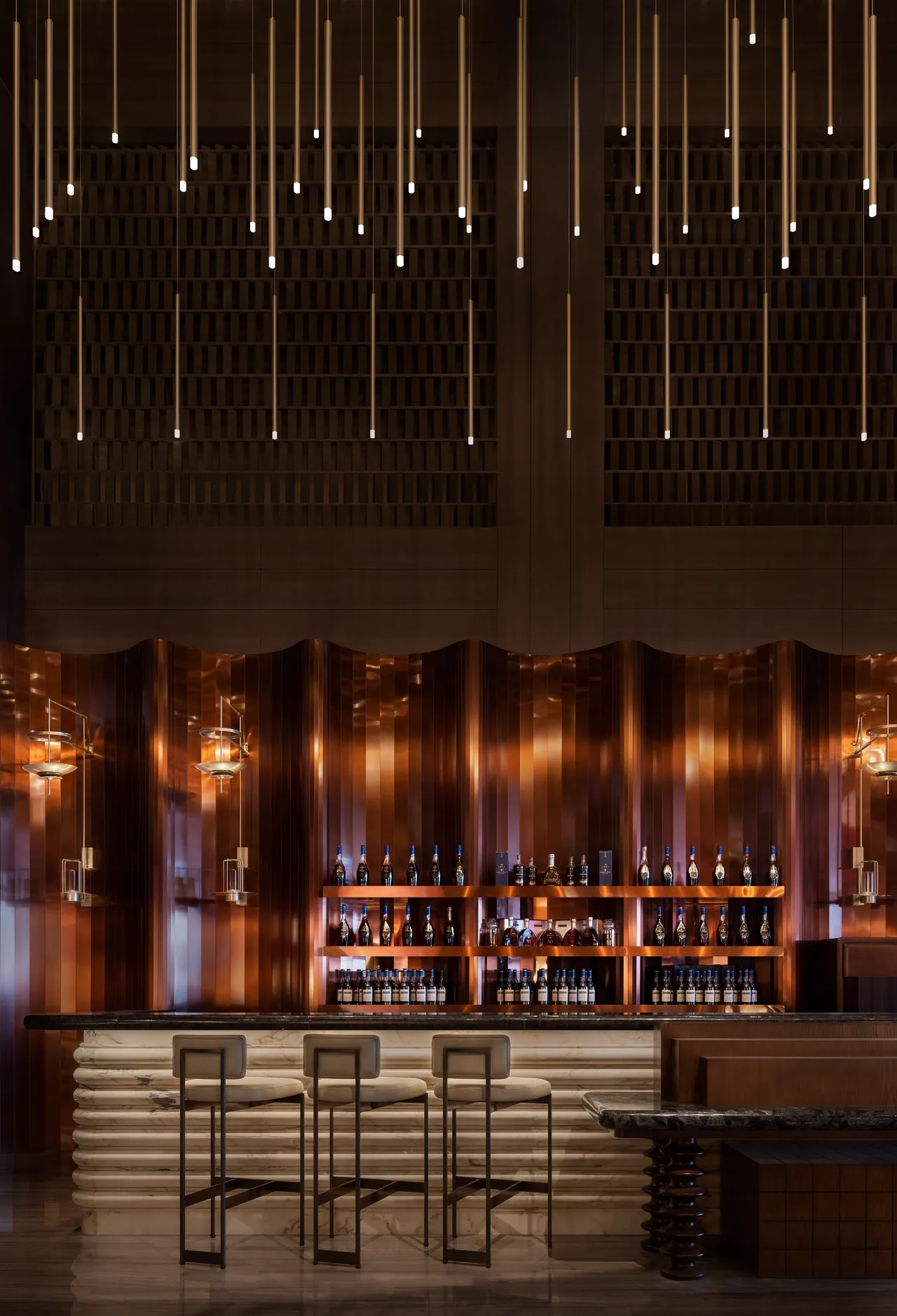
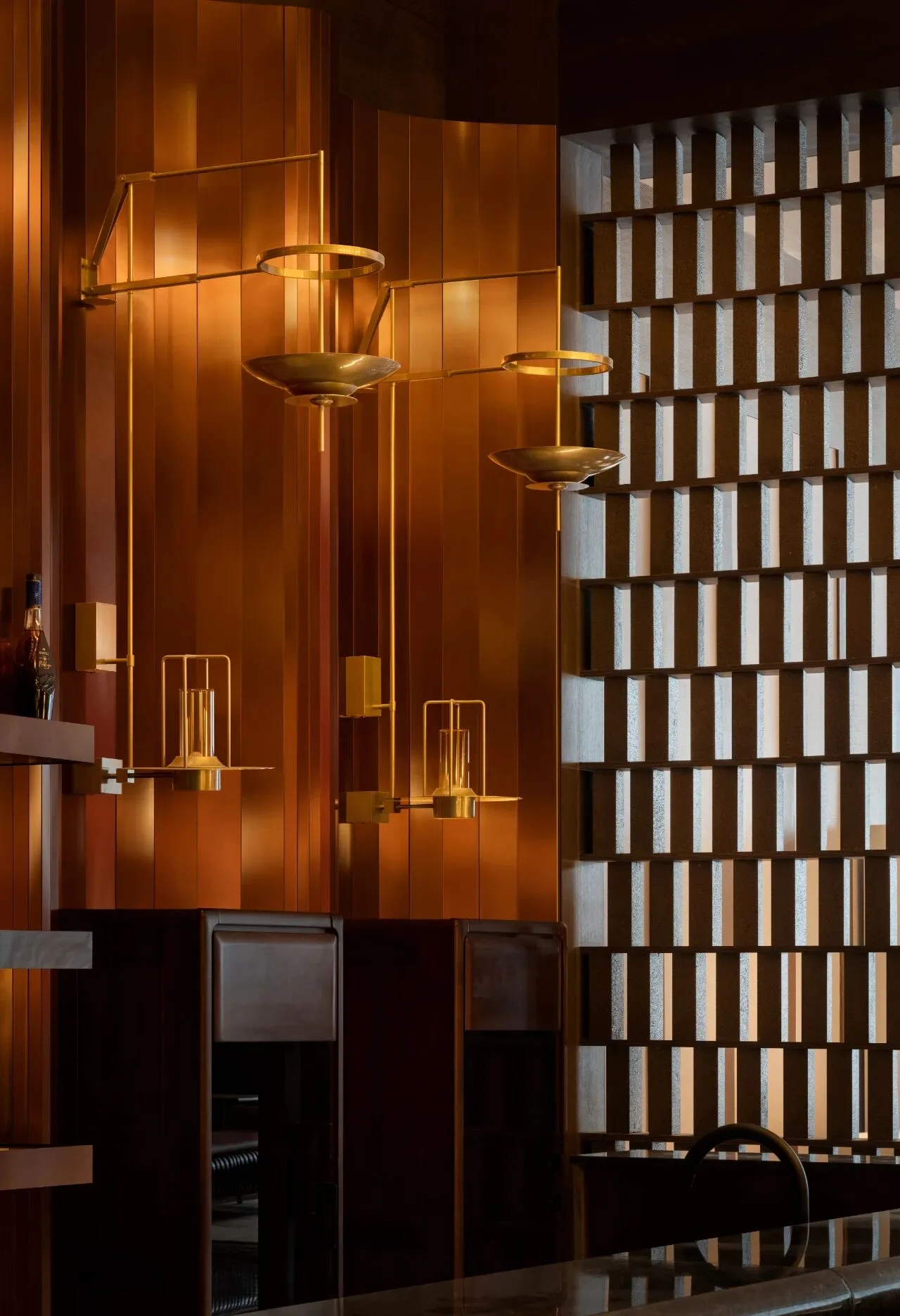
宾客休憩小酌的吧台区,金属墙背板通过曲线的演变打开运河的历史卷轴,灯具勾勒出船只的形态,留下粼粼的波光。千里运河,迤逦穿行,运河文化与惬意的生活气息相交融合,古老与新生相辉相映。
In the bar area for guests to relax and have a drink, the metal wall backboard opens up the historical scroll of the canal through the evolution of curves, and the lamps outline the shape of ships, leaving behind sparkling waves. The thousand mile canal meanders through, blending canal culture with a comfortable lifestyle, integrating the ancient and the new.
城市的壮丽不会永恒,但它的平静却是最深沉的祝福,仿佛与大地达成了一种和解。随着时代的发展,铁路与海运把古老的漕运甩在时代的后面,不到三代人的时间,盛世逐渐没落。被日新月异的时代震得手足无措的扬州城,停下了脚步重新凝视自己的家园,重新打理,守好旧堂故巷,做好三时三餐。
The magnificence of a city may not last forever, but its tranquility is the deepest blessing, as if it has reached a reconciliation with the earth. With the development of the times, railways and shipping have left the ancient water transportation behind, and in less than three generations, the prosperous era gradually declined. The city of Yangzhou, shaken by the ever-changing times, pauses and looks back at its homeland, takes care of it again, guards its old halls and alleys, and dutifully prepares the three meals every day.

PHILOSOPHICAL LIFESTYLE: DRINK SOME TEA
生活的哲学:茶肆品茗
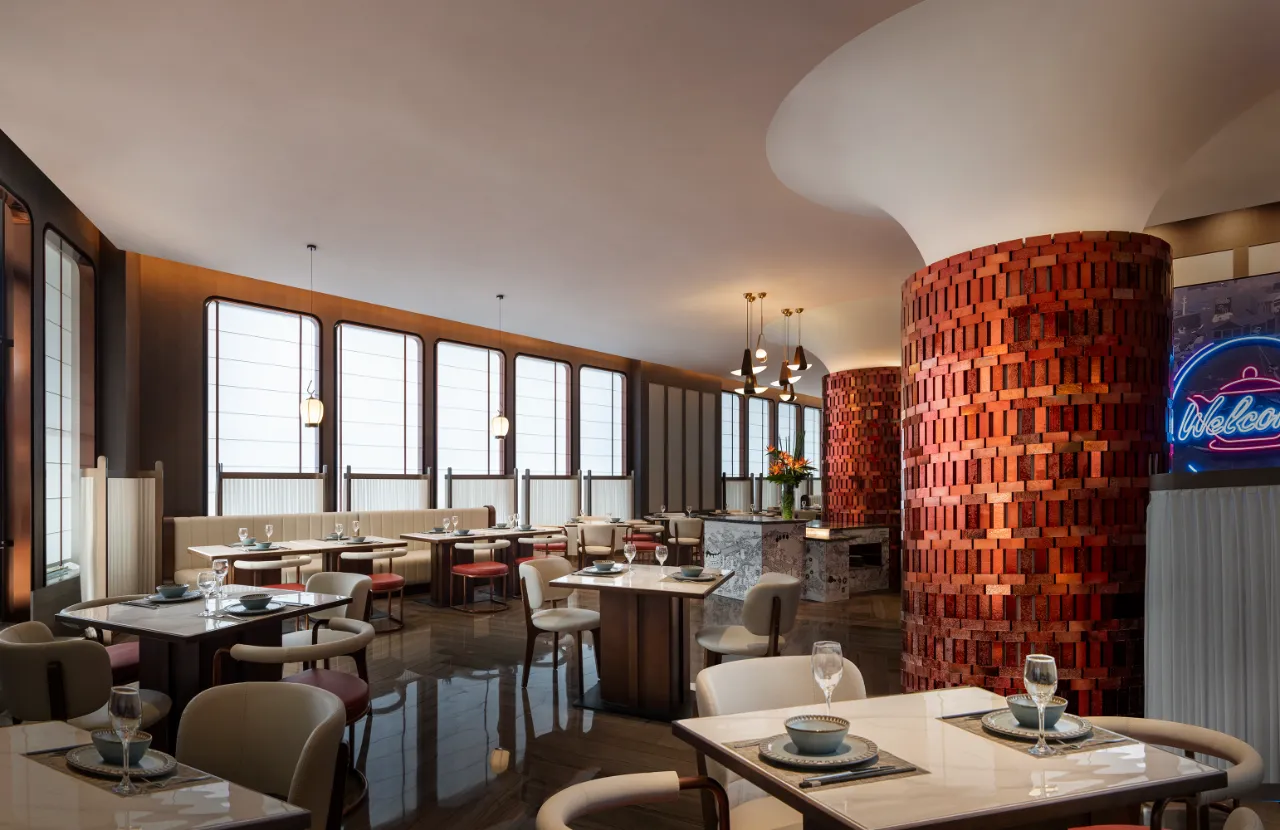
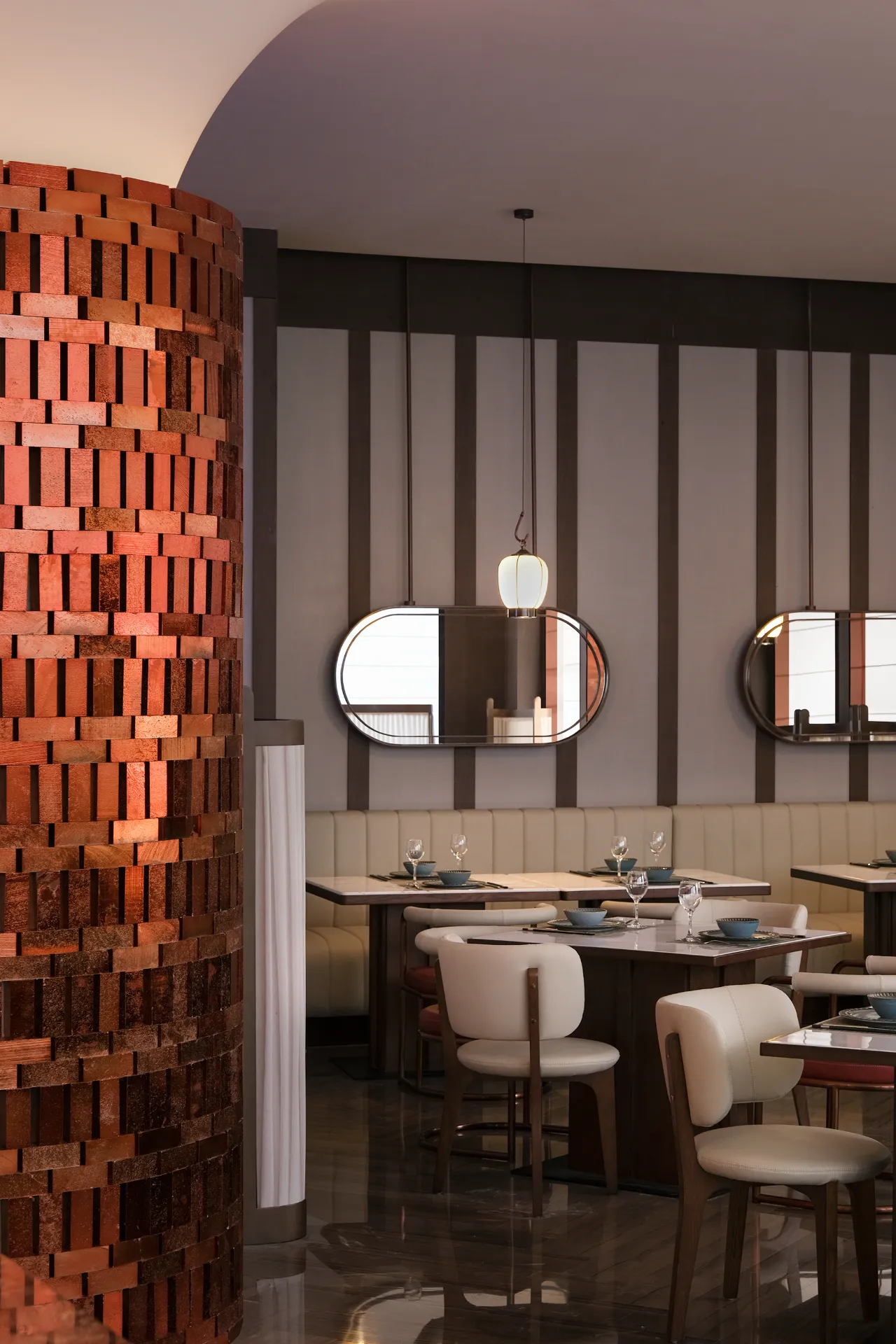
因运河发家致富的盐商不仅为扬州留下了诸多繁盛风雅,其对生活极致享受的追求也一直延续至今。餐厅是茶肆品茗的趣园,灵活的布局与柱体的遮掩形成弯绕的路径,让食客有如乘画舫出红桥,穿水湾,绕小岛蜿蜒而行的游园雅趣。
Salt merchants, enriched by the canal, have left Yangzhou with prosperity and a passion for life's finest joys. The restaurant, a delightful garden for tea tasting, features flexible layouts and columnar screens that create winding paths, giving diners the feeling of riding a painted boat out of Red Bridge, through water bays, and around small islands, meandering along with the refined interest of a garden tour.
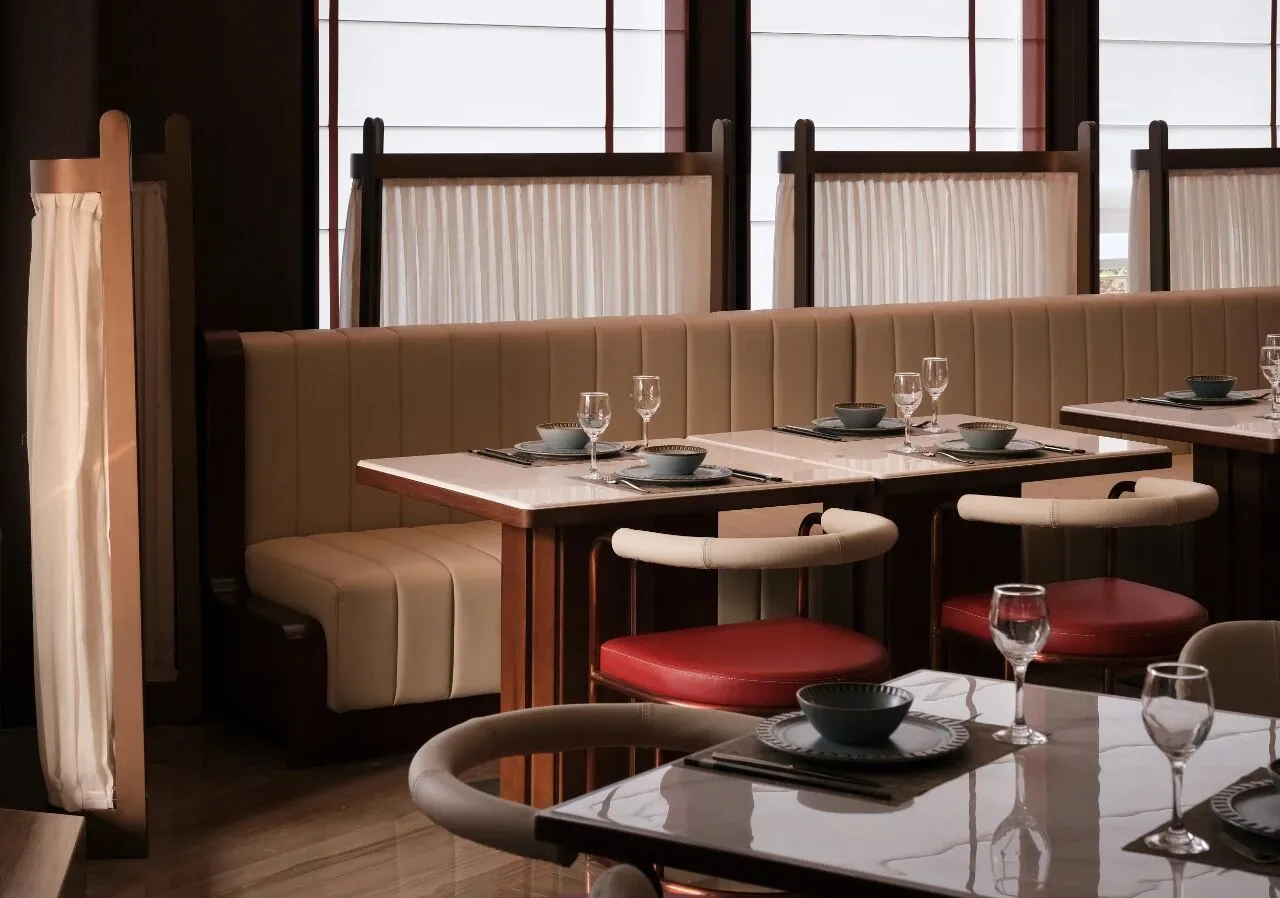
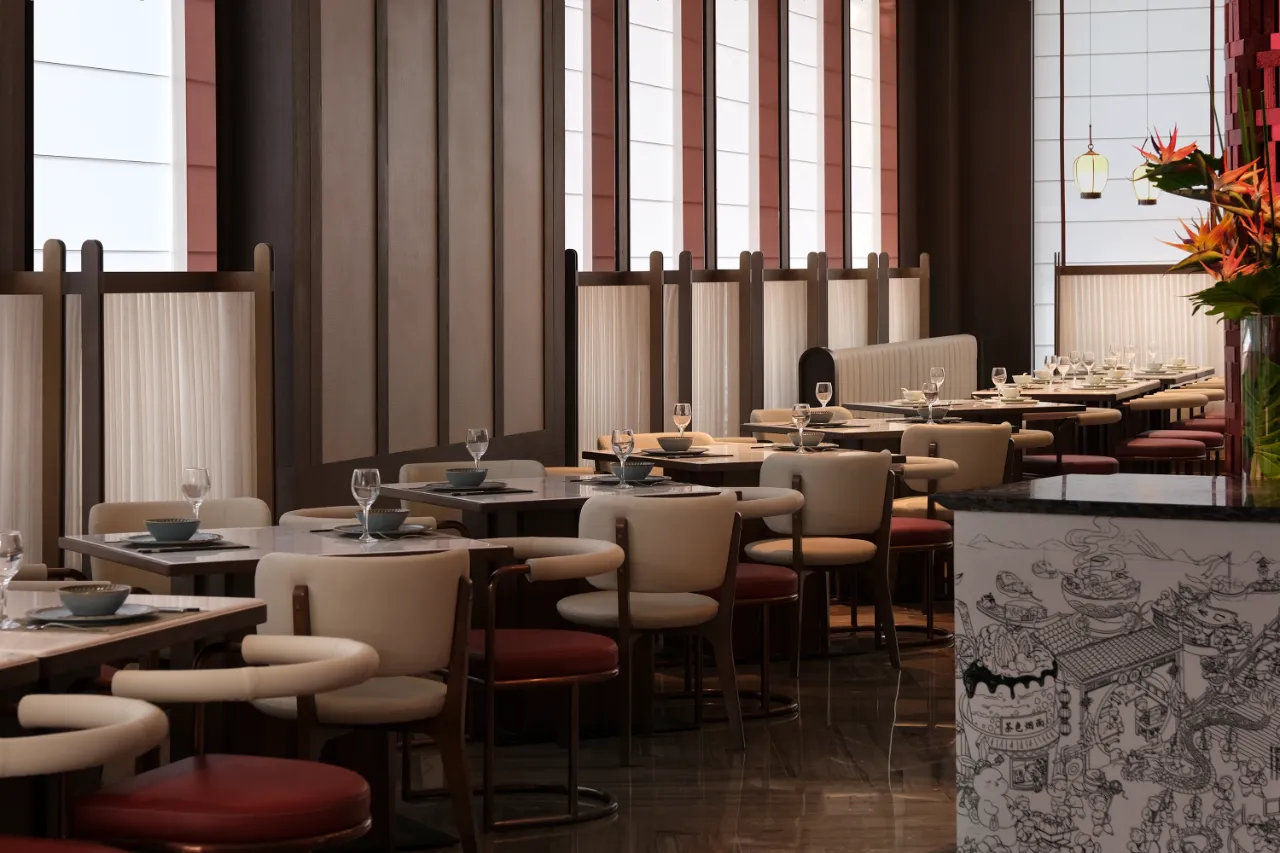
对吃的讲究,也是盐商培养起来的,扬州盐商几乎每一家都有头等好厨子,都有一样著名的拿手好菜或点心。鼎盛时期的扬州盐商夸富逐金,修豪园,养名姬,培戏班,赛巧厨,几度接圣驾更是一掷千金。
Yangzhou's culinary emphasis is cultivated by its salt merchants, with each household boasting a top-notch chef and a renowned signature dish or pastry. At their peak, Yangzhou salt merchants flaunted their wealth, building luxurious gardens, keeping famous courtesans, nurturing opera troupes, and competing with skilled chefs, sparing no expense when hosting the emperor's visits.
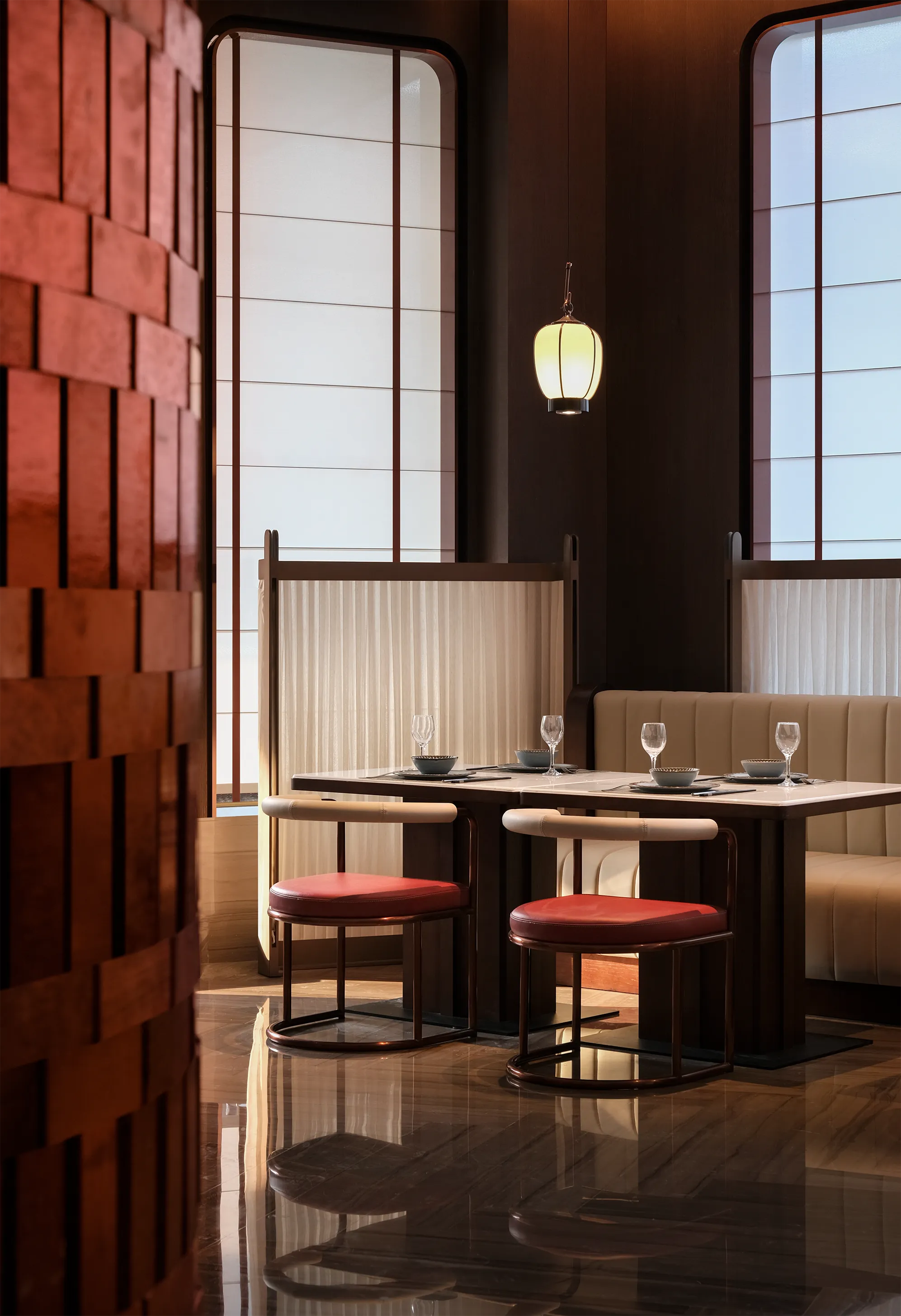
饮茶如筵,澡堂文化,生活的仪式感和水乡人家的生活哲学早已融入扬州人的骨子。或许,有过那样肆意张扬、穷妍尽巧的时光,哪怕岁月骤变,也再更改不了这座城市根骨里“今朝有酒今朝醉”的基因。
Tea sipping, bath soaking, the ritual of life, and the philosophy of living by the water town families have long been ingrained in the hearts of Yangzhou people. Perhaps, having experienced such unrestrained and exquisite times, even if the years change drastically, the city's inherent "seize the day and live it up" spirit remains unaltered.

THE HIDDEN STONES: LINGLONG HILLY HOUSE
藏起来的珍宝:山馆埋石
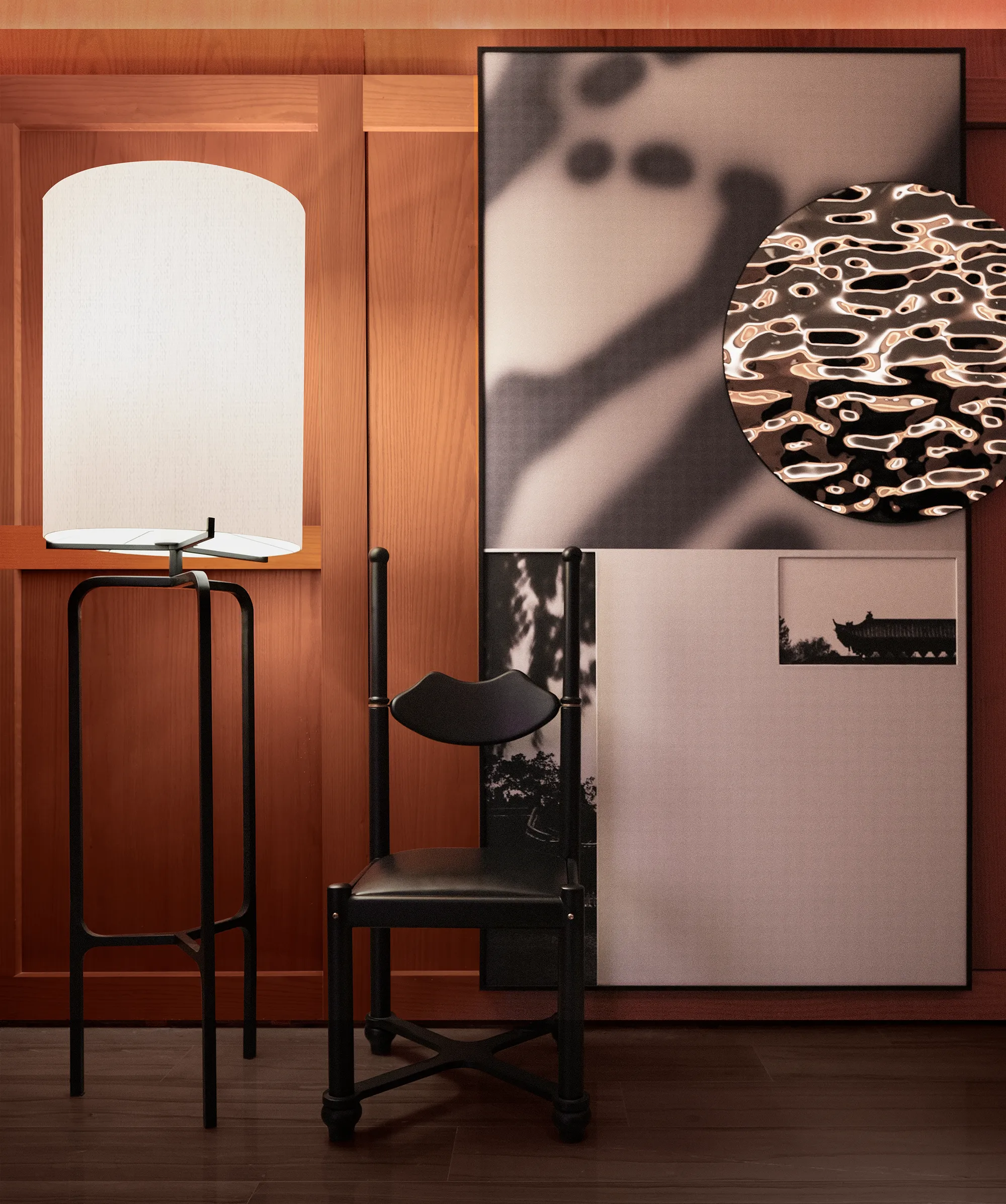
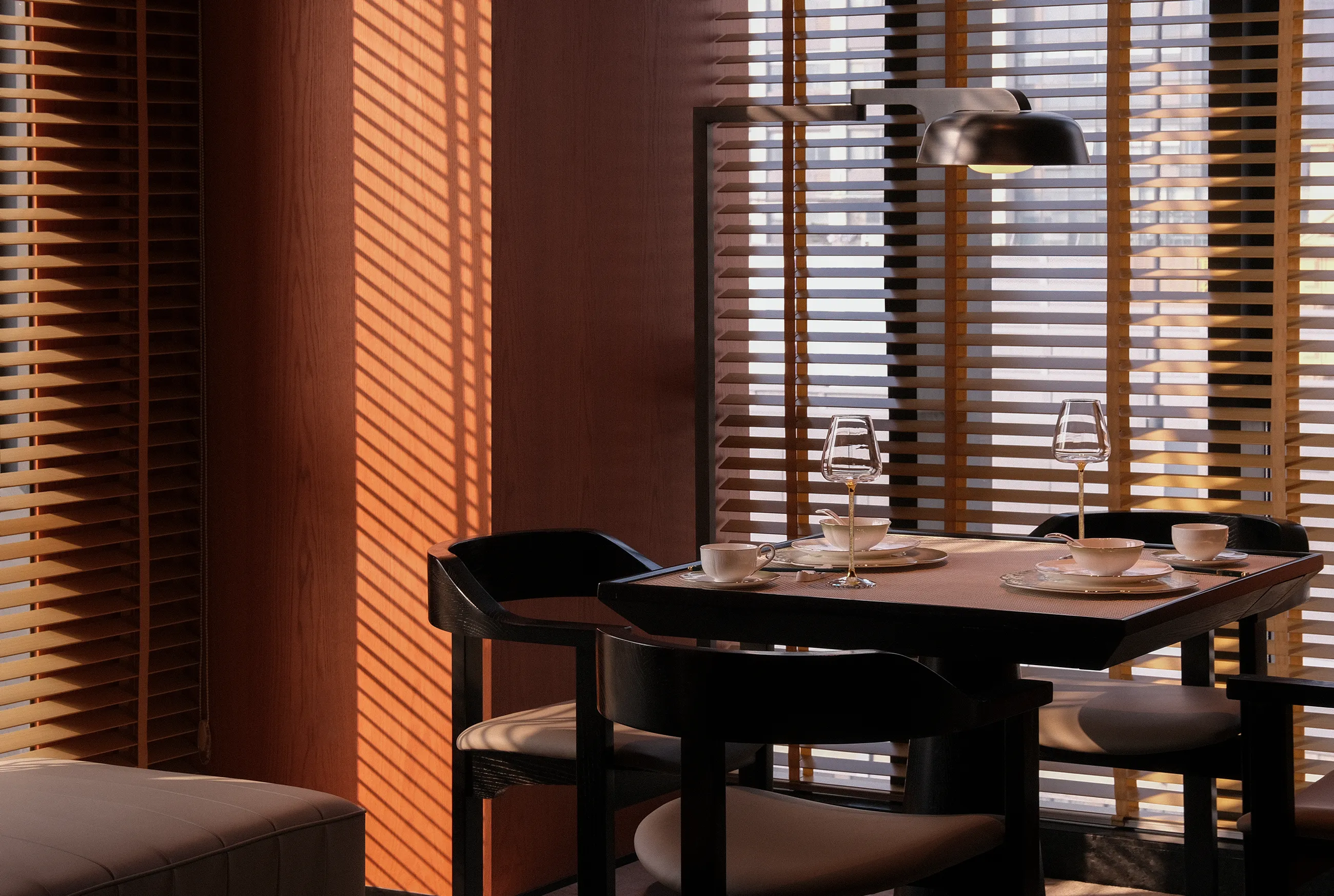
“天下珍馐属扬州”,中国四大菜系之一的淮扬菜,以扬州为代表,凭借精细刀工和独特口味享誉世界。《鱼翅与花椒》中,食物反映着城市的特质:川菜的辣带着一丝丝甜,就像悠闲的四川人,总是带着甜甜的体贴;湘菜直接又毫无妥协余地,就跟那里培养出来的领袖人物一样;扬州菜则是太平盛世的食物,温暖而抚慰人心。
"The finest delicacies are from Yangzhou," a city that epitomizes one of China's four major culinary traditions, Huaiyang cuisine, celebrated for its fine knife work and distinctive flavors. In "Shark's Fin and Sichuan Pepper," food reflects the character of the city: Sichuan cuisine is spicy with a hint of sweetness, much like the leisurely Sichuan people, always with a touch of sweet consideration; Hunan cuisine is direct and uncompromising, just like the leaders nurtured there; Yangzhou cuisine is the food of a time of peace and prosperity, warm and comforting to the heart.
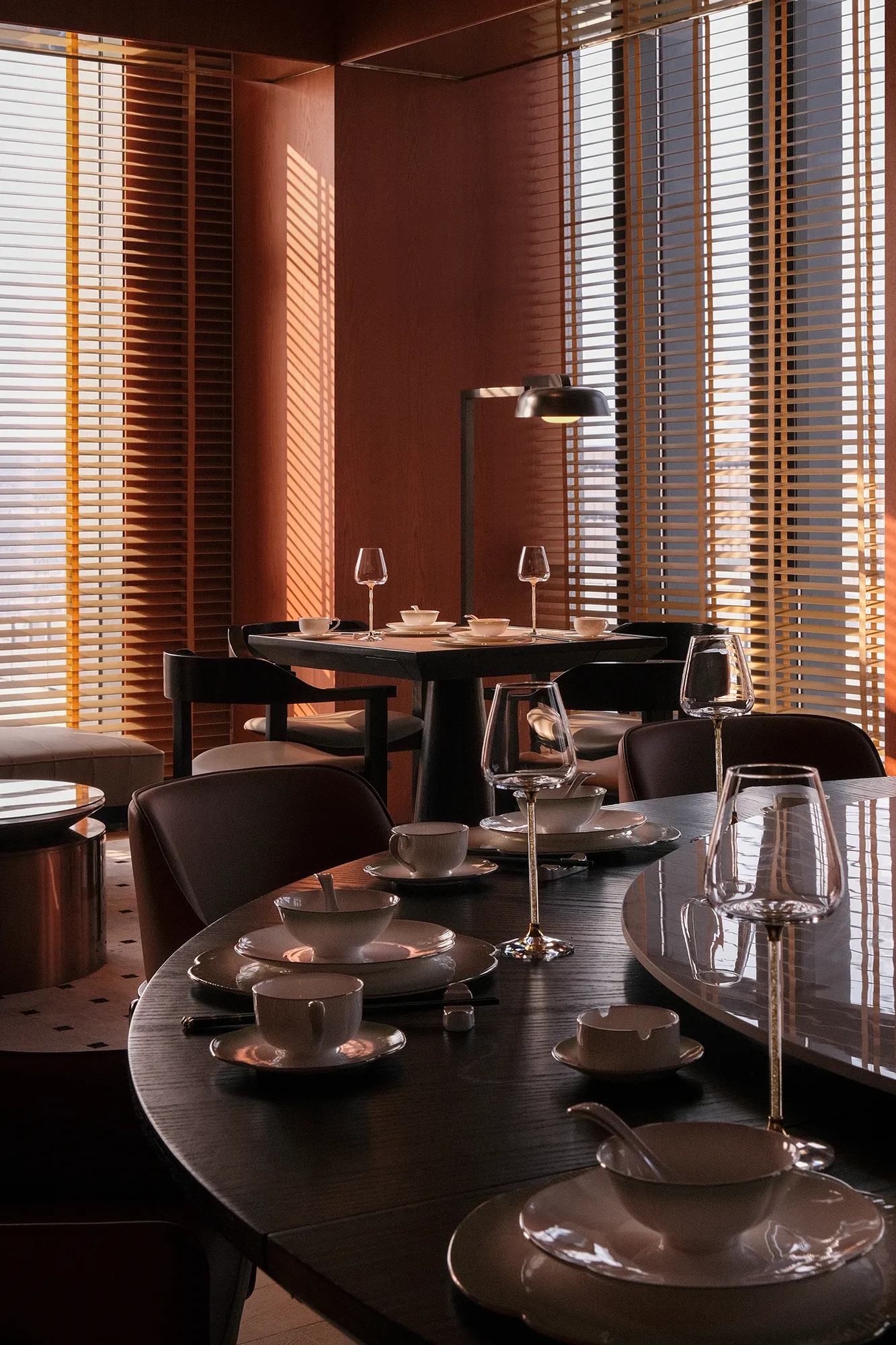
红记中餐厅以淮扬菜为特色私房菜,室内设计源于扬州二马埋石的故事。富甲一方的儒商马曰琯与马曰璐,修建了以其丰富的藏书和雅致的园林景观而闻名的街南书屋。
Hongji Restaurant specializes in Huaiyang cuisine and is inspired by the story of the Mas burying the stone in Yangzhou. The wealthy Confucian merchants Ma Yueguan and Ma Yuelu built the Jienan Sanctum, which is famous for its rich collection of books and elegant garden landscapes.
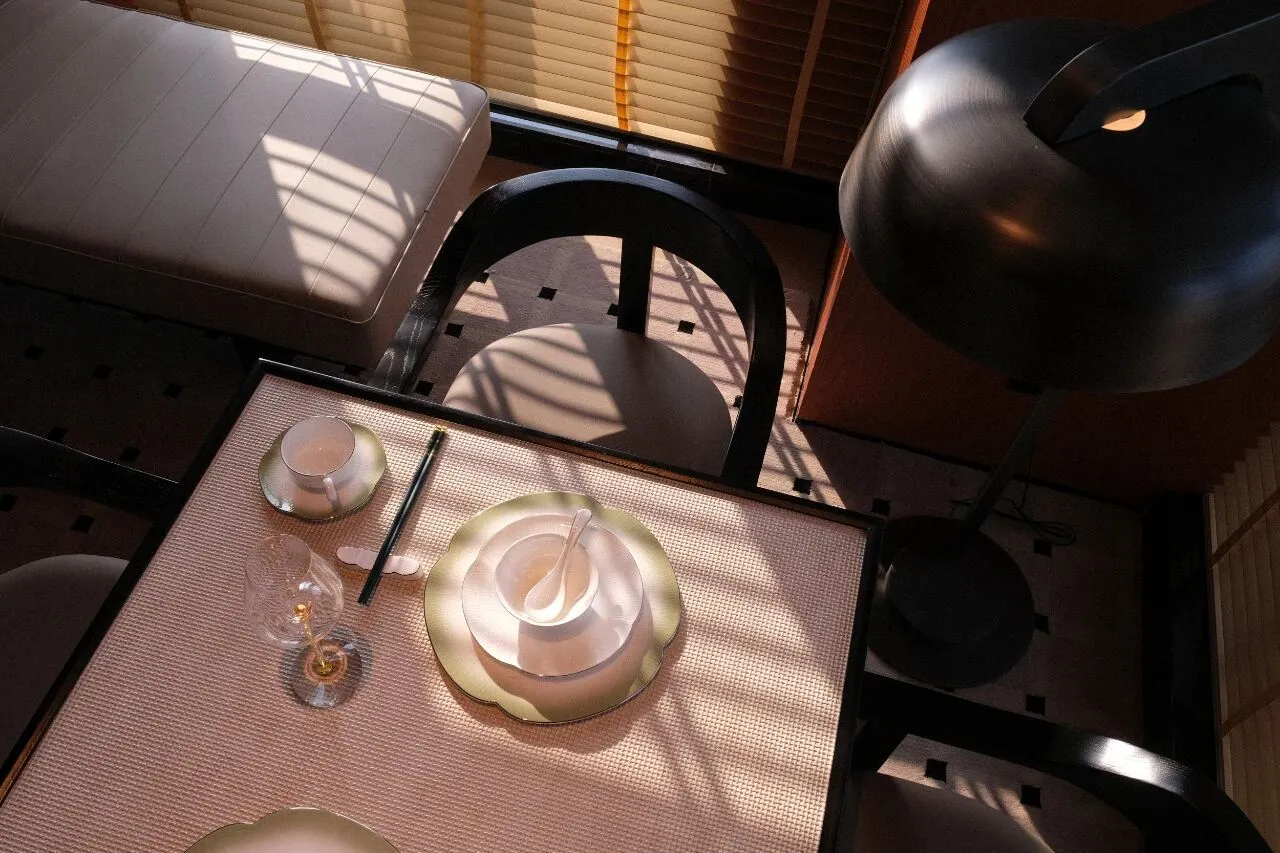
书屋落成时,二马得到一方巨型玲珑太湖石设于书屋院落,其秀美与奇奥可以媲美任何奇石。但是马氏兄弟考虑到邻里关系并没有将它树立起来,反而将它埋于地下。
When the Jie Nan Shuwu was completed, the Mas were gifted an enormous, exquisite Taihu rock, which was as beautiful and mysterious as any rare stone. However, considering the relationship with their neighbors, the Mas did not erect the rock but instead buried it underground.
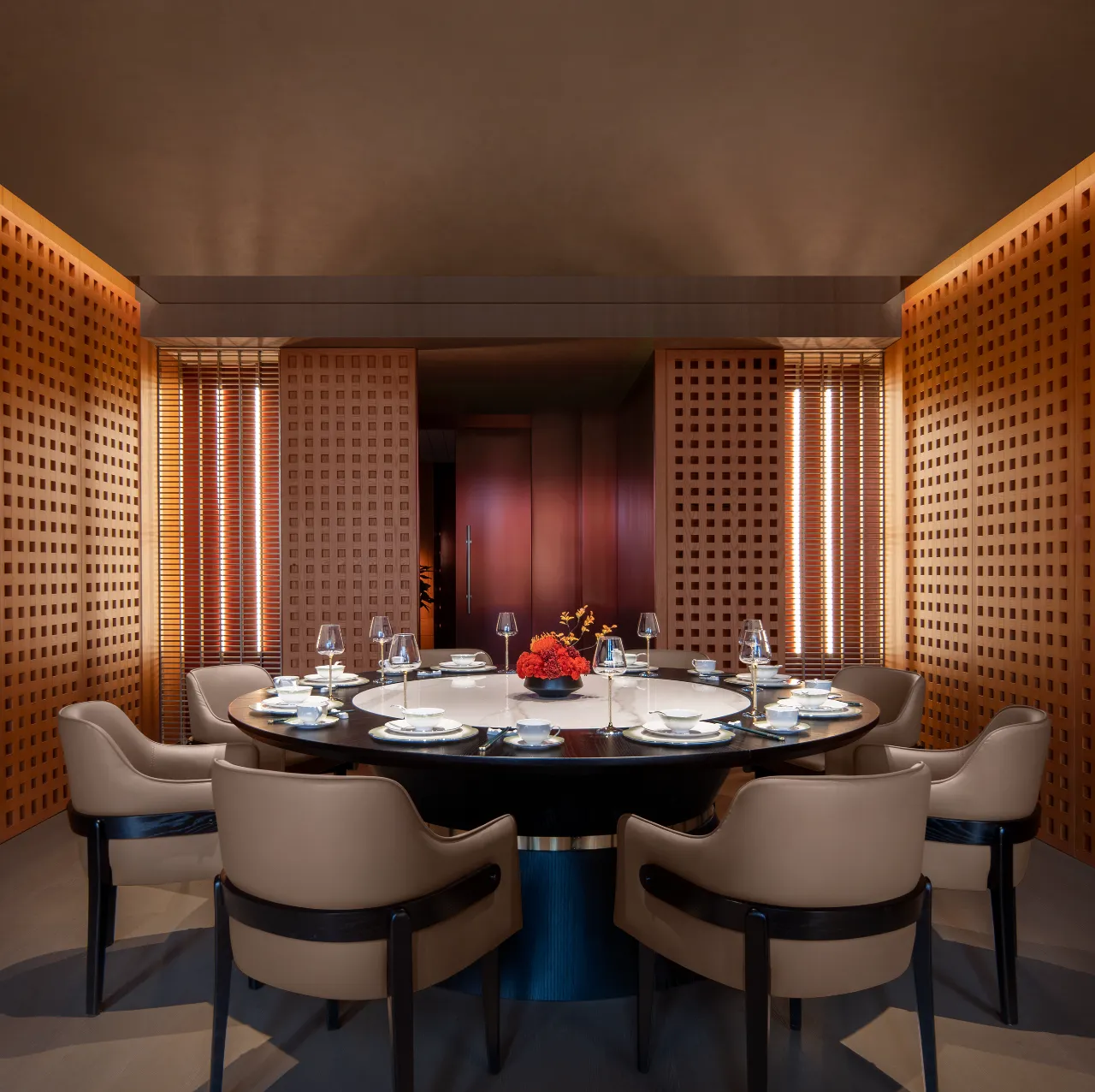
二马埋石的故事和扬州菜皆是扬州儒雅、内敛的人文传统和文化精神的缩影。设计以埋石为题,将光源的碎片埋藏于转角和缝隙间,不似寻常灯火那样直白显露,而是如同古书里的墨香,淡淡地从书页间透出。
The story of the Mas and Yangzhou cuisine epitomize the city's cultured and restrained ethos. The design, inspired by the buried stone, tucks light into nooks and crannies, subtly, like the scent of ink from old books.
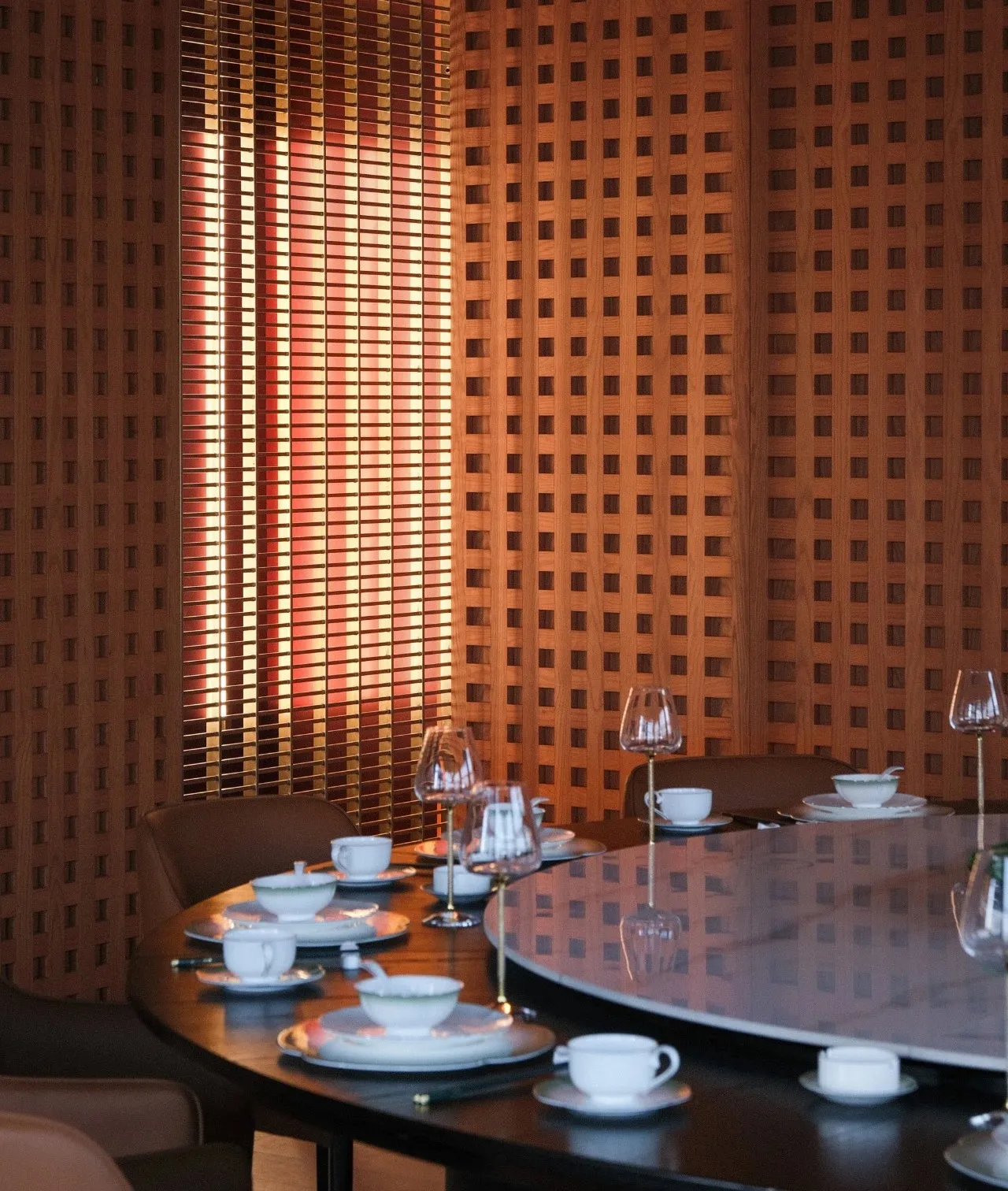
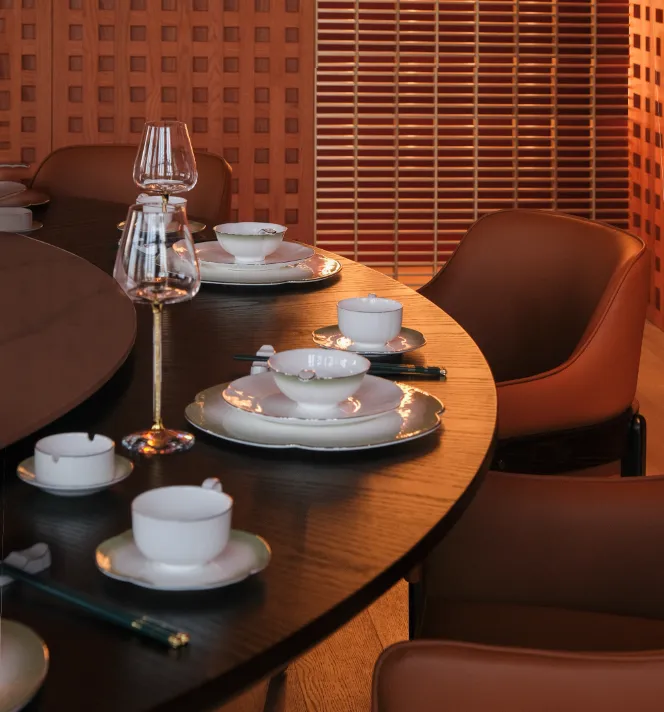
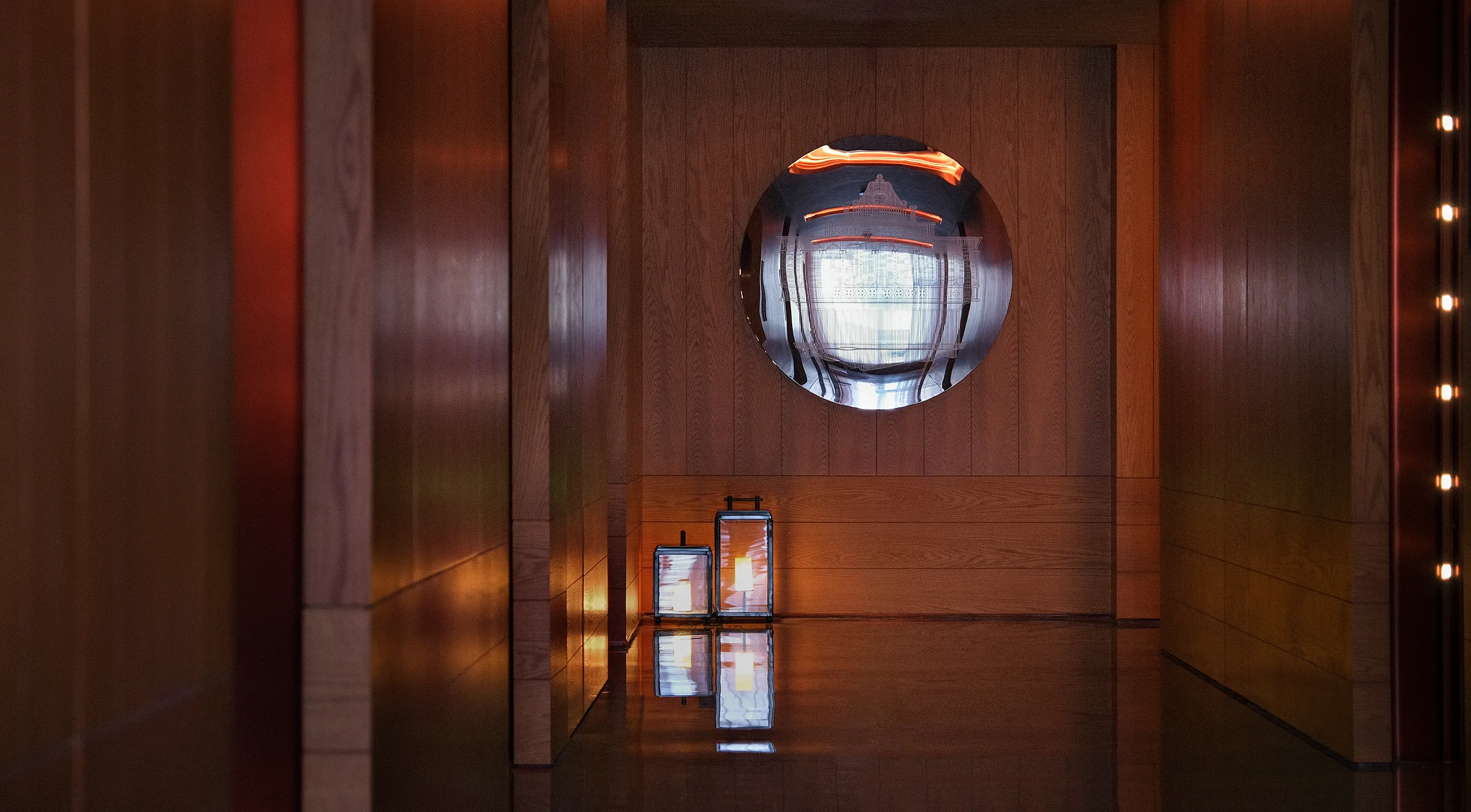
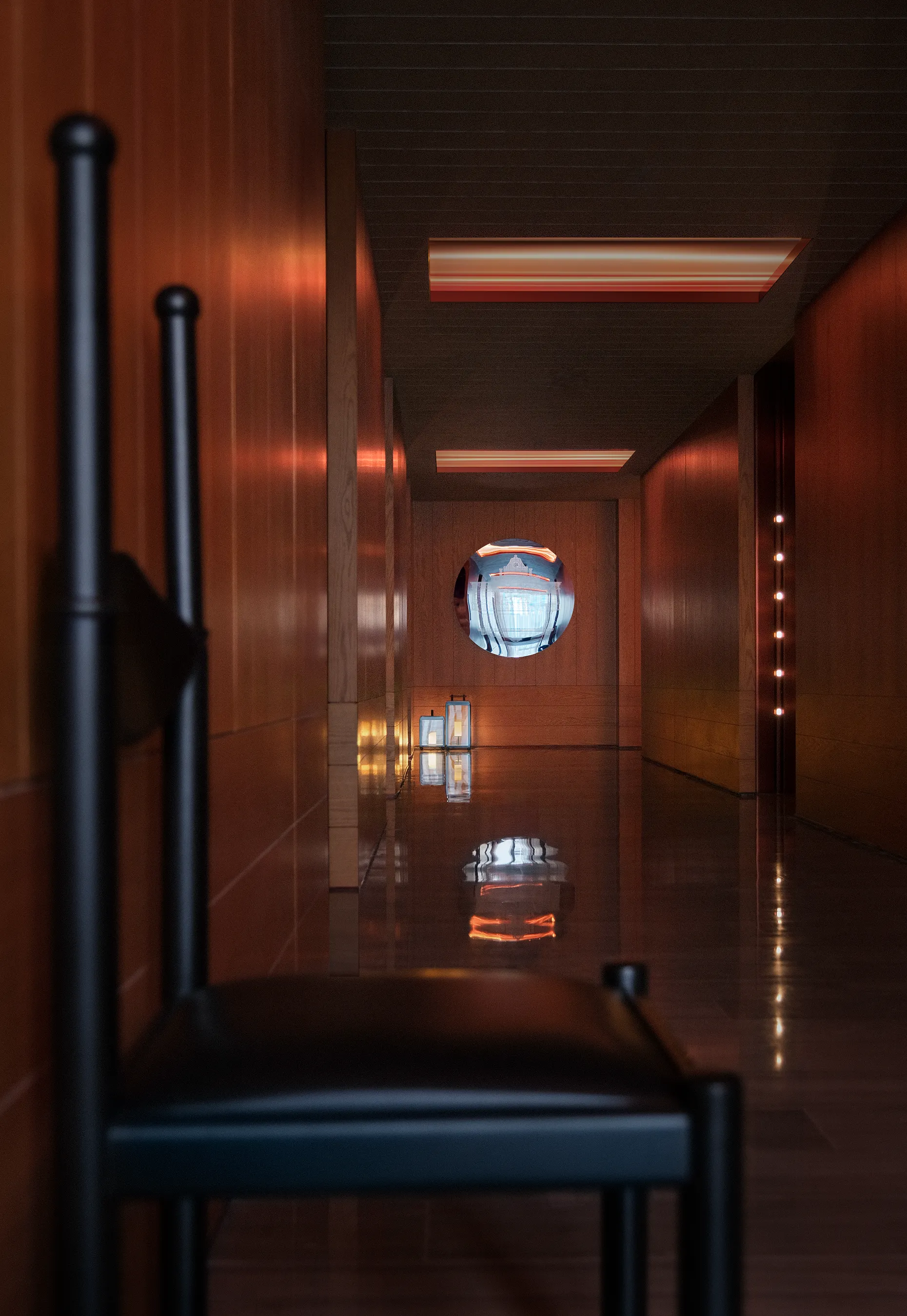
灯光与色彩隐匿在温润内敛的格子背后,光影氤氲出缓慢而细腻的氛围,带着一种不可言说的宁静。
Light and color are hidden behind the mellow wooden lattice, creating a slow and delicate atmosphere, with an indescribable sense of tranquility.
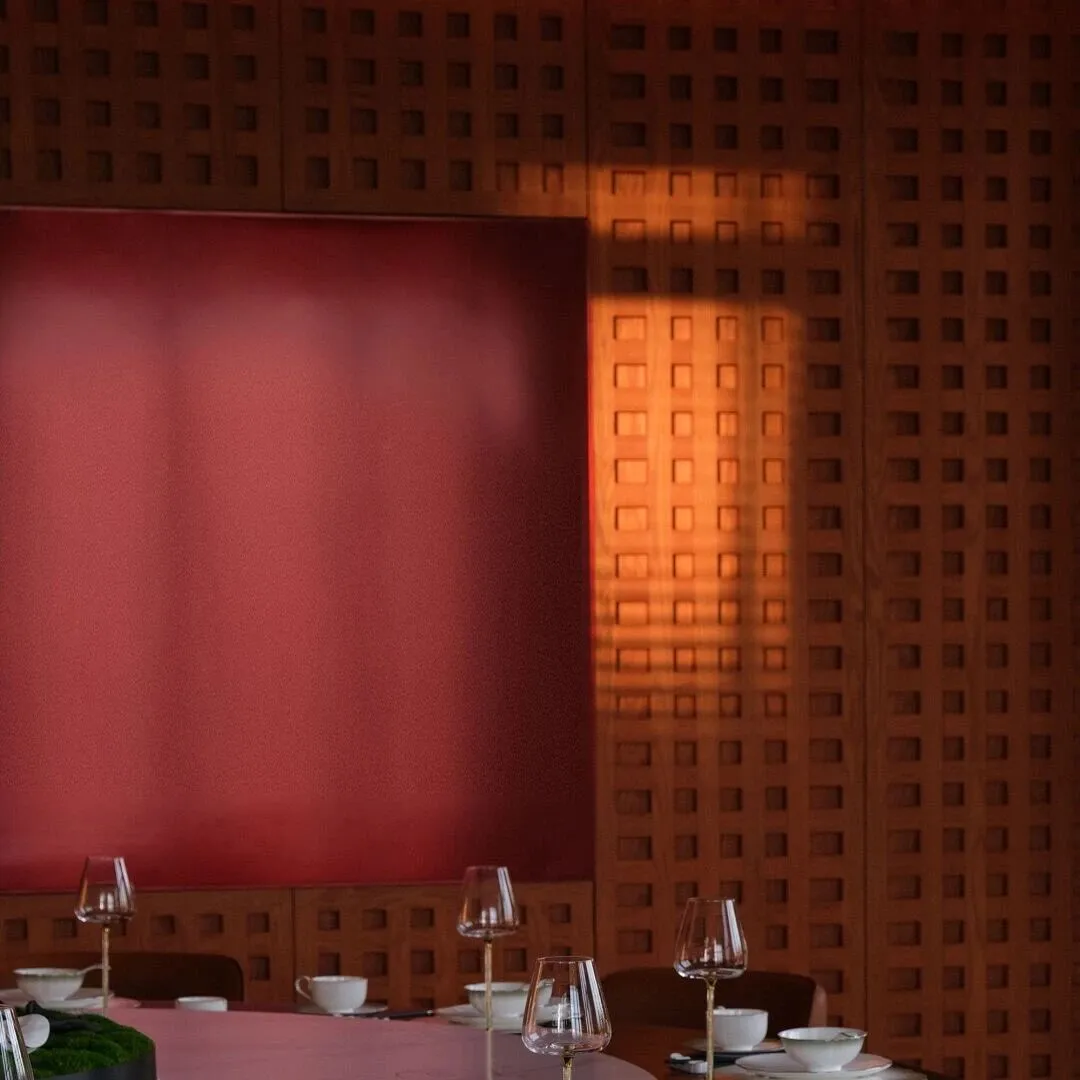
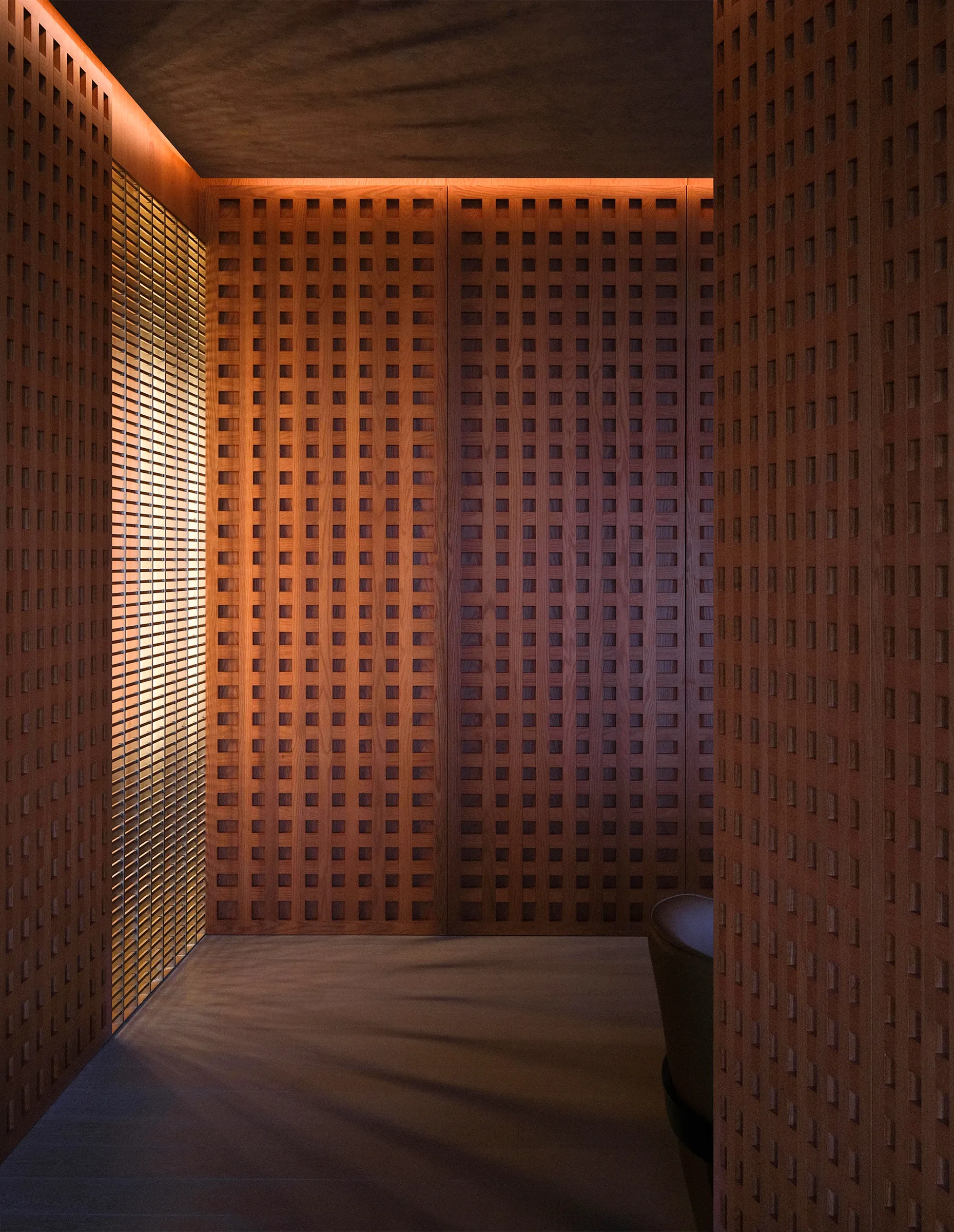
兼具着文人的气质与疏离的格调,设计呼应着这座城市的风雅,将文化与财富藏于朴素的青砖黛瓦之下。
The design embodies the temperament of a literati and a detached elegance, echoing the city's refinement, hiding culture and wealth beneath its modest grey bricks and black tiles.
未曾实现的未来仅仅是过去的枝杈,干枯了的枝杈。千年古城,几经起落,在时代的变迁中回归从容,淡定地与世沉浮,仿佛从“春风十里扬州路,卷上珠帘总不如”的诗情画意中走了出去,终又走了回来。
Futures not achieved are only branches of the past: dead branches. The ancient city, after many rises and falls, returns to a state of composure amidst the changes of the times, calmly floating with the world. It seems to have ventured forth from the realm of poetry and painting, only to return once more.
在各个城市都在铆足劲追逐国际的如今,疲倦焦虑的人们会想起,在南方,有一个“竹西佳处”,接得住夙夜梦寤的江南情怀,盛得下临风对月的一唱三叹。
In a world where cities race towards globalization, tired souls remember a "beautiful Zhuxi pavilion" in the south, a place that can hold the dreams and emotions of the Jiangnan, and bear the sighs and songs in the moonlight.
RETURN: GONE LIKE A DREAM
归来:梦一样过去
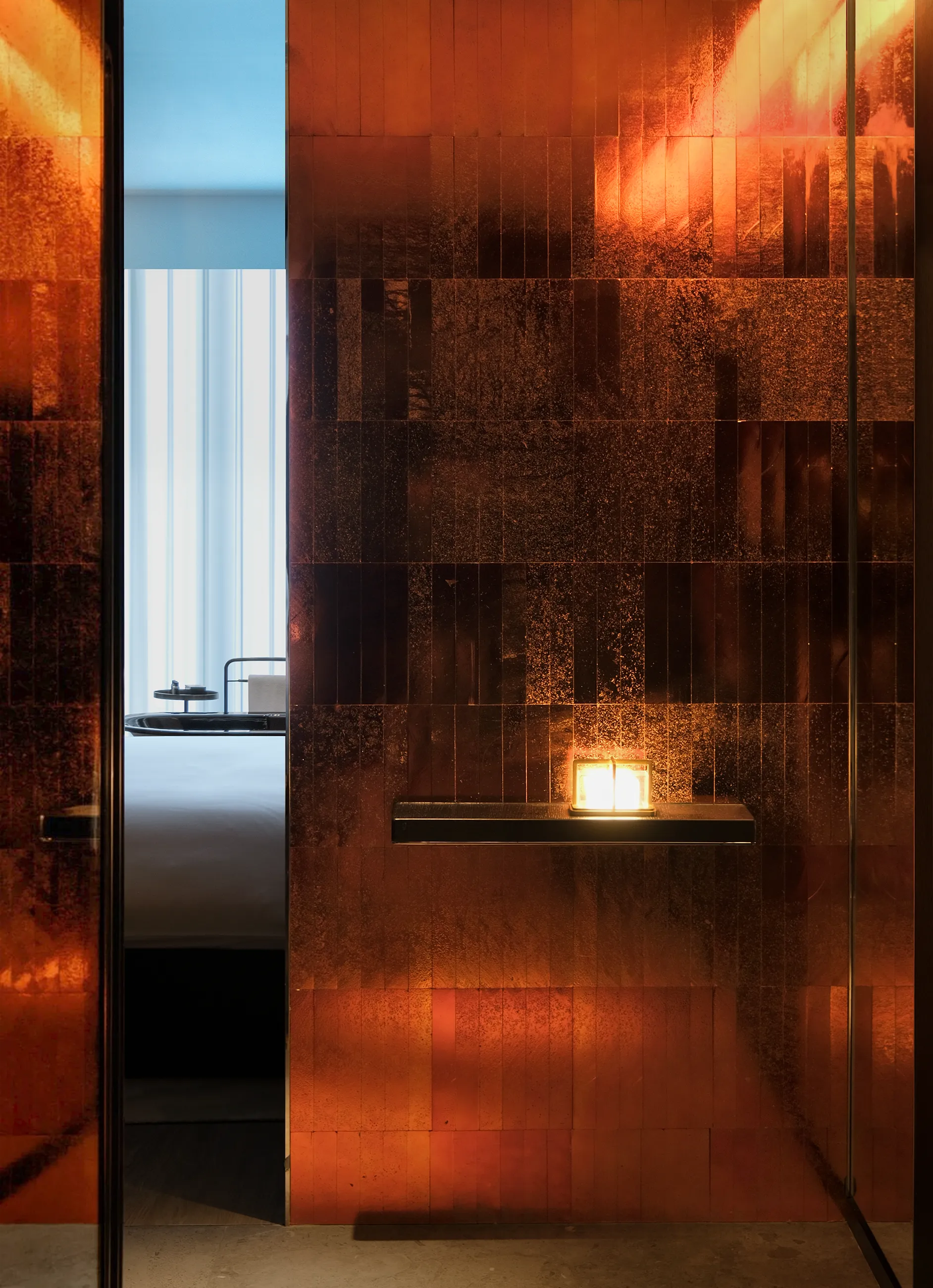
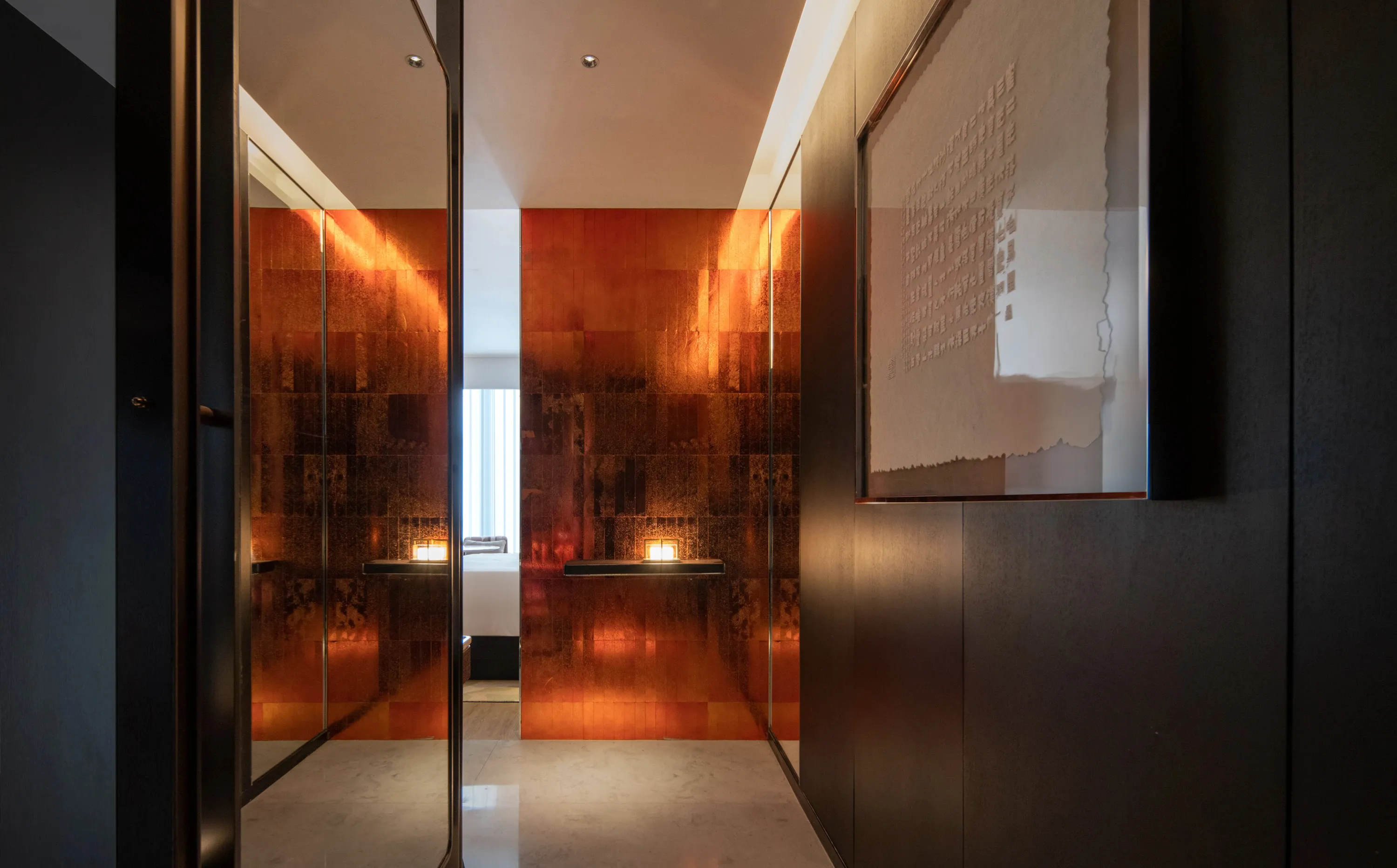
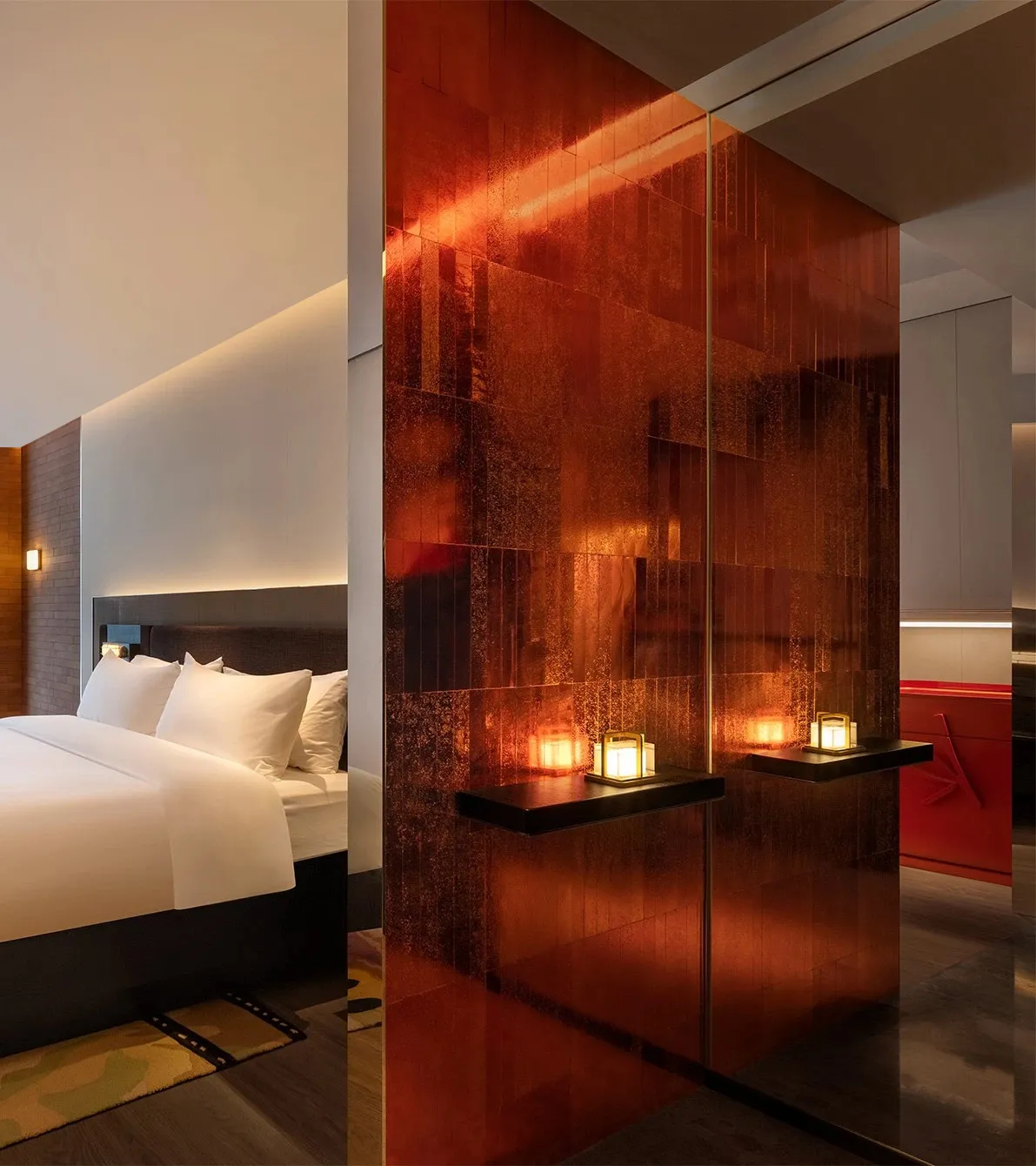
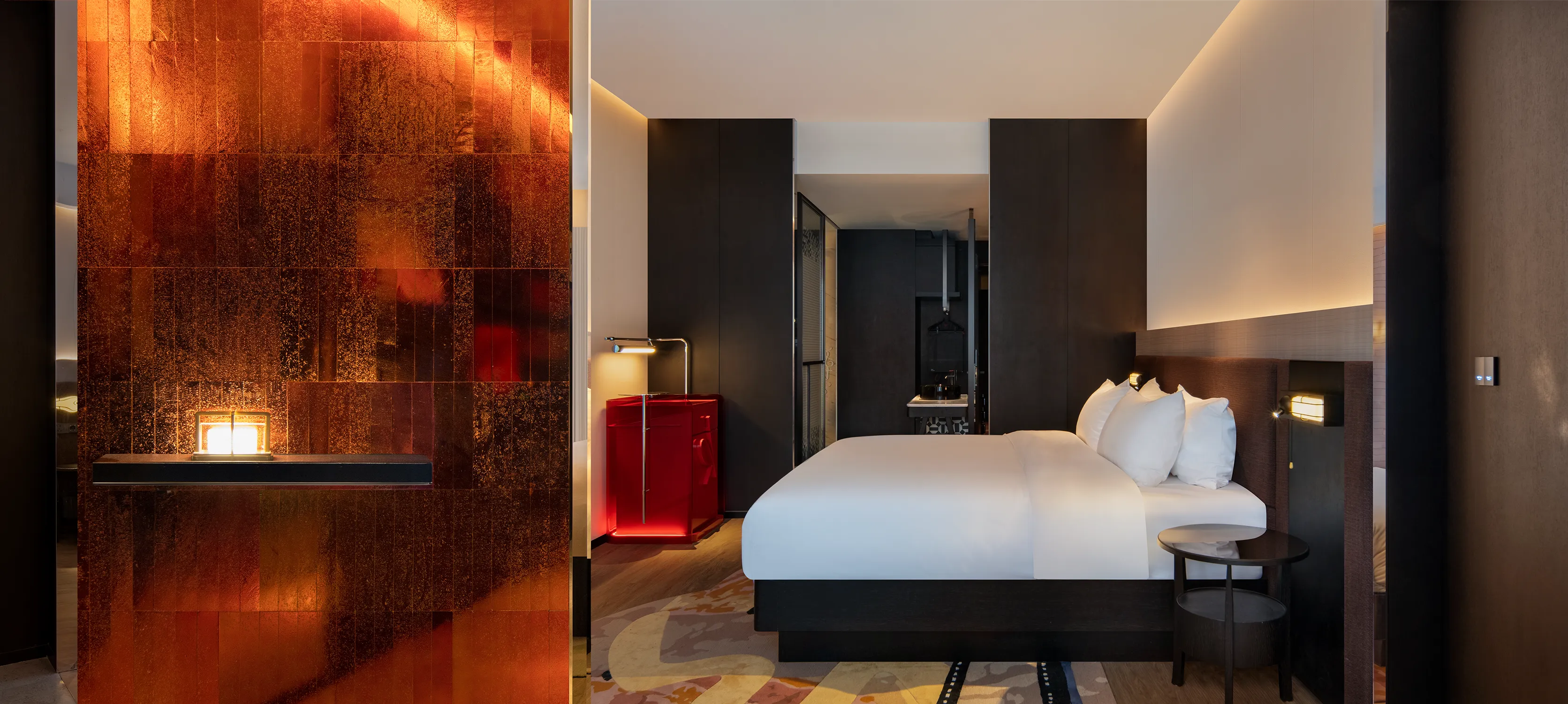
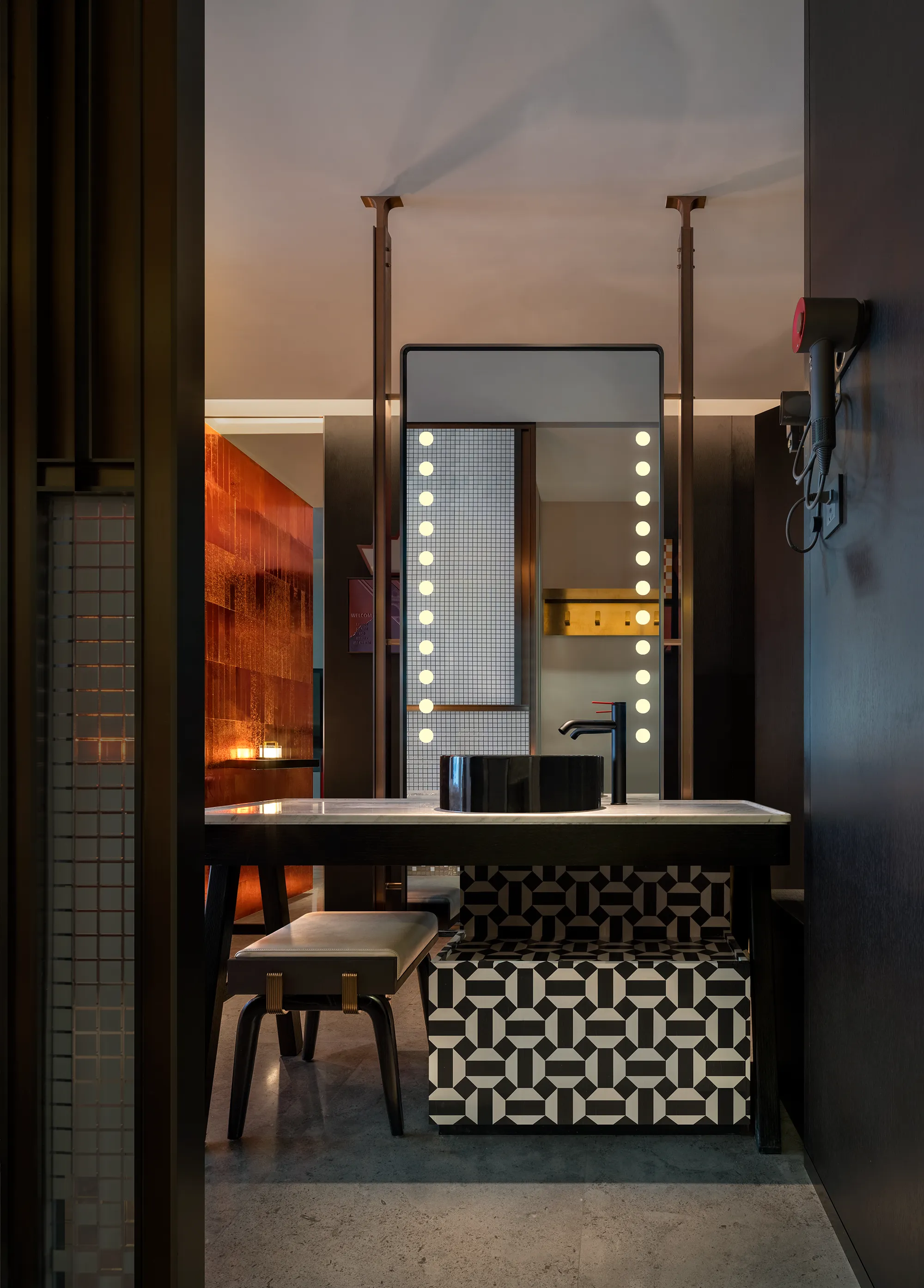
回到客房,一盏琉璃壁灯点亮入口处的红墙隔断,松弛的意图将意识带离喧嚣与粘稠,沉浸到实感分明的静谧与安逸中。
Back in the guest room, a glass wall lamp lights up the red partition at the entrance, easing the mind away from the noise and immersing it in a clear sense of peace and ease.
沐浴油滴入深浸浴缸池中,情绪的流动搅进升腾起的泡沫,温热的水没过肩膀,疲惫融进雾霭,连梦境也朦胧。
Bath oil drops into the deep soaking tub, emotions swirling into the rising foam, as warm water reaches the shoulders, melting away fatigue into the mist, even dreams becoming hazy.
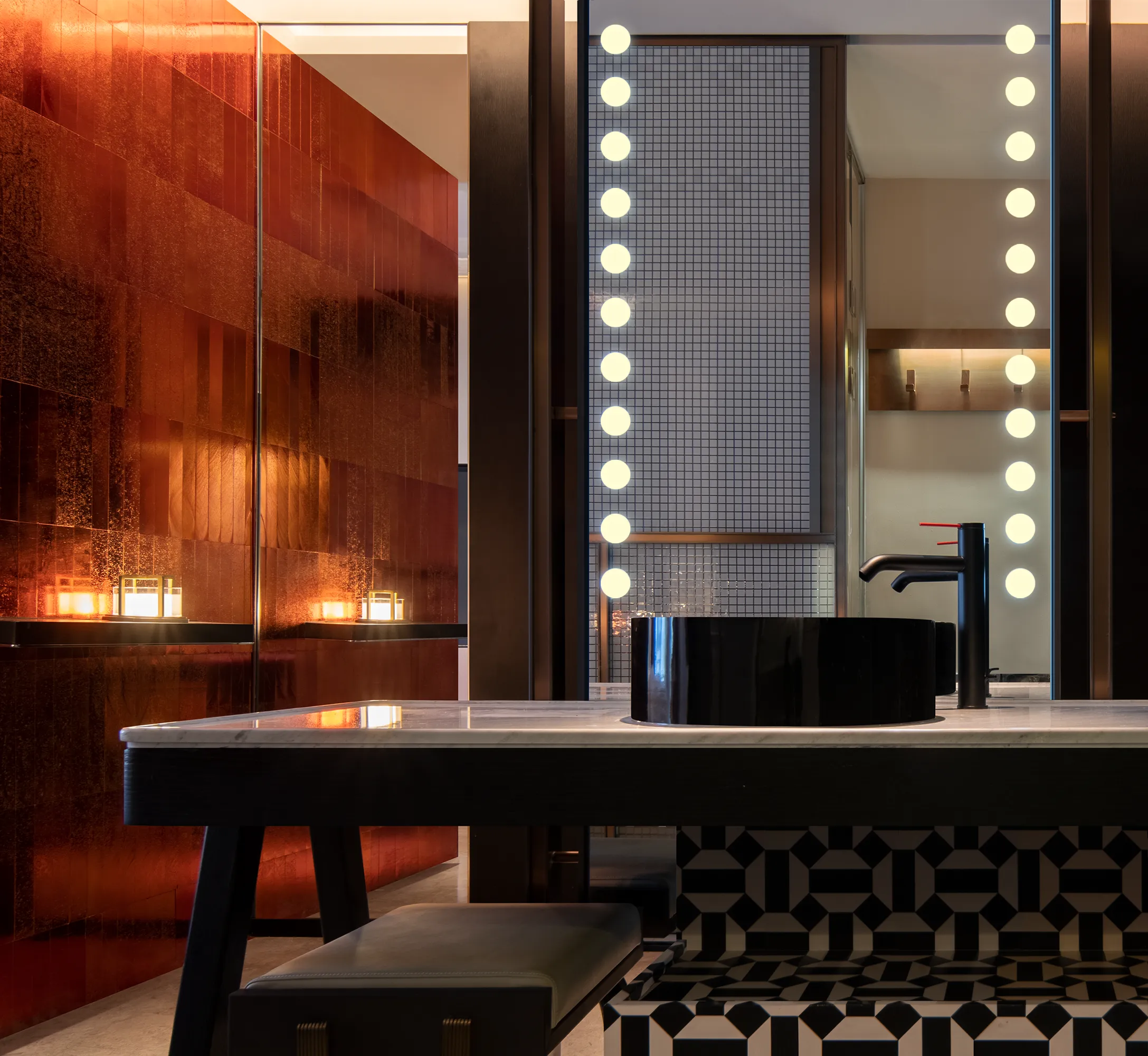
时间的流逝变得绵长而丰满。黄铜金属构件嵌在皮革椅面两侧,柔和的灯光如锦缎覆在台面,为温馨的场景氛围平添出几分怡然雅致的情愫,沁入绵绵夜色。
Time stretches, rich and full. Brass metal fittings are embedded in the leather chair sides, and soft lighting drapes the table like silk, adding a touch of elegance to the cozy scene, seeping into the lingering night.
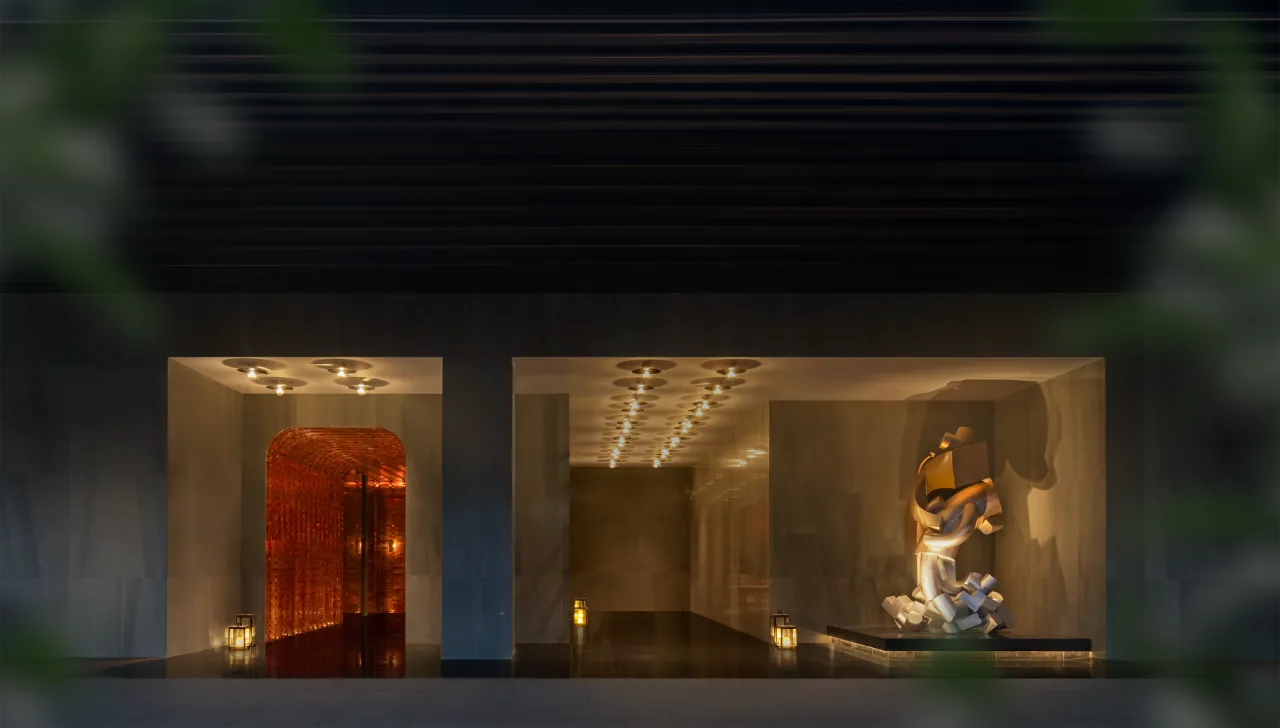
“陆上的门只是通向有限世界的一部分,面水而开的门则直接通向浩瀚无边的空间。”大运河使扬州成为全国财富聚集地,水运带来繁盛的商贸,文学与艺术百花齐放,成就“腰缠十万贯,骑鹤下扬州”的盛世图景。
The doors on land lead to only a part of the finite world, while the doors opening onto the water lead directly to the boundless expanse. The Grand Canal made Yangzhou a beacon of wealth, commerce, and cultural blossom, embodying the idyllic vision of "Carrying all my possessions, I will ride a crane down to Yangzhou."
春秋代序,商贸方式转变,兴衰更迭。千年盛名中的起落沉浮,扬州也自有了一种超然世外,安然质朴的淡泊。人来人往熙熙攘攘,古城不急不忙,时光以扬州独有的速度流动着。旧时的清丽留在扬州人的骨子里,人们保持着闲暇生活处的仪式感,以豁达的心态经营起时过境迁后的幽静日子,一半烟火谋生活,一半诗意得清欢。
Through the cycles of dynasties, Yangzhou has seen the rise and fall of commerce, yet maintains a serene and simple detachment. Amidst the bustle of comings and goings, the ancient city moves at its own pace, with time flowing at a speed unique to Yangzhou. The city's past elegance is ingrained in its people, who uphold the ritual of leisurely life, managing their days with a broad-minded approach, blending the mundane with the poetic joy.
Name|项目名称:扬州瘦西湖丽芮酒店
Developer|发展商:扬州丽昇酒店管理有限公司
Design Unit|设计单位:ADD加设计
Type|项目类型:酒店
Location|项目地址:江苏扬州
Chief Designer|主案设计:李想
Project Management|项目管理:陈万镁 区颖超
Design Team|方案设计:吴柏 赵之泓 黄丽妍 谭英浩 贺雨晴 陈家炜 林华保
Design Team|软装设计:朱川平 卢婉滢 朱茵茵 傅沛霖
Media Management|传媒管理:郑华纯
Photography|项目摄影:禾火火
ABOUT 公司简介 -
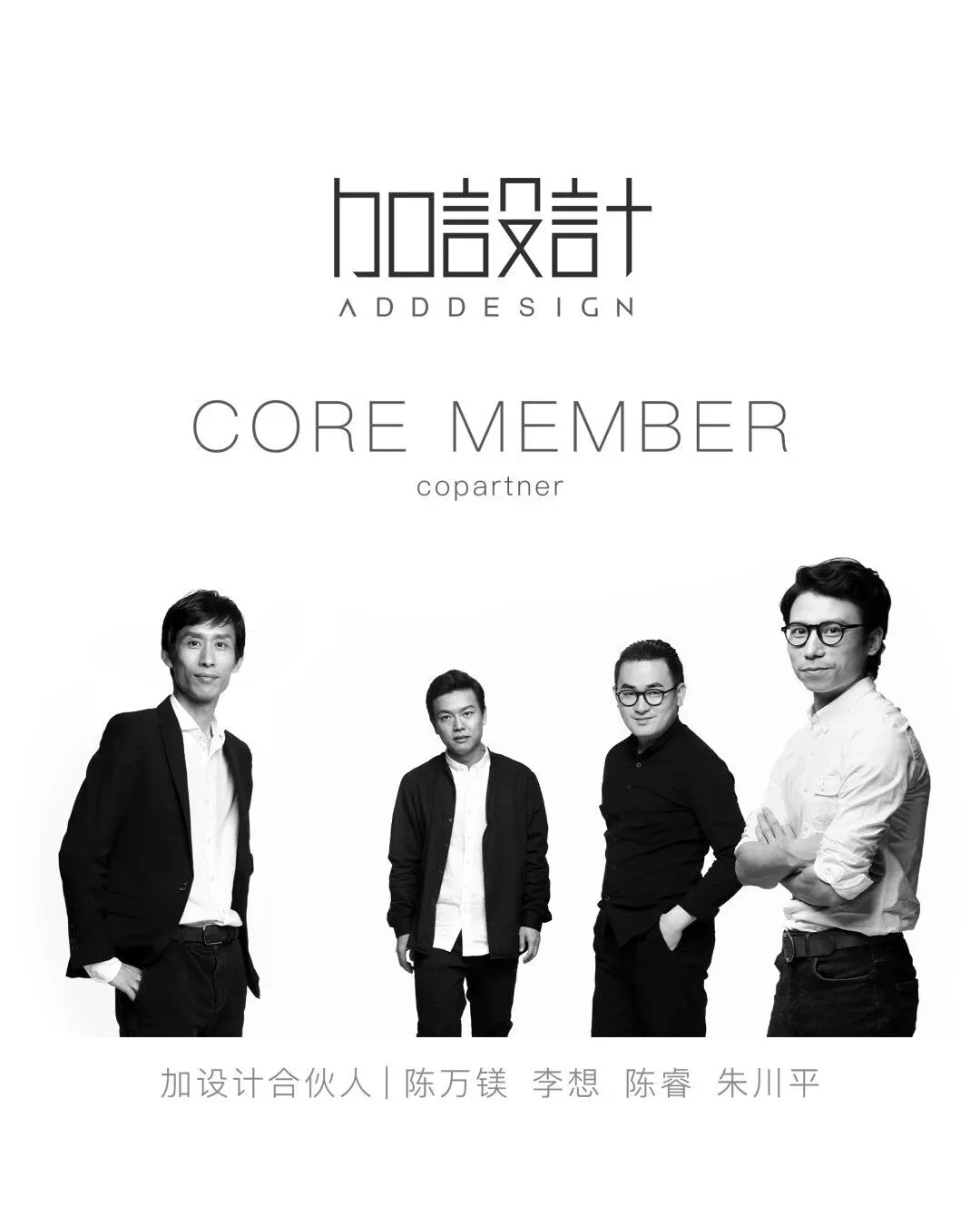
加设计有限公司在2008年成立于香港,中华地区总部位于广州,深圳、香港均设有公司及办事处。设计聚焦于高端酒店、生活方式及度假村酒店,提供国际化的建筑、室内、软式以及产品设计服务,致力于为大中华区及世界各地客户提供专业的一体化设计解决方案。加设计以国际化的视野,前卫的设计理念,前沿的技术工艺以及完善的项目控管模式为客户提供高质量的设计作品,以系统化的全产业链设计服务提升项目的产业价值。
ADDDESIGN Co., Ltd. was established in 2008, whose business scope covers hotel, restaurant, high-end mansion, etc. The company provides services of international architecture, interior and soft design, devoting itself to providing professional integrated design for customers home and abroad. ADDDESIGN provides high-quality design works for customers with international vision, advanced design concept, cutting-edge technology and mature project control mode and enhances the industrial value with systematic industrial chain design services.

加设计先后为10多个国际酒店管理集团,20多个国际品牌,100多家高品质酒店成功提供了室内设计及顾问服务,充分得到了希尔顿、万豪、洲际、文华东方等国际酒店品牌集团的高度认可。
ADDDESIGN has successfully provided interior design and consulting services for more than 10 international hotel management groups, more than 20 international brands and more than 100 high-quality hotels, highly recognized by such international brand groups as Hilton, Mandarin Oriental, Wyndham, InterContinental, Swire Properties, Poly Real Estate.
CHIEF DESIGNER 设计主创 -
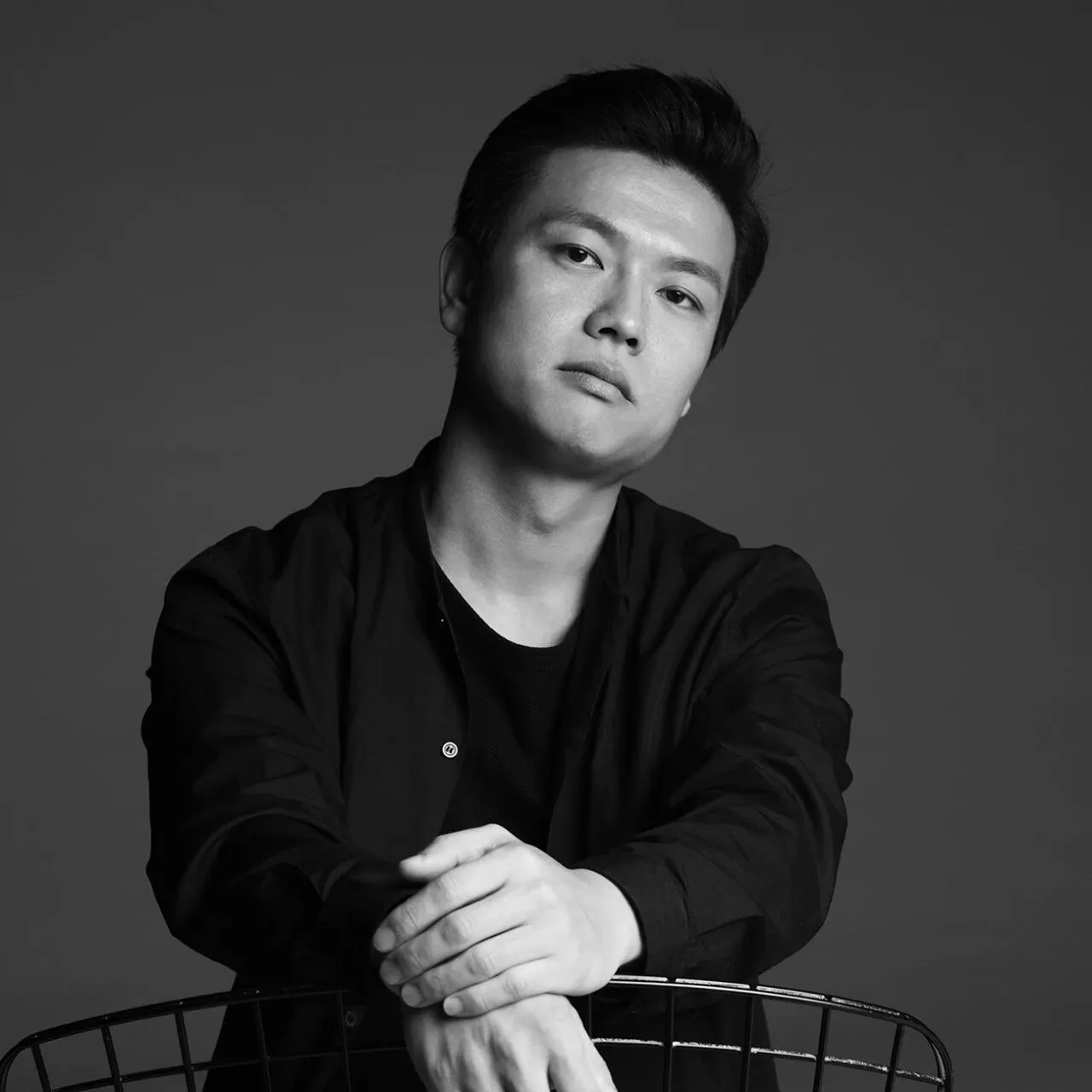
李想 I Shaun Lee
李想先生,加设计有限公司联合创始人及设计总监。擅长将物理环境转变为感官体验,在人、空间、物质之间建立情感联系。对每个项目都保持好奇心,在文化、艺术、美学之间寻找可能性,突破固有格局,打造完整、永恒的空间。李想先生先后为希尔顿,文华东方,洲际,温德姆,丽笙,锦江等10多个国际酒店管理集团旗下的20多个国际品牌提供设计服务,帮助众多项目获得独一无二的空间体验。并带领团队在众多国际奖项中屡获殊荣,享有盛誉。
Shaun Lee, founder and design director of ADDDESIGN, is good at transforming physical environment into a sensory experience and establishing emotional connections between people, space and substance. He maintains high curiosity for each project, seeks for possibility between culture, art, and aesthetics, breaking through the inherent patterns and creating a complete and eternal space. Shaun Lee has provided design services for more than 20 international brands under the umbrella of more than 10 international hotel management groups like Hilton, Mandarin Oriental, InterContinental, Wyndham, Radisson, Jinjiang, etc., helping many projects to achieve a unique space experience. He has won numerous international awards with the team led by himself and enjoyed high reputation.
AWARDS 奖项荣誉 -
公司设计完成的商业项目分布在全国的几十个主要城市,如:北京、上海、深圳、广州、三亚、成都、武汉、海口、长沙等地,作品在全球各大权威设计大奖中屡获殊荣。
The commercial projects designed by ADDDESIGN are distributed in dozens of major cities across the country, such as Beijing, Shanghai, Shenzhen, Guangzhou, Sanya, Chengdu, Wuhan, Haikou, Changsha, etc. The works have won numerous awards in the world's leading authoritative design awards.